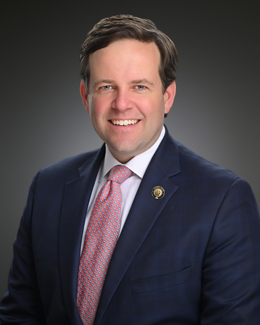
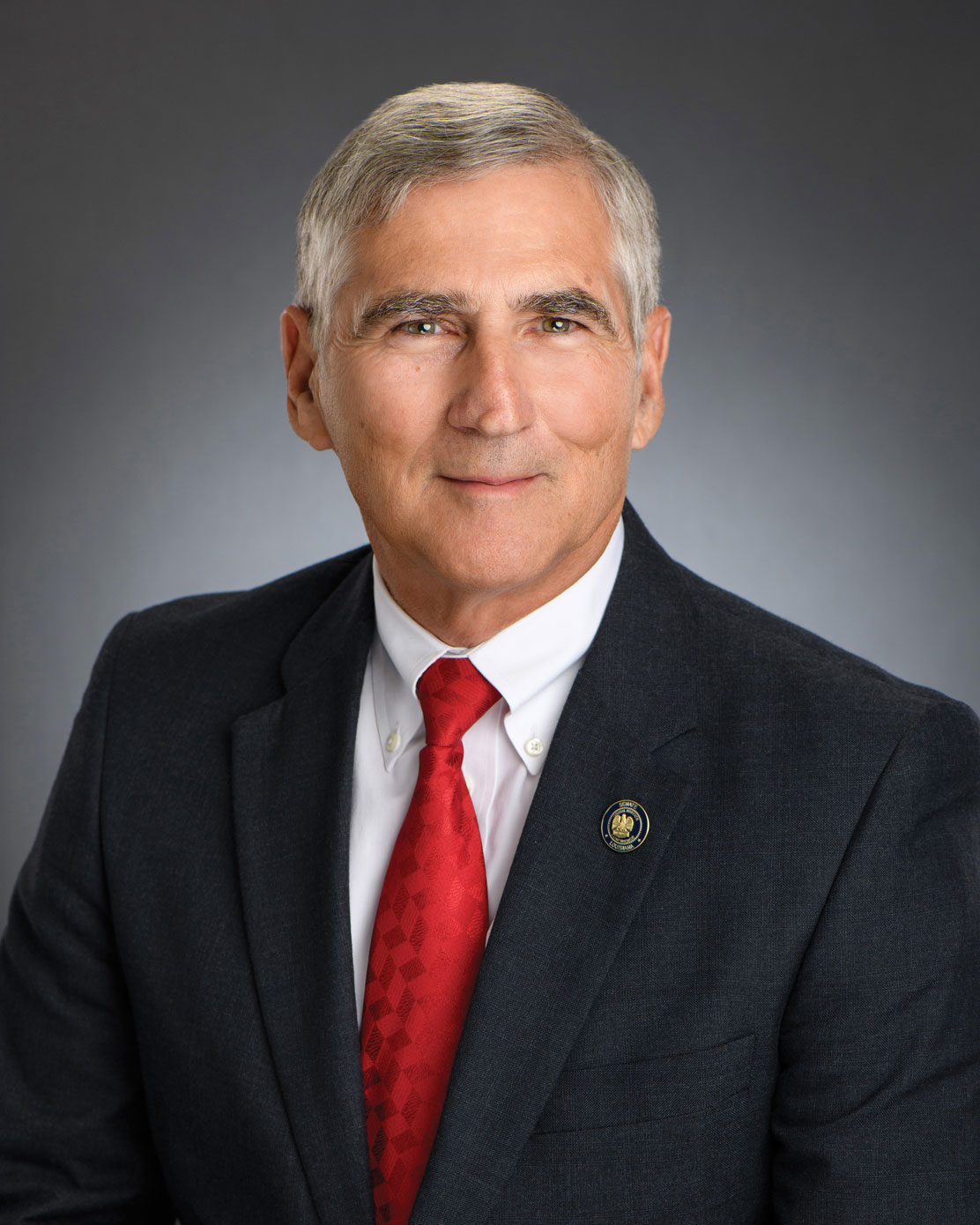
This bill amends an existing law to expand the list of law enforcement officials who are prohibited from owning or having financial interests in companies that provide electronic monitoring services. The specific change adds "chief of police, constable, marshal" to the categories of individuals already restricted, which currently include sheriffs. By updating the text, the legislation ensures these additional officials are also barred from profiting from the industry they regulate. The measure was recently passed by the House of Representatives and sent to the Senate for further consideration.
This bill modifies Louisiana's penalties for a fourth offense of driving while impaired by allowing courts to order unsupervised probation in certain cases. It requires offenders to complete treatment programs, drug division probation, or supervised probation after release from incarceration, with the probation period lasting until the original sentence ends or for twenty years, whichever is longer. Additionally, the bill authorizes prosecutors to request the seizure and auction of vehicles used during the offense. These changes directly affect repeat offenders charged with operating a vehicle while impaired and aim to balance rehabilitation with accountability through structured probation requirements.
This bill allows jurors in Louisiana's Nineteenth Judicial District to voluntarily donate their jury duty pay to the Court Appointed Special Advocates (CASA) program, which supports children in the court system. The legislation creates a pilot program where jurors can choose to contribute their per diem compensation to CASA during jury orientation, with the court clerk managing the collection and distribution of funds. The bill also ensures that information about participating jurors remains confidential and is not part of public records. This change applies only to the Nineteenth Judicial District and is limited to a two-year trial period.
This bill establishes a two-year pilot program for a Domestic Violence Intervention Court within the Nineteenth Judicial District Court in Louisiana. The program targets defendants convicted of domestic abuse-related offenses who are assessed as at-risk of reoffending, offering them voluntary participation in a specialized court track that combines judicial supervision with treatment and accountability measures. Key provisions include mandatory batterer intervention programming using evidence-based cognitive behavioral therapy, regular court appearances, compliance with individualized case plans, and access to services such as mental health screening, substance abuse referrals, and victim safety planning. The court will operate with a coordinated team including judges, prosecutors, defense attorneys, probation officers, and victim advocates, while collecting data on recidivism and program outcomes to evaluate effectiveness for potential statewide expansion.
This bill updates Louisiana's Public Defender Act to clarify how public defender funds must be used and to establish a judicial district indigent defender fund for expert witnesses. It requires that all state, local, and fund money be used exclusively for representing public defender clients, while also allowing judicial districts to set aside money for expert witness fees that can be accessed by both public defender clients and indigent individuals who hired private counsel. The legislation also outlines specific factors courts must consider when determining if a person qualifies as indigent, such as income, employment history, and dependents, and prohibits court clerks from charging filing fees for appeals or writ applications by those found to be indigent.
HB 162 establishes a fee structure for the Jefferson Place/Bocage Crime Prevention and Improvement District in Louisiana. It sets a maximum annual parcel fee of $541,000 per improved property, starting at $501,000 for the first year, with future adjustments requiring voter approval through a special election. Property owners within the district are directly affected, as the fee - collected to fund crime prevention efforts - cannot be imposed without majority voter consent for both its initial adoption and any subsequent increases. The bill modifies existing law to formalize these fee limits and voter approval requirements.
SB 83 requires Louisiana public school boards to adopt human trafficking prevention policies starting in the 2026-2027 school year. Each school must designate at least one employee (a counselor, mental health professional, or administrator) to complete annual training on identifying trafficking indicators, reporting requirements, and victim resources, with the state providing training options. The bill also expands victim services by directing the Department of Children and Family Services to develop coordinated care plans for child and youth trafficking victims, including access to health, housing, and legal support. Charter schools are specifically exempt from most public school mandates but must comply with this training requirement (R.S. 3996(B)(92)). Annual reports on victim services and trafficking investigations will be submitted to the governor’s office and legislature.
This bill modifies Louisiana law to exempt individuals under 17 from certain child sexual abuse materials charges when they create or possess such materials without intending to gain something of value or secure a privilege. It specifies that the standard offense provisions do not apply to minors in these circumstances, instead directing that related rules (R.S. 14:81.1.1) govern such cases. The law directly affects minors under 17 who share or possess explicit materials for personal reasons, not for commercial gain or advantage. It does not change penalties for adults or cases involving minors who seek something in return.
SB 259 creates a statewide online portal in Louisiana for filing civil protective orders in domestic violence cases. It allows victims to submit petitions electronically without needing to provide an "affirmation" (a sworn statement), simplifying the process. The portal will be developed by the judicial administrator's office and directly affects individuals seeking protection from domestic abuse. This change streamlines access to legal protection while maintaining the existing legal framework for protective orders.
HB 741 requires Louisiana local housing authorities to give priority for housing vouchers to human trafficking survivors. It mandates verification of survivor status through healthcare professionals, law enforcement reports, protective orders, or other official sources. The bill also prohibits public disclosure of addresses linked to these vouchers to protect survivors' privacy. This policy directly affects trafficking survivors seeking stable housing and housing authorities administering voucher programs. The law aims to provide immediate housing support while safeguarding survivors' safety through confidential address handling.