Issue · Immigration

Immigration

Every immigration bill, vote, and legislator stance in Kentucky, automatically classified by Maddy, our AI policy reader.

Total bills
31
119th Congress
Top supporter
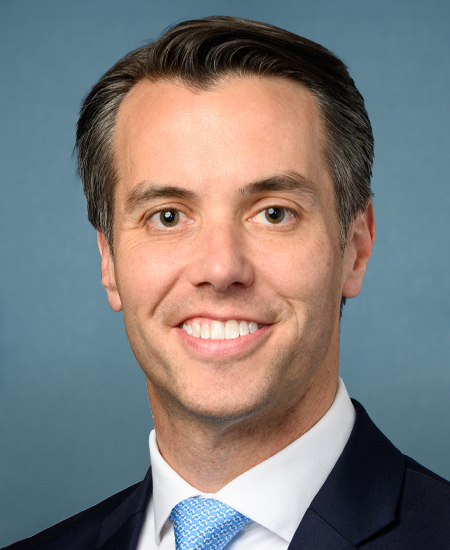
Morgan McGarvey
81% support rate
Top opponent
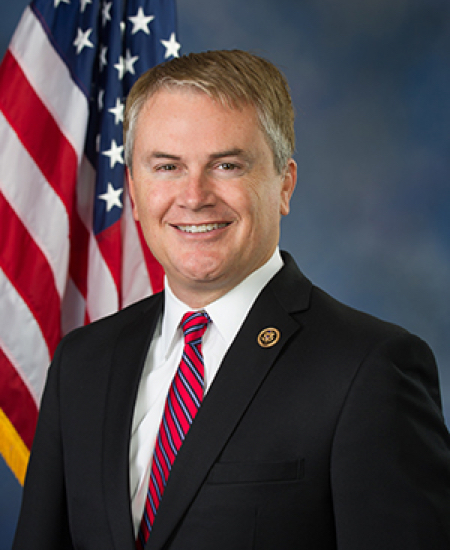
James Comer
17% support rate
Ranked legislators
8
3 support · 5 oppose
Key legislators

Who's moving immigration in Kentucky

Legislators moving immigration in Kentucky
Legislator Party Stance Support rate Votes
Morgan McGarvey
Morgan McGarvey House · District 3
D
Strong +
81% 149
Mitch McConnell
Mitch McConnell Senate
R
Support
77% 166
Rand Paul
Rand Paul Senate
R
Support
75% 172
James Comer
James Comer House · District 1
R
Strong −
17% 145
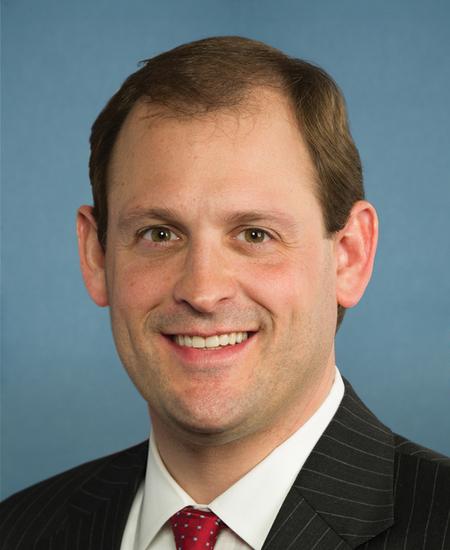
Andy Barr
Andy Barr House · District 6
R
Strong −
19% 141
Thomas Massie
Thomas Massie House · District 4
R
Strong −
19% 145
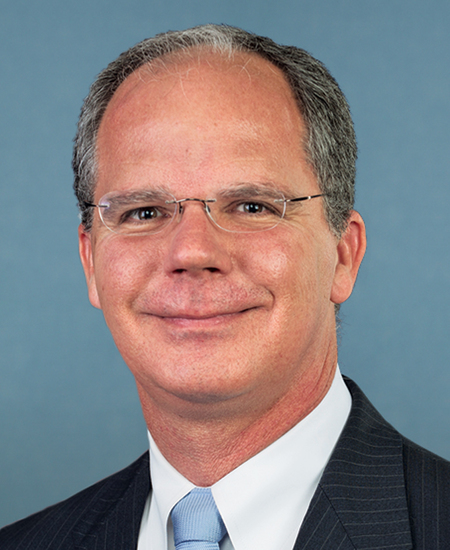
Brett Guthrie
Brett Guthrie House · District 2
R
Strong −
19% 149
Harold Rogers
Harold Rogers House · District 5
R
Strong −
19% 144
Showing 1–10 of 31 bills

All immigration bills

passed · United States · House Sep 1, 2026

HRES 1490: Providing for the condemnation and denouncement of socialism in all its forms, and for other purposes.

This resolution states that the House of Representatives condemns and denounces socialism in all its forms, including the Democratic Socialists of America, and opposes the implementation of socialist policies in the United States; reaffirms its support for free, fair, and secure elections and calls for enactment of the SAVE America Act; reiterates that American elections are for American citizens only; and recommits itself to upholding the U.S. Constitution.
in committee · United States · House Sep 2, 2026

HR 10222: No HUD Funding for Sanctuary Cities Act

This bill would prohibit any state or local government designated as a "sanctuary jurisdiction" from receiving grant funds distributed by the Department of Housing and Urban Development (HUD). A jurisdiction is defined as a sanctuary if it has laws, policies, or practices that restrict officials from sharing information about an individual's immigration status or from complying with federal requests to detain or notify about the release of individuals. The funding restriction would apply to grants distributed 180 days after the bill's enactment. To determine which jurisdictions qualify for this ineligibility, the HUD Secretary is required to consult with the Secretary of Homeland Security.
in committee · United States · Senate Apr 29, 2026

SJRES 189: A joint resolution proposing an amendment to the Constitution of the United States to protect United States citizenship.

This joint resolution proposes a new amendment to the U.S. Constitution to clarify who qualifies as a citizen at birth. It would restrict automatic citizenship to children born in the United States only if at least one parent is a U.S. citizen, a lawful permanent resident, or an alien with lawful status serving in the military. The bill aims to limit the scope of the 14th Amendment's citizenship clause and explicitly grants Congress the authority to pass laws enforcing these new requirements. If ratified, this change would alter the legal definition of birthright citizenship for children born to undocumented immigrants or other non-citizen parents.
in committee · United States · House Apr 14, 2026

HRES 1168: Recognizing U.S. Immigration and Customs Enforcement for their work in protecting communities from violent criminals and illegal aliens.

This resolution formally acknowledges the work of U.S. Immigration and Customs Enforcement (ICE) agents in protecting communities from violent criminals and illegal immigrants. It calls on state and local law enforcement to cooperate with federal partners in investigating threats against ICE officers and condemns violence directed at federal law enforcement personnel. The measure also thanks ICE agents for their expanded security roles at airports during a partial government shutdown. As a congressional resolution, it does not change laws or funding but serves as an official statement of support and condemnation of violence.
in committee · United States · House Mar 3, 2026

HR 7759: Afghanistan Vetting and Accountability Act of 2026

This bill requires the Department of Homeland Security to verify personal and biometric information and conduct in-person interviews for all individuals evacuated from Afghanistan between January 20, 2021, and January 20, 2022, excluding U.S. citizens and military members. It mandates the creation of a database tracking these individuals' vetting status, criminal records, and receipt of unemployment compensation or federal benefits. Afghan evacuees who do not provide the required information or complete the in-person vetting process would be ineligible to receive unemployment compensation or other federal means-tested public benefits. The bill also requires quarterly reports to Congress on compliance and independent audits by the Government Accountability Office to verify implementation.
in committee · United States · House Mar 4, 2026

HR 7758: The Dalilah Law

This bill, known as the Dalilah Law, would restrict commercial driver's licenses to U.S. citizens, lawful permanent residents, and holders of specific work visas. It requires states to verify the citizenship or visa status of all CDL applicants and renewals within 180 days of enactment, while also mandating English language proficiency testing for all license holders. States that fail to enforce these requirements or issue licenses to ineligible individuals risk losing federal transportation funding. The law also imposes lifetime disqualifications for operating commercial vehicles without proper immigration status.
in committee · United States · House Jan 3, 2025

HR 163: Finish the Wall Act

HR 163, the "Finish the Wall Act," mandates the immediate resumption of border wall construction along the U.S.-Mexico border within 24 hours of enactment. It requires the Department of Homeland Security to use all existing funds appropriated since 2016 for this purpose, prohibits canceling pre-January 2021 contracts, and sets a deadline of September 30, 2026, to complete the wall system. The bill directly affects the Department of Homeland Security, contractors with prior wall contracts, and border facilities, which must also comply with DNA collection requirements under federal law. It focuses on concrete policy actions - resuming construction, using existing funds, and meeting a specific timeline - without addressing broader policy impacts.
in committee · United States · House Jan 21, 2025

HR 569: Birthright Citizenship Act of 2025

Birthright Citizenship Act of 2025 This bill limits birthright citizenship by redefining what it means to be subject to the jurisdiction of the United States. Currently, a person born in the United States and subject to U.S. jurisdiction is entitled to citizenship. Under the bill, a person is subject to U.S. jurisdiction if he or she is born to a parent who is (1) a U.S. citizen or national, (2) a lawful permanent resident residing in the United States, or (3) a non-U.S. national ( alien under federal law) with a lawful immigration status who is performing active service in the Armed Forces. The bill does not affect the citizenship or nationality status of any person born before the bill's enactment date.
in committee · United States · House Mar 25, 2025

HR 2315: Fairness for High-Skilled Americans Act of 2025

Fairness for High-Skilled Americans Act of 2025 This bill eliminates the Optional Practical Training Program or any successor program, unless Congress expressly authorizes such a program. (The program provides an F-1 student visa holder temporary employment authorization before or after completion of the student's studies, or both.)
Sub-Topics Work Authorization
in committee · United States · House Jan 9, 2025

HR 251: Legal Workforce Act

Legal Workforce Act This bill directs the Department of Homeland Security (DHS) to create an electronic employment eligibility confirmation system modeled after and to replace the E-Verify system, which allows employers and recruiters to verify the immigration status of individuals. The bill also mandates the use of such a system, where currently only some employers, such as those with federal contracts, are required to use E-Verify. The bill specifies documents that can establish an individual's identity and employment authorization. During the period starting when a job offer is made until three business days after hiring, the individual must attest to his or her employment authorization, and the employer or recruiter must attest that it has examined the individual's required documents. Employers shall reverify certain types of employees who were not previously verified using E-Verify. The Social Security Administration shall notify employees if their Social Security number has been used multiple times in an unusual manner. DHS shall establish programs for blocking and suspending misused numbers. Employers that are required to use the verification system shall not be liable for any employment-related action based on a good-faith reliance on the system. The bill establishes a phased-in participation deadline for different sizes and categories of employers, including agricultural employers. The bill increases civil penalties related to hiring individuals without work authorization. It also preempts state laws relating to hiring and employment eligibility verification, but states may use their authority of business licensing to penalize employers for failing to comply with the bill's provisions.
Sub-Topics Work Authorization
Showing 1 to 10 of 31 bills
1 2 3 4 Next