Issue · Healthcare

Healthcare (Prescription Drugs)

Every healthcare bill, vote, and legislator stance in Kansas, automatically classified by Maddy, our AI policy reader.

Total bills
20
2025-2026 Regular Session
Top supporter
Bill Clifford
100% support rate
Top opponent
Silas Miller
33% support rate
Ranked legislators
10
5 support · 5 oppose
Key legislators

Who's moving prescription drugs in Kansas

Legislators moving prescription drugs in Kansas
Legislator Party Stance Support rate Decisive votes
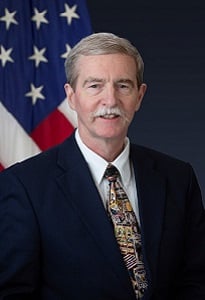
Bill Clifford
Bill Clifford Senate · District 39
R
Strong +
100% 7
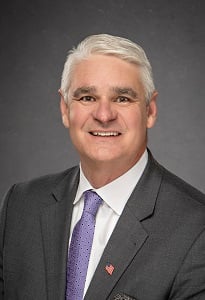
Craig Bowser
Craig Bowser Senate · District 1
R
Strong +
100% 7
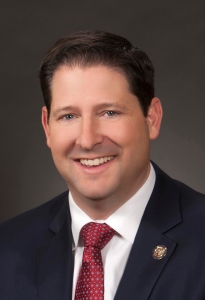
Elaine Bowers
Elaine Bowers Senate · District 36
R
Strong +
100% 7
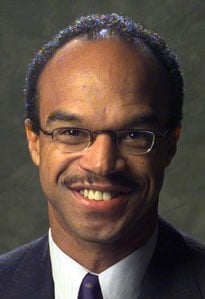
Ron Ryckman
Ron Ryckman Senate · District 38
R
Strong +
100% 7
Rick Billinger
Rick Billinger Senate · District 40
R
Strong +
100% 6
Silas Miller
Silas Miller Senate · District 25
D
Oppose
33% 6
Cindy Holscher
Cindy Holscher Senate · District 8
D
Mixed −
43% 7
David Haley
David Haley Senate · District 4
D
Mixed −
43% 7
Dinah Sykes
Dinah Sykes Senate · District 21
D
Mixed −
43% 7
Ethan Corson
Ethan Corson Senate · District 7
D
Mixed −
43% 7
Showing 11–20 of 20 bills

All healthcare bills

vetoed · Kansas · House Apr 10, 2026

HB 2587: Authorizing a licensed private psychiatric hospital to maintain a stock supply of emergency medication kits for pharmaceutical emergencies.

HB 2587 allows state-licensed private psychiatric hospitals in Kansas to maintain approved emergency medication kits for immediate patient use during pharmaceutical emergencies. These kits, stocked under pharmacist supervision, can include controlled substances but require specific committee approval for types and quantities. Hospitals must follow strict protocols for kit access, administration, and recordkeeping, with pharmacists-in-charge responsible for oversight. The bill directly affects private psychiatric hospitals and their pharmacy staff, ensuring rapid access to critical medications when standard supplies are unavailable.
died · Kansas · House Apr 10, 2026

HB 2551: Enacting the Kansas pharmacy services administrative organization act.

HB 2551 creates a licensing and regulatory framework for pharmacy services administrative organizations (PSAOs) in Kansas. These are entities that help independent pharmacies negotiate contracts with insurance companies and pharmacy benefits managers (PBMs), requiring them to obtain a license from the Kansas Department of Insurance ($200 application fee, $150 annual renewal). The bill mandates PSAOs to disclose ownership details (including ties to drug manufacturers or PBMs) to both the state and pharmacies/PBMs before contracts are signed, prohibits requiring pharmacies to buy specific drugs to access discounts, and requires sharing contract terms and reimbursement rates with pharmacies within 10 days. This directly affects independent pharmacies, PBMs, and PSAOs by increasing transparency and standardizing their business relationships.
Sub-Topics Prescription Drugs
died · Kansas · House Apr 10, 2026

HB 2550: Requiring certain 340B entities to report annually to the Kansas department of insurance on certain costs, savings and payments made under the federal 340B drug pricing program.

HB 2550 requires Kansas hospitals participating in the federal 340B drug pricing program to submit annual reports starting January 1, 2027, to the Kansas Department of Insurance. The reports must detail how hospitals use 340B savings for community services, compare drug acquisition costs under 340B to other pricing sources, and provide specific financial data on drug expenditures, payments to pharmacies, and program administration. The Department of Insurance must publish these reports publicly on its website. This bill applies directly to Kansas hospitals designated as 340B entities under federal law, aiming to increase transparency around how these savings are utilized.
Sub-Topics Prescription Drugs
died · Kansas · House Apr 10, 2026

HB 2100: Establishing statewide standards governing the use of HIV post-exposure prophylaxis, permitting a pharmacist to initiate such medication to certain patients, providing civil liability protections to pharmacists who initiate prophylactic therapy to patients for post-exposure to human immunodeficiency virus.

HB 2100 allows pharmacists in Kansas to initiate HIV post-exposure prophylaxis (PEP) medication for patients who believe they've been exposed to HIV, directly affecting pharmacists and those at risk of HIV exposure. The bill requires the state board of pharmacy to create a statewide protocol mandating proper patient education on PEP use, safe administration, and follow-up care with a doctor, alongside accurate recordkeeping. Pharmacists acting in good faith under this protocol are protected from civil lawsuits, criminal charges, or professional discipline related to initiating PEP. The protocol must be established by January 1, 2026, to ensure timely access to HIV prevention medication outside of traditional medical settings.
Sub-Topics Prescription Drugs
died · Kansas · House Apr 10, 2026

HB 2364: Prohibiting certain health insurers from requiring cost-sharing for nonopioid prescription drugs or providing less favorable coverage for such drug than that for opioid or narcotic prescription drugs for the treatment of pain.

HB 2364 requires health insurers (including Medicaid, CHIP, and state employee plans) to provide equal coverage for FDA-approved nonopioid pain medications as for opioid or narcotic drugs. Specifically, insurers cannot deny coverage for nonopioid drugs in favor of opioids, force patients to try opioids first, or impose higher out-of-pocket costs (like copays or stricter prior authorization) on nonopioid drugs compared to opioids. The bill ensures nonopioid pain medications are not disadvantaged in formulary tiers or coverage rules. It directly affects patients prescribed nonopioid pain treatments and insurers managing drug coverage. The law takes effect upon publication in the statute book.
died · Kansas · House Apr 10, 2026

HB 2244: Modifying the composition of the board of pharmacy and prohibiting the board of pharmacy from adopting rules and regulations that would limit or condition the use of telepharmacy.

HB 2244 modifies Kansas' pharmacy board composition and prohibits the board from restricting telepharmacy use. It requires the board to include three pharmacist types (community, chain pharmacy, specialty/mail-order) plus a public member, and explicitly bans rules limiting telepharmacy based on population, distance from physical pharmacies, or network adequacy. The bill defines telepharmacy as remote pharmacist services using technology for real-time patient care and counseling at registered locations. These changes directly affect pharmacists, telepharmacy providers, and patients seeking remote pharmacy services across Kansas.
Sub-Topics Prescription Drugs
died · Kansas · House Apr 10, 2026

HB 2369: Allowing pharmacists to administer certain vaccines to children and adults pursuant to a vaccination protocol.

HB 2369 allows Kansas pharmacists to administer certain vaccines to patients aged seven or older (or as recommended by the CDC) under a vaccination protocol. This applies to vaccines approved by the U.S. Food and Drug Administration (FDA), excluding specific vaccines like cholera, rabies, smallpox, and any vaccine approved after January 1, 2023. The bill expands pharmacists' scope of practice for routine vaccinations without requiring physician orders for eligible vaccines. It replaces the previous pharmacy act provision with these updated rules, effective upon publication.
died · Kansas · Senate Apr 10, 2026

SB 212: Enacting the prescription drug cost and affordability review act to establish the prescription drug pricing board and prescription drug affordability stakeholder council to review the cost of prescription medications and establish upper payment limits for certain prescription drugs.

SB 212 establishes a Prescription Drug Affordability Board within Kansas' Insurance Department and a Prescription Drug Affordability Stakeholder Council. The Board will review prescription drug costs and set upper payment limits for certain brand name, generic, biologic, and biosimilar drugs using the Consumer Price Index as a benchmark. The Council, with 21 members representing manufacturers, pharmacies, insurers, employers, and the public, will advise the Board on pricing. This bill directly affects drug manufacturers, health insurers, pharmacies, and patients by creating a formal process to cap prices for specific prescription medications.
Sub-Topics Prescription Drugs
died · Kansas · House Apr 10, 2026

HB 2081: Substitute for HB 2081 by Committee on Taxation - Providing a sales tax exemption for community pharmacies serving medically underserved individuals and families.

This bill would exempt community pharmacies serving medically underserved areas from paying sales tax on their business purchases. It directly affects local pharmacies in communities with limited healthcare access, including those providing services to low-income or rural residents. The key provision removes sales tax for pharmacy purchases used to serve medically underserved patients, reducing operating costs for these providers. This policy change applies specifically to pharmacies meeting the "medically underserved" criteria defined in the bill. The exemption modifies Kansas' existing tax code to include these pharmacies under the sales tax exemption list.
died · Kansas · Senate Apr 10, 2026

SB 284: Enacting the defense of drug delivery act to prohibit manufacturer interference relating to 340B drug distribution.

SB 284, the "Defense of Drug Delivery Act," prohibits drug manufacturers from restricting how 340B drugs are distributed to covered healthcare entities (like hospitals and clinics participating in the federal 340B drug pricing program). It specifically bans manufacturers from denying, limiting, or discriminating against the delivery of 340B drugs to these entities unless prohibited by federal law or state law. The bill also prevents manufacturers from requiring covered entities to share health information, claims data, or purchasing details unless voluntarily provided or legally mandated. This directly affects covered entities by ensuring they can access discounted drugs without manufacturer-imposed barriers.
Sub-Topics Prescription Drugs
Showing 11 to 20 of 20 bills