Issue · Budget & Taxes

Budget & Taxes (Business Taxes)

Every budget & taxes bill, vote, and legislator stance in Kansas, automatically classified by Maddy, our AI policy reader.

Total bills
14
2025-2026 Regular Session
Top supporter
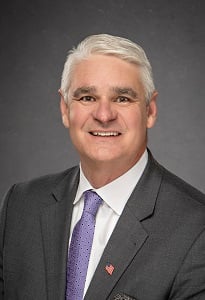
Brad Starnes
100% support rate
Top opponent
Barbara Ballard
0% support rate
Ranked legislators
10
5 support · 5 oppose
Key legislators

Who's moving business taxes in Kansas

Legislators moving business taxes in Kansas
Legislator Party Stance Support rate Decisive votes
Brad Starnes
Brad Starnes Senate · District 22
R
Strong +
100% 5
Chase Blasi
Chase Blasi Senate · District 26
R
Strong +
100% 5
Craig Bowser
Craig Bowser Senate · District 1
R
Strong +
100% 5
Jeff Klemp
Jeff Klemp Senate · District 5
R
Strong +
100% 5
Kellie Warren
Kellie Warren Senate · District 11
R
Strong +
100% 5
Barbara Ballard
Barbara Ballard House · District 44
D
Strong −
0% 7
Brandon Woodard
Brandon Woodard House · District 108
D
Strong −
0% 7
Cindy Neighbor
Cindy Neighbor House · District 18
D
Strong −
0% 7
Jerry Stogsdill
Jerry Stogsdill House · District 21
D
Strong −
0% 7
Jo Ella Hoye
Jo Ella Hoye House · District 17
D
Strong −
0% 7
Showing 11–14 of 14 bills

All budget & taxes bills

died · Kansas · Senate Apr 10, 2026

SB 26: Providing a sales tax exemption for certain purchases by bowling centers.

SB 26 would exempt specific purchases made by bowling centers in Kansas from the state's sales tax. This means bowling centers would not pay sales tax on qualifying items they buy for their operations, such as equipment or supplies. The bill amends Kansas' sales tax law (K.S.A. 2024 Supp. 79-3606) to add bowling centers to the list of businesses eligible for this exemption. This change directly affects bowling centers by lowering their operating costs for qualifying purchases.
died · Kansas · Senate Apr 10, 2026

SB 280: Requiring the approval by a majority of electors voting at an election in order for the governing body of any taxing entity to increase its total amount of property tax to be levied by more than the annual rate of inflation.

SB 280 requires local taxing entities (like cities, counties, or school districts) to obtain majority voter approval via a special election before raising total property taxes by more than the annual inflation rate, as measured by the U.S. Bureau of Labor Statistics' consumer price index. It excludes new construction taxes from the calculation of the tax levy limit and does not apply to certain statutorily fixed mill rates. The law takes effect January 1, 2026, mandating voter consent for tax increases beyond inflation for all other property tax levies. This directly affects local governments seeking to raise revenue above inflation and property owners whose taxes could be impacted by such increases.
died · Kansas · Senate Apr 10, 2026

SB 32: Reducing insurance company premium tax rates and discontinuing remittance and crediting of a portion of the premium tax to the insurance department service regulation fund.

SB 32 reduces insurance company premium tax rates in Kansas and stops the practice of sending 1% of those taxes to the insurance department's service regulation fund. Instead, it requires insurance companies to pay annual assessments based on their total assets (with a $500 minimum and $25,000 maximum per company) to fund the department's regulatory activities. This directly affects all insurance companies licensed to operate in Kansas, shifting their primary funding obligation from tax remittances to these asset-based assessments. The bill amends Kansas statutes 40-112 and 40-252 to implement these changes, effective January 1, 2026.
Sub-Topics Business Taxes
died · Kansas · House Apr 10, 2026

HB 2406: Providing tax exemption eligibility for telecommunication, railroad, commercial and industrial machinery and equipment that is currently ineligible for tax exemption due to such equipment being acquired or transported into this state on or before June 30, 2006.

HB 2406 expands tax exemption eligibility in Kansas for commercial and industrial machinery and equipment that was previously ineligible because it was acquired or transported into the state on or before June 30, 2006. The bill amends property tax law to allow tax exemptions for such equipment if acquired or transported after that date for business expansion or new business creation. It specifically targets equipment classified under Kansas property tax rules (subclass 5 of class 2) but excludes electric generation facilities using renewable energy. This change directly affects Kansas businesses that acquired machinery before 2006 but now qualify for exemption under the updated rules.
Showing 11 to 14 of 14 bills