Issue · Education

Education (Higher Education)

Every education bill, vote, and legislator stance in Iowa, automatically classified by Maddy, our AI policy reader.

Total bills
95
2025-2026 Regular Session
Top supporter
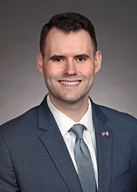
Zach Wahls
83% support rate
Top opponent
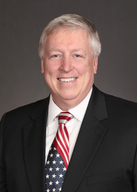
Dan Dawson
31% support rate
Ranked legislators
10
5 support · 5 oppose
Key legislators

Who's moving higher education in Iowa

Legislators moving higher education in Iowa
Legislator Party Stance Support rate Votes
Zach Wahls
Zach Wahls Senate · District 43
D
Strong +
83% 6
Matt Blake
Matt Blake Senate · District 22
D
Support
73% 15
Izaah Knox
Izaah Knox Senate · District 17
D
Support
69% 16
Jon Dunwell
Jon Dunwell House · District 38
R
Support
67% 18
Craig Williams
Craig Williams House · District 11
R
Support
67% 15
Dan Dawson
Dan Dawson Senate · District 10
R
Oppose
31% 13
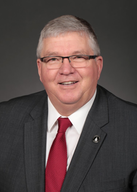
Dan Zumbach
Dan Zumbach Senate · District 34
R
Oppose
31% 13
Annette Sweeney
Annette Sweeney Senate · District 27
R
Oppose
33% 15
Cherielynn Westrich
Cherielynn Westrich Senate · District 13
R
Oppose
33% 15
Doug Campbell
Doug Campbell Senate · District 30
R
Oppose
33% 15
Showing 61–70 of 95 bills

All education bills

in committee · Iowa · Senate Jan 28, 2026

SSB 3027: A bill for an act relating to the definition of qualified education expenses.

This bill updates Iowa's definition of "qualified education expenses" for its educational savings plans to align with current federal Internal Revenue Code standards. It specifically includes elementary and secondary school tuition (under IRS section 529(c)(7)), apprenticeship program costs, and qualified education loan payments for beneficiaries or their siblings. The change directly affects Iowans using state savings plans for education expenses, ensuring eligibility matches federal guidelines. The bill is procedural, simplifying Iowa's legal reference without altering policy benefits or creating new requirements.
in committee · Iowa · House Feb 9, 2026

HSB 543: A bill for an act relating to general education requirements, core curricula, other functions of regents institutions, and including applicability provisions.

This bill requires Iowa regents institutions to mandate that all undergraduate students complete introductory survey courses in American history and American government, each worth at least three semester hours of credit. These courses must fulfill general education requirements in social sciences or humanities and cannot focus exclusively on subgroups of Americans. The requirement applies to students starting at these institutions in academic years beginning July 1, 2028, and excludes students in designated three-year degree programs. The centers for civic education at Iowa’s three regents universities must annually designate qualifying courses to meet this standard.
in committee · Iowa · Senate Feb 4, 2026

SSB 3043: A bill for an act requiring the board of educational examiners to establish additional endorsements for instruction related to fine arts, mathematics, and science.

This bill requires Iowa's Board of Educational Examiners to create new teaching certifications (endorsements) for teachers specializing in fine arts, mathematics, and science - subjects identified as high-need areas. To qualify for these endorsements, applicants must hold a bachelor's degree from an accredited college or university. These new certifications will expire on July 1, 2030, meaning the requirement is temporary. The policy directly affects educators seeking to teach in these specific subject areas within Iowa's K-12 schools.
in committee · Iowa · House Jan 22, 2026

HSB 550: A bill for an act providing for accreditation of regents institutions by the commission for public higher education.

This bill requires Iowa's public universities (governed by the Board of Regents) to apply for and qualify for accreditation through the Commission for Public Higher Education. It directs the Board of Regents to ensure each institution takes all necessary steps to meet accreditation standards. The policy change mandates that these institutions formally seek accreditation rather than relying on existing processes. This affects all public universities in Iowa under the Board of Regents, such as the University of Iowa and Iowa State University. The bill focuses on establishing a formal accreditation pathway for these institutions.
Sub-Topics Higher Education
in committee · Iowa · Senate Feb 4, 2026

SSB 3049: A bill for an act relating to career education, including by modifying provisions related to career academies, the collective statewide articulation agreement between community colleges and the state board of regents, the district-to-community college sharing or concurrent enrollment program, and individual career and academic plans.

This bill (SSB 3049) updates Iowa's career education framework to better align high school programs with workforce needs. It requires the state workforce board to create a statewide list of high-demand jobs, while allowing community colleges to add up to five regional high-demand job listings for local program planning. The bill modifies career academy requirements to ensure they include articulated postsecondary coursework, improves credit transfer between community colleges and four-year institutions for career programs, and expands funding for high school students (grades 9-12) to take college-level classes through concurrent enrollment. These changes directly affect high school students, community colleges, school districts, and the state workforce development board by strengthening career pathways and college credit access.
in committee · Iowa · House Feb 9, 2026

HSB 549: A bill for an act relating to tuition charged to resident undergraduate students enrolled at regents institutions.

HB 549 requires Iowa's public universities to set a policy where tuition for in-state undergraduate students remains fixed after their first year of enrollment, starting with students beginning in 2027 or later. This means a resident student's tuition won't rise in their second, third, or fourth year (up to three consecutive years total), unless they transfer credits allowing them to graduate faster. The policy does not apply to students who start after their first year or beyond the three-year window. It directly affects undergraduate students enrolled at Iowa's regents universities who are classified as state residents.
introduced · Iowa · Legislature

5497XD: Concurrent Enrollment and Career and Academic Planning (5497XD) - Education, Department of

This bill establishes a statewide list of high-demand jobs to guide workforce programs like apprenticeships and scholarships, while allowing community colleges to identify up to five regional high-demand jobs for local career planning. It updates career academy requirements to ensure they are career-focused, include articulated postsecondary pathways, and require director approval. The bill also adjusts school funding weights for high school students taking community college courses (with higher weighting for career/technical courses) and mandates community colleges to create statewide agreements for seamless transfer of career-technical credits to four-year universities without arbitrary limits. These changes directly affect high school students, community colleges, school districts, and career academies across Iowa.
in committee · Iowa · House Feb 6, 2025

HF 264: A bill for an act providing for temporary abrogation of authority of the state board of regents over regents institutions based on the amount of appropriations to the institutions from the general fund of the state.

HF 264 requires Iowa's State Board of Regents to annually review whether general fund appropriations to the University of Iowa, Iowa State University, and the University of Northern Iowa meet or exceed 52% of their combined projected operating costs by August 1 each year. If appropriations fall below this threshold, the Board temporarily loses all authority over these institutions for the rest of that fiscal year, and each university gains direct control over management, budgets, programs, and operations as if the Board had no authority. The Board regains full authority on July 1 of the following year. This bill directly affects the three public universities and shifts operational control based solely on funding levels relative to projected costs.
died · Iowa · House Apr 28, 2025

HF 772: A bill for an act providing for an annual authorization fee to be collected by the college student aid commission from certain postsecondary educational institutions not subject to registration with the commission.

HF 772 requires the college student aid commission to collect a new annual authorization fee from certain postsecondary educational institutions. This fee applies to educational entities that are either exempt from standard registration with the commission or those offering educational courses in Iowa, and who do not already pay a registration fee. The bill sets the annual fee at $2,000 for institutions with a primary location in Iowa and $3,500 for those located outside of Iowa, beginning July 1, 2025. The commission is authorized to increase these fees annually by up to three percent.
Sub-Topics Higher Education
in committee · Iowa · House Jan 30, 2025

HSB 6: A bill for an act relating to in-state residency for purposes of undergraduate tuition and mandatory fees at regents institutions and community colleges for certain military personnel and family members.

This bill expands Iowa's in-state tuition residency rules to include more military-connected students. It allows qualified military personnel (including those stationed in Iowa or at Rock Island Arsenal), their spouses, dependent children, and survivors (spouses/children of deceased veterans) to be classified as Iowa residents for undergraduate tuition and fees at public colleges and universities. To qualify, military members must be stationed in Iowa or have filed an Iowa tax return recently, while survivors must be the spouse or child of a veteran meeting specific federal benefit criteria. The bill clarifies that dependents remain eligible if they maintain continuous enrollment during military relocations. It directly affects active-duty service members, veterans, and their families enrolled in Iowa's public higher education institutions.
Showing 61 to 70 of 95 bills
Previous 1 6 7 8 10 Next