Issue · Education

Education (Higher Education)

Every education bill, vote, and legislator stance in Iowa, automatically classified by Maddy, our AI policy reader.

Total bills
114
2025-2026 Regular Session
Top supporter
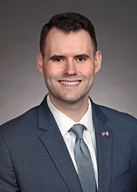
Zach Wahls
83% support rate
Top opponent
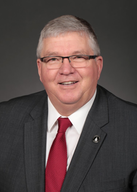
Dan Dawson
31% support rate
Ranked legislators
10
5 support · 5 oppose
Key legislators

Who's moving higher education in Iowa

Legislators moving higher education in Iowa
Legislator Party Stance Support rate Votes
Zach Wahls
Zach Wahls Senate · District 43
D
Strong +
83% 6
Matt Blake
Matt Blake Senate · District 22
D
Support
73% 15
Izaah Knox
Izaah Knox Senate · District 17
D
Support
69% 16
Jon Dunwell
Jon Dunwell House · District 38
R
Support
67% 18
Craig Williams
Craig Williams House · District 11
R
Support
67% 15
Dan Dawson
Dan Dawson Senate · District 10
R
Oppose
31% 13
Dan Zumbach
Dan Zumbach Senate · District 34
R
Oppose
31% 13
Annette Sweeney
Annette Sweeney Senate · District 27
R
Oppose
33% 15
Cherielynn Westrich
Cherielynn Westrich Senate · District 13
R
Oppose
33% 15
Doug Campbell
Doug Campbell Senate · District 30
R
Oppose
33% 15
Showing 31–40 of 114 bills

All education bills

in committee · Iowa · Senate Feb 12, 2026

SF 2176: A bill for an act relating to the district-to-community college sharing or concurrent enrollment program.

This bill requires students (or their parents/guardians if the student is a minor) to reimburse school districts if they fail a community college course taken through the district-to-community college concurrent enrollment program. Specifically, if a student fails a class offered by a community college or taught by a community college instructor, the school district can request payment equal to the amount it paid the college for that student's participation. The reimbursement applies only to the district's direct costs for that specific course, not to the student's regular tuition or fees. This policy directly affects high school students in Iowa's concurrent enrollment programs who fail a college-level course.
in committee · Iowa · Senate Mar 19, 2026

SF 2227: A bill for an act relating to tuition charged to resident undergraduate students enrolled at regents institutions.

SF 2227 requires Iowa's public universities to freeze tuition for resident undergraduate students in their first academic year (starting in 2027) for up to three consecutive subsequent years. This applies to students who begin their first year of enrollment at a regents institution in 2027 or later. The bill does not apply to students who transfer credits allowing them to graduate in less than four years, and the freeze only covers the first three years after initial enrollment. It directly affects new resident undergraduate students at Iowa's public universities beginning in 2027 or later.
Sub-Topics Higher Education
passed · Iowa · House Mar 16, 2026

HF 2488: A bill for an act prohibiting private institutions of higher education that participate in the Iowa tuition grant program from establishing diversity, equity, and inclusion offices.

HF 2488 prohibits private colleges in Iowa that receive Iowa Tuition Grants from establishing or maintaining Diversity, Equity, and Inclusion (DEI) offices. The bill defines a DEI office as any unit creating or promoting policies related to race, ethnicity, gender, or sexual orientation, but excludes legal compliance offices, academic departments, student recruitment, and student organizations. Private institutions violating this could lose eligibility for the tuition grant program starting the next academic year. The law allows institutions to report disputes to the attorney general, who can suspend grant access if violations aren't resolved within 30 days.
Sub-Topics Higher Education
in committee · Iowa · Senate Mar 12, 2026

SF 2302: A bill for an act providing for career development information for students newly enrolling in institutions of higher education and including applicability provisions.

SF 2302 requires Iowa institutions of higher education to schedule a career development meeting for each new undergraduate student within their first year. During this meeting, institutions must review the student's interests, career paths aligned with their major (or potential majors), and provide specific job market data including local job availability, pay ranges, and high-demand occupations for the prior five years. The bill mandates that institutions also provide students with resources for resumes, networking, and employment opportunities during or before the meeting. This applies to first-time students enrolling at participating institutions (state-regulated or certain private schools with Iowa tuition grants) on or after July 1, 2026.
Sub-Topics Higher Education
in committee · Iowa · House Feb 19, 2026

HSB 675: A bill for an act relating to education programs and systems, including career and technical education expenditures and definitions, statewide lower division general education framework and common course numbering systems, and the implementation of a statewide corequisite model in Iowa community colleges.

This Iowa bill (HSB 675) establishes new standards for career and technical education (CTE) in K-12 schools and creates statewide transfer systems for community colleges. It requires schools to offer computer science instruction starting in 2023, mandate six specific CTE content areas (like health sciences and business), and define "high-demand" occupations to guide career planning. For community colleges, it implements a common course numbering system to simplify transfers and requires replacing remedial math/English with corequisite models by 2028-2029. The bill directly affects Iowa public schools, community colleges, and students pursuing CTE pathways or college transfers.
in committee · Iowa · Senate Feb 12, 2026

SF 2170: A bill for an act modifying provisions related to the district-to-community college sharing or concurrent enrollment program.

This bill (SF 2170) modifies Iowa's concurrent enrollment program, which allows high school students (grades 9-12) to take college courses at community colleges. Its key change requires students to enroll in in-person course sections at community colleges unless a school superintendent specifically authorizes online enrollment. The bill also maintains requirements for school districts to approve courses for academic rigor, provide written notices about course details to students and parents, and ensure comparable courses aren’t already offered locally. These changes aim to standardize enrollment procedures while preserving the program’s goal of offering rigorous academic options. The bill does not alter funding or eligibility but clarifies operational rules for the existing program.
signed · Iowa · House Apr 30, 2026

HF 2539: A bill for an act repealing certain programs and other matters relating to higher education.

HF 2539 repeals multiple existing higher education programs and administrative requirements in Iowa. It specifically eliminates the Regent’s Minority and Women Educators Enhancement Program, the College Bound program, laboratory schools, and related reporting obligations. The bill also modifies a reporting requirement for the college student aid commission regarding program implementation. These changes remove specific state-funded initiatives and streamline administrative processes for institutions governed by the state board of regents.
Sub-Topics Higher Education
in committee · Iowa · Senate Feb 25, 2026

SF 2223: A bill for an act relating to career education, including by modifying provisions related to career academies, the collective statewide articulation agreement between community colleges and the state board of regents, the district-to-community college sharing or concurrent enrollment program, and individual career and academic plans.

SF 2223 modifies Iowa's career education system to better align high school programs with workforce needs. It requires the workforce development board and community colleges to create statewide and regional lists of high-demand jobs, which will guide apprenticeships, scholarships, and summer programs. The bill updates credit transfer agreements between community colleges and four-year universities to prioritize seamless transfer of career and technical education credits. Additionally, it expands funding for high school students taking college-level classes at community colleges through concurrent enrollment programs.
vetoed · Iowa · Senate Jun 2, 2026

SF 2453: A bill for an act providing for investment by regents institutions in certified innovation funds and including effective date provisions.

This bill requires Iowa's three regents universities (University of Iowa, Iowa State University, and University of Northern Iowa) to invest at least 1% of their total endowment assets into state-certified innovation funds by July 1, 2027. The investment must be calculated using the average quarterly market value of endowment assets from the previous fiscal year, with institutions retaining discretion over which funds to support and how to structure investments. Annual reporting on investment amounts, fund names, and economic impact is required, while the state board of regents may grant one-year waivers for capacity or market reasons. Noncompliance could result in corrective action or withholding up to 0.5% of annual appropriations, all while maintaining fiduciary standards for endowment management.
Sub-Topics Higher Education
vetoed · Iowa · Senate Jun 2, 2026

SF 2299: A bill for an act relating to the district-to-community college sharing or concurrent enrollment program.

This bill requires students (or their parents/guardians if minors) to reimburse school districts for community college courses taken through concurrent enrollment programs if the student fails the course. Specifically, if a student fails a class offered by a community college or taught by its instructor, the school district can request payment equal to the amount it paid the college for that specific course. The policy applies to high school students enrolled in Iowa's district-to-community college sharing program, which allows them to earn college credits while in high school. This change modifies existing rules under Code section 261E.8 to shift the financial responsibility for failed courses back to the student or family.
Showing 31 to 40 of 114 bills
Previous 1 3 4 5 12 Next