Issue · Education

Education (Higher Education)

Every education bill, vote, and legislator stance in Iowa, automatically classified by Maddy, our AI policy reader.

Total bills
95
2025-2026 Regular Session
Top supporter
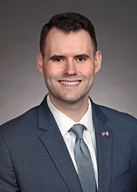
Zach Wahls
83% support rate
Top opponent
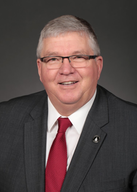
Dan Dawson
31% support rate
Ranked legislators
10
5 support · 5 oppose
Key legislators

Who's moving higher education in Iowa

Legislators moving higher education in Iowa
Legislator Party Stance Support rate Votes
Zach Wahls
Zach Wahls Senate · District 43
D
Strong +
83% 6
Matt Blake
Matt Blake Senate · District 22
D
Support
73% 15
Izaah Knox
Izaah Knox Senate · District 17
D
Support
69% 16
Jon Dunwell
Jon Dunwell House · District 38
R
Support
67% 18
Craig Williams
Craig Williams House · District 11
R
Support
67% 15
Dan Dawson
Dan Dawson Senate · District 10
R
Oppose
31% 13
Dan Zumbach
Dan Zumbach Senate · District 34
R
Oppose
31% 13
Annette Sweeney
Annette Sweeney Senate · District 27
R
Oppose
33% 15
Cherielynn Westrich
Cherielynn Westrich Senate · District 13
R
Oppose
33% 15
Doug Campbell
Doug Campbell Senate · District 30
R
Oppose
33% 15
Showing 31–40 of 95 bills

All education bills

vetoed · Iowa · Senate Jun 2, 2026

SF 2453: A bill for an act providing for investment by regents institutions in certified innovation funds and including effective date provisions.

This bill requires Iowa's three regents universities (University of Iowa, Iowa State University, and University of Northern Iowa) to invest at least 1% of their total endowment assets into state-certified innovation funds by July 1, 2027. The investment must be calculated using the average quarterly market value of endowment assets from the previous fiscal year, with institutions retaining discretion over which funds to support and how to structure investments. Annual reporting on investment amounts, fund names, and economic impact is required, while the state board of regents may grant one-year waivers for capacity or market reasons. Noncompliance could result in corrective action or withholding up to 0.5% of annual appropriations, all while maintaining fiduciary standards for endowment management.
Sub-Topics Higher Education
died · Iowa · Senate Mar 4, 2026

SF 2391: A bill for an act relating to education programs and systems, including career and technical education expenditures and definitions, statewide lower division general education framework and common course numbering systems, and the implementation of a statewide corequisite model in Iowa community colleges.

SF 2391 establishes new requirements for Iowa's career and technical education (CTE) programs and community college coursework. It mandates high schools to offer computer science aligned with state standards starting in 2023, requires students to complete sequential CTE coursework across four of six defined career areas (like health sciences or business), and defines "high-demand," "high-skill," and "high-wage" occupations to guide program development. For community colleges, the bill requires implementing a statewide common course numbering system by 2027 to improve transferability and replacing traditional remedial math/English courses with corequisite models by 2028-2029. These changes directly affect Iowa K-12 students, educators, school districts, and community colleges through updated curriculum standards and institutional practices.
in committee · Iowa · House Feb 24, 2026

HSB 677: A bill for an act requiring the board of educational examiners to establish additional endorsements for instruction related to fine arts, mathematics, science, and agriculture.

This bill requires Iowa's Board of Educational Examiners to create new teaching endorsements for high-need subjects: fine arts, mathematics, science, and agriculture. It mandates that applicants must hold a bachelor's degree from an accredited college to receive these endorsements. The new endorsements and requirements will expire on July 1, 2030, after which they will no longer apply. The bill directly affects educators seeking specialized teaching credentials in these subject areas.
Sub-Topics Higher Education
in committee · Iowa · House Jan 30, 2026

HSB 544: A bill for an act creating an endowment tax on the endowment value of certain Iowa colleges and universities, limited charges relating to certain endowment funds, making appropriations to workforce grant and incentive programs, and making appropriations to supplement tuition grants for high-wage and high-demand jobs.

This bill imposes a 15% annual tax on the endowment value exceeding $250 million for Iowa public universities (governed by the state board of regents) and accredited private colleges. The tax revenue from public institutions funds Iowa’s workforce grant incentive program, while private colleges’ tax revenue supports a new "high-wage and high-demand jobs" account within the tuition grants fund. This account supplements tuition grants for students enrolled in private colleges studying in fields identified as high-wage and high-demand by the workforce development board. The bill also limits management fees on endowments to 1% of endowment value annually.
in committee · Iowa · Senate Feb 9, 2026

SF 2033: A bill for an act relating to general education requirements, core curricula, other functions of regents institutions, and including applicability provisions.

SF 2033, the "Increasing Civic Proficiency in Higher Education Act," requires Iowa's regents universities (University of Iowa, Iowa State, and UNI) to mandate that all undergraduate students complete introductory survey courses in American history and American government. Each course must be worth at least three semester credits and fulfill social sciences or humanities requirements, while avoiding exclusive focus on specific subgroups. The requirement applies to students beginning enrollment in academic years starting July 1, 2028, and institutions must grant credit for equivalent prior coursework. Excluded are students in designated three-year degree programs, and the bill also directs university centers to designate qualifying courses and submit annual reports.
Sub-Topics Higher Education
in committee · Iowa · House Feb 16, 2026

HSB 548: A bill for an act directing regents institutions to sign the federal Compact for Academic Excellence in Higher Education and including effective date provisions.

This bill directs Iowa's three regents universities - University of Iowa, Iowa State University, and University of Northern Iowa - to sign the federal Compact for Academic Excellence in Higher Education by December 31, 2026. The institutions and their board of regents must take all necessary steps to complete this signature by the deadline. The bill takes immediate effect upon enactment and does not alter the terms of the federal compact itself.
Sub-Topics Higher Education
passed · Iowa · House Mar 18, 2026

HF 2250: A bill for an act authorizing resident students who are admitted to and in attendance in a comprehensive transition and postsecondary program to participate in the Iowa tuition grants program.

HF 2250 would allow Iowa residents with intellectual disabilities enrolled in approved comprehensive transition and postsecondary programs to receive state tuition grants. These programs, designed to prepare students for employment through academic and life skills training, must be approved by the U.S. Department of Education and offered by accredited private institutions, community colleges, or state universities. Eligible students could receive grants covering up to two semesters of tuition and fees per year for a maximum of eight semesters total. Payments would be made at the start of each semester by the educational institution, with refunds required if a student withdraws after receiving funds.
Sub-Topics Higher Education
in committee · Iowa · Senate Feb 23, 2026

SF 2095: A bill for an act relating to vaccination exemptions for certain students in clinical rotations and the qualification of postsecondary schools as eligible institutions for Iowa tuition grants.

SF 2095 requires Iowa postsecondary schools offering health-related degree programs (like nursing or medicine) to find clinical rotation placements where students can be exempt from vaccination rules during their training, upon student request. This applies specifically to students completing supervised health care training for academic credit. Schools failing to provide such exemptions lose eligibility to receive Iowa tuition grants for their students. The bill amends existing law to link school compliance with vaccination exemption placement to tuition grant eligibility.
in committee · Iowa · House Feb 16, 2026

HSB 610: A bill for an act relating to computer science education, including high school curricula and graduation requirements, practitioner preparation programs, and college admissions, and including applicability provisions.

Iowa's HSB 610 requires all public and accredited nonpublic high schools to include one semester of computer science as a graduation requirement for students graduating in the 2030-2031 school year and beyond. The bill mandates that computer science courses must cover fundamental concepts of evolving technologies and artificial intelligence - including how AI works, its societal impact, and ethical considerations - starting in the 2022-2023 school year for a half-unit requirement. The state must publish a list of approved computer science courses by June 2027 and create a plan to expand teacher capacity, especially for small schools (under 500 students in grades 9-12). This directly affects Iowa high school students, educators, and school districts implementing new graduation standards.
in committee · Iowa · House Jan 30, 2026

HF 2240: A bill for an act creating an endowment tax on the endowment value of certain Iowa colleges and universities, limiting charges relating to certain endowment funds, making appropriations to workforce grant and incentive programs, and making appropriations to supplement tuition grants for high-wage and high-demand jobs.

HF 2240, the "Tax the Endowments Act," imposes an annual tax of 7.1% on the endowment value exceeding $500 million held by Iowa public universities (governed by the state board of regents) and accredited private colleges. The tax revenue is directed to two specific programs: funds from public institutions support workforce grant programs, while funds from private institutions supplement tuition grants for students in high-wage, high-demand majors. The bill also limits institutions to charging no more than 5% on gift proceeds and 1% annual fees on endowment management. It directly affects large Iowa colleges with substantial endowments, redirecting tax revenue to workforce development and targeted student financial aid.
Showing 31 to 40 of 95 bills
Previous 1 3 4 5 10 Next