Issue · Criminal Justice

Criminal Justice (Courts)

Every criminal justice bill, vote, and legislator stance in Iowa, automatically classified by Maddy, our AI policy reader.

Total bills
54
2025-2026 Regular Session
Top supporter
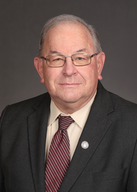
Doug Campbell
75% support rate
Top opponent
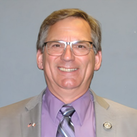
Dave Sires
25% support rate
Ranked legislators
10
5 support · 5 oppose
Key legislators

Who's moving courts in Iowa

Legislators moving courts in Iowa
Legislator Party Stance Support rate Votes
Doug Campbell
Doug Campbell Senate · District 30
R
Support
75% 4
Izaah Knox
Izaah Knox Senate · District 17
D
Support
67% 3
Jeff Taylor
Jeff Taylor Senate · District 2
R
Support
67% 3
Jeff Shipley
Jeff Shipley House · District 87
R
Support
60% 5
Tom Shipley
Tom Shipley Senate · District 9
R
Support
60% 5
Dave Sires
Dave Sires Senate · District 38
R
Oppose
25% 4
Mark Lofgren
Mark Lofgren Senate · District 48
R
Oppose
25% 4
Matt Blake
Matt Blake Senate · District 22
D
Oppose
33% 3
Mike Zimmer
Mike Zimmer Senate · District 35
D
Oppose
33% 3
Sarah Garriott
Sarah Garriott Senate · District 14
D
Oppose
33% 3
Showing 41–50 of 54 bills

All criminal justice bills

in committee · Iowa · Senate Feb 17, 2026

SSB 3089: A bill for an act relating to victim protections including victim counselors, protective orders, sex offender registration, rights of sexual abuse victims, mental competency and civil commitment, restitution, and victim rights.

This bill strengthens protections for crime victims in Iowa by expanding confidentiality for victim-counselor communications and updating key procedures. It requires victim counselors to complete specialized training (covering trauma, laws, and resources) and establishes strict rules preventing disclosure of counseling records, with limited exceptions for imminent danger or victim consent. The bill also allows courts to issue lifetime protective orders for sexual assault victims, eliminating the previous one-year limit and enabling victims to seek these orders without appearing in court. Additionally, it modifies sex offender registration requirements to mandate in-person updates within three business days for address, employment, or school changes.
in committee · Iowa · House Feb 12, 2026

HF 2037: A bill for an act requiring an initial appearance before a magistrate on new felony charges by a person on felony probation or parole.

This bill requires individuals on felony probation or parole who are arrested for new felony charges to have an initial court appearance before a magistrate prior to being released under pretrial guidelines or bond schedules. It directly affects people under supervision by Iowa's district department of correctional services who face new felony charges while on probation or parole. The key provision amends Iowa law to mandate this court appearance within 24 hours (or the next business day) after release, overriding current exceptions that allowed such individuals to be released without immediate court review. The bill does not change pretrial release guidelines but ensures judicial oversight for this specific group before they are released.
in committee · Iowa · Senate Mar 4, 2025

SF 362: A bill for an act relating to administrative investigations under the peace officer, public safety, and emergency personnel bill of rights, civil service disciplinary hearings and appeals, and communications in professional confidence, and including effective date provisions.

SF 362 amends Iowa law to clarify procedures for administrative investigations and disciplinary actions involving public safety personnel, including law enforcement officers, firefighters, and emergency medical staff. It requires agencies to provide officers with complaint details, witness statements, and complete investigation reports upon request, and establishes new court review processes for officers placed on Brady-Giglio lists (disclosure lists for misconduct records). The bill also adds confidentiality protections for communications during peer support counseling and defines key terms like "formal investigation" and "interview" to limit their scope. These changes directly affect Iowa public safety employees facing disciplinary actions under civil service rules.
Sub-Topics Courts Law Enforcement
in committee · Iowa · House Apr 3, 2025

HF 921: A bill for an act relating to administrative investigations under the peace officer, public safety, and emergency personnel bill of rights, civil service disciplinary hearings and appeals, and communications in professional confidence, and including effective date provisions.

HF 921 updates Iowa law governing investigations and disciplinary actions for certified public safety personnel, including law enforcement officers, firefighters, EMTs, and corrections staff. It requires agencies to provide officers with complaint details, witness statements, and complete investigation reports upon request, and establishes a court review process for officers challenging placement on Brady-Giglio lists (which affect officer credibility in court). The bill also clarifies that interviews during investigations are not hearings and adds confidentiality protections for peer support communications during crisis interventions. These changes aim to increase transparency in disciplinary processes while protecting officer rights.
Sub-Topics Courts Law Enforcement
in committee · Iowa · Senate Mar 3, 2025

SF 364: A bill for an act modifying the periods of time to bring certain civil actions by victims of sexual abuse and other sexual offenses that occurred when the victim was a minor, entitling certain cases to a preference in trial order, and including effective date provisions.

SF 364 extends the statute of limitations for civil lawsuits by victims of sexual abuse or other sexual offenses that occurred when they were minors. It allows these cases to be filed within 10 years of discovering both the injury and its connection to the abuse, or until the victim turns 18, whichever is later - replacing the previous 5-year window for minor victims. The bill also revives previously time-barred cases, permitting new filings within three years of the bill’s effective date. Additionally, it entitles these cases to priority in court scheduling and includes a sunset provision for certain provisions, repealing them July 1, 2031.
Sub-Topics Courts
in committee · Iowa · Senate Jan 23, 2025

SF 66: A bill for an act relating to testimony by certain witnesses by two-way closed-circuit equipment.

This bill (SF 66) allows courts to permit minors (under 18) and witnesses with mental illness, intellectual disabilities, or developmental disabilities to testify remotely via two-way video equipment instead of in the same courtroom as the defendant. It requires a court to make a specific finding that this is necessary to prevent trauma that would impair the witness's ability to communicate. The testimony is recorded in a separate room and displayed in the courtroom through a video connection, with only essential personnel and those aiding the witness's well-being allowed in the testimony room. The defendant can view the witness during testimony, and the witness can see the defendant, but the defendant is not physically present in the testimony room. This change aims to reduce emotional distress for vulnerable witnesses while maintaining courtroom procedures.
Sub-Topics Courts
in committee · Iowa · House Feb 10, 2025

HSB 13: A bill for an act relating to indigent defense and the appointment of counsel by the court.

HSB 13 modifies Iowa's indigent defense law by changing liability rules for court-appointed attorneys. It states that noncontract attorneys appointed by courts (without their consent) accused of ineffective counsel will be treated as state employees under Chapter 669, meaning the state - not the attorney - will defend and cover any damages from malpractice claims. This directly affects indigent defendants, court-appointed lawyers (especially noncontract attorneys), and the state government, which assumes liability for legal claims arising from representation. The bill does not alter who qualifies for appointed counsel but shifts responsibility for legal malpractice claims from individual attorneys to the state.
Sub-Topics Courts
in committee · Iowa · House Feb 25, 2025

HF 591: A bill for an act relating to expedited contempt of court appeal proceedings and including effective date provisions.

HF 591 creates a faster appeals process for individuals sentenced to jail or fines in contempt of court cases. It requires courts to hold a review hearing within 24 hours of an appeal being filed (with appeals due within 4 hours of the ruling) and gives appellate courts the authority to pause enforcement or change the contempt ruling. The law directs the Supreme Court to establish rules for handling these expedited appeals, including electronic filing options. It takes effect immediately upon enactment.
Sub-Topics Courts
in committee · Iowa · House Mar 12, 2025

HSB 213: A bill for an act providing for a hearing to determine immunity from criminal or civil liability following a use of reasonable force in defense of one’s self, others, or property.

This Iowa bill (HSB 213) creates a new pretrial hearing process for criminal cases where defendants claim immunity after using reasonable force to defend themselves, others, or property. Defendants must file a motion at least 45 days before trial, triggering a hearing where the court determines if immunity applies. If the defendant shows a valid claim, the state must prove by "clear and convincing evidence" that immunity shouldn't apply; if it fails, the case is dismissed. This directly affects individuals charged in self-defense cases and clarifies the legal process for immunity claims in criminal proceedings.
Sub-Topics Courts
signed · Iowa · Senate Jun 27, 2025

SF 648: A bill for an act relating to and making appropriations to the judicial branch including judicial officer salaries and interpreter or translator fees, and including effective date provisions.

SF 648 allocates state funds to cover judicial officer salaries and interpreter/translator fees within the court system. It directly affects court employees, judges, and individuals requiring language assistance during legal proceedings. The bill provides the necessary budgetary resources to pay these staff members and cover translation costs, ensuring courts can operate effectively. It includes specific timing details for when the funding becomes effective. This is a funding measure, not a policy change, and it became law after the Governor signed it on June 11, 2025.
Sub-Topics Courts
Showing 41 to 50 of 54 bills
Previous 1 4 5 6 Next