Issue · Criminal Justice

Criminal Justice (Juvenile Justice)

Every criminal justice bill, vote, and legislator stance in Iowa, automatically classified by Maddy, our AI policy reader.

Total bills
33
2025-2026 Regular Session
Top supporter
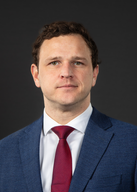
Jeff Shipley
75% support rate
Top opponent
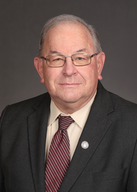
Art Staed
33% support rate
Ranked legislators
10
5 support · 5 oppose
Key legislators

Who's moving juvenile justice in Iowa

Legislators moving juvenile justice in Iowa
Legislator Party Stance Support rate Votes
Jeff Shipley
Jeff Shipley House · District 87
R
Support
75% 4
Tom Shipley
Tom Shipley Senate · District 9
R
Support
75% 4
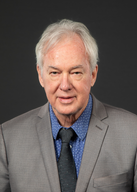
Adrian Dickey
Adrian Dickey Senate · District 44
R
Support
67% 3
Amy Sinclair
Amy Sinclair Senate · District 12
R
Support
67% 3
Annette Sweeney
Annette Sweeney Senate · District 27
R
Support
67% 3
Art Staed
Art Staed Senate · District 40
D
Oppose
33% 3
Dave Sires
Dave Sires Senate · District 38
R
Oppose
33% 3
Izaah Knox
Izaah Knox Senate · District 17
D
Oppose
33% 3
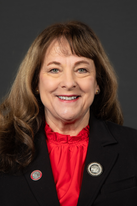
Janet Petersen
Janet Petersen Senate · District 18
D
Oppose
33% 3
Janice Weiner
Janice Weiner Senate · District 45
D
Oppose
33% 3
Showing 11–20 of 33 bills

All criminal justice bills

in committee · Iowa · House Feb 17, 2026

HF 2174: A bill for an act providing for a task force to address legal services for indigent parties.

HF 2174 establishes a task force within Iowa's judicial branch to examine legal services for indigent parties (those unable to pay for legal representation) in criminal, juvenile, and child abuse/neglect cases. The task force, composed of appointed legal and judicial representatives, must identify current service delivery methods, recommend improvements, address conflicts of interest for public defenders, ensure competent representation, and propose sustainable funding and attorney recruitment strategies. The task force will operate from July 2026 through November 2030, submitting annual reports to the governor and legislature with findings and recommendations. This is a procedural bill focused on analysis and recommendations, not direct policy implementation.
Sub-Topics Juvenile Justice
in committee · Iowa · House Jan 29, 2026

HSB 529: A bill for an act relating to sexual misconduct with offenders and juveniles, and providing penalties.

This bill (HSB 529) upgrades penalties for sexual misconduct by certain staff working with vulnerable individuals. It increases penalties from an aggravated misdemeanor to a class D felony for peace officers, correctional staff, juvenile facility workers, or county jail employees who engage in sex acts with people in their custody - specifically offenders in state facilities, juveniles in placement facilities, or prisoners in county jails. A class D felony carries a maximum penalty of five years in prison and a fine between $1,025 and $10,245. The bill directly affects correctional and juvenile facility employees, law enforcement, and contractors working in these settings. It does not change existing laws but raises the legal consequences for violations.
in committee · Iowa · House Feb 24, 2026

HSB 631: A bill for an act relating to the collection and publication of judicial officer performance information.

This bill requires Iowa's state court administrator to annually collect and publish specific performance data for district court judges, including pretrial decisions (like bond-setting practices and release rates for violent vs. non-violent offenses), sentencing outcomes compared to recommendations, appellate reversals, and case processing efficiency. The data would be published on a public website with search tools by county or name, along with average district statistics and a space for judges to add brief personal statements (up to 500 words) explaining their judicial approach. It directly affects all district court judges, full-time associate juvenile judges, and full-time associate probate judges. The bill aims to increase transparency in judicial decision-making through standardized, publicly accessible reporting.
Sub-Topics Courts Judges Juvenile Justice Tags Data Reporting
in committee · Iowa · Senate Jan 27, 2026

SF 2079: A bill for an act relating to parole eligibility for a person under the age of twenty-one convicted of a class “A” felony and making penalties applicable.

This bill (SF 2079) increases the age limit for parole eligibility for young offenders convicted of class "A" felonies in Iowa. It raises the cutoff from 18 to 21 years old for two sentencing scenarios: first-degree murder (under §707.2) and all other class "A" felonies. Currently, individuals under 18 convicted of these crimes face life sentences with limited parole options; the bill extends these eligibility provisions to those under 21 at the time of the offense. The change modifies specific sections of Iowa’s sentencing code to adjust when these parole considerations apply.
introduced · Iowa · House Feb 24, 2026

HF 2201: A bill for an act relating to sexual misconduct with offenders and juveniles, and providing penalties.

HF 2201 amends Iowa law to upgrade penalties for sexual misconduct by certain staff members working with vulnerable individuals. It increases penalties from an aggravated misdemeanor to a class "D" felony for peace officers, correctional facility employees, juvenile facility staff, or county jail personnel who engage in sexual acts with inmates or juveniles under their care. The bill directly affects these specific professionals by making such misconduct a more serious felony charge, punishable by up to five years in prison and fines between $1,025 and $10,245. This change applies to individuals committed to state correctional facilities, juvenile placement facilities, or county jails.
introduced · Iowa · Legislature

5450XD: Sexual Misconduct with Offenders and Juveniles, Felony (5450XD) - Corrections, Department of

This bill (5450XD) increases penalties for sexual misconduct by certain correctional and juvenile facility staff. It upgrades the offense from an aggravated misdemeanor to a class "D" felony for peace officers or employees/contractors/volunteers of correctional facilities, juvenile placement facilities, or county jails who engage in sex acts with people in their custody. Specifically, it applies to staff of the Department of Corrections, judicial district correctional services, juvenile placement facilities, and county jails when misconduct occurs with inmates, juveniles in care, or county jail prisoners. A class "D" felony carries up to five years in prison and fines between $1,025 and $10,245.
in committee · Iowa · House Feb 20, 2025

HSB 167: A bill for an act relating to the sealing of juvenile court records, and including effective date provisions.

HSB 167 modifies Iowa's process for sealing juvenile court records. It requires courts to automatically schedule sealing hearings two years after the last court action or when a person turns 18 (whichever is later) for those involved in delinquency cases, rather than requiring a separate application. The bill also mandates automatic sealing of all records when a petition is dismissed, and creates new pathways for sealing records of individuals adjudicated delinquent for serious offenses (like aggravated misdemeanors or felonies) if the court finds sealing is in the person's and public's best interest. Additionally, it directs courts to identify and seal eligible historical records within one year of the law's effective date. This bill directly affects juveniles in Iowa's court system who have completed their cases without subsequent felony convictions.
Sub-Topics Juvenile Justice
died · Iowa · House Apr 22, 2025

HF 984: A bill for an act relating to services and support for youth, including treatment, physical assessments, and behavioral health evaluations for youth involved in juvenile delinquency and child in need of assistance proceedings; the licensing and certification of certain residential facilities; the provision of home and community-based services and habilitation services to certain youth by residential programs; administration and supervision of juvenile court services; and the suspension of Hawki eligibility for inmates of public institutions.

HF 984 modifies services and support for youth, particularly those involved in juvenile delinquency and child in need of assistance proceedings. The bill updates definitions and requirements for psychiatric medical institutions for children (PMICs), specifying that they provide treatment, physical assessments, and behavioral health evaluations for youth with serious emotional disturbances, substance use disorders, or both. It also addresses the licensing and certification of these residential facilities and mentions home and community-based services. Additionally, it includes provisions for the administration of juvenile court services and the suspension of Hawki eligibility for inmates of public institutions.
Sub-Topics Juvenile Justice
died · Iowa · House Apr 28, 2025

HF 833: A bill for an act relating to services and support for youth, including treatment, physical assessments, and behavioral health evaluations for youth involved in involuntary commitment, juvenile delinquency, child in need of assistance, and family in need of assistance proceedings; the licensing and certification of certain residential facilities; the provision of home and community-based services and habilitation services to certain youth by residential programs; administration and supervision of juvenile court services; and the suspension of Hawki eligibility for inmates of public institutions.

HF 833 updates and expands services and support for youth under 21 involved in involuntary commitment, juvenile delinquency, and child welfare proceedings. The bill specifies that psychiatric medical institutions for children (PMICs) must provide physical assessments and behavioral health evaluations, particularly for youth with serious emotional disturbances or substance use disorders. It also clarifies licensing requirements for these residential facilities. Additionally, the bill ensures certain insurance coverage for youth with biologically based mental illnesses admitted to PMICs and addresses the suspension of Hawki eligibility for inmates of public institutions.
Sub-Topics Juvenile Justice
in committee · Iowa · Senate Feb 26, 2025

SSB 1120: A bill for an act relating to services and support for youth, including treatment, physical assessments, and behavioral health evaluations; exemptions from children’s residential facility certification; the director of juvenile court services and chief juvenile court officers; and suspension of Hawki eligibility for public institution inmates.

This bill establishes standards for psychiatric medical institutions caring for youth under 21 with significant mental health conditions. It requires facilities to provide comprehensive care through a team of qualified professionals (including those with master's degrees and clinical experience), develop personalized medical care plans based on full evaluations, and meet specific licensing requirements. The bill directly affects psychiatric institutions, their staff, and youth receiving inpatient behavioral health services. Key provisions include defining "serious emotional disturbance," setting staff qualifications, and mandating care plans to reduce inpatient needs. These changes aim to improve safety and treatment quality for youth in residential facilities.
Sub-Topics Juvenile Justice
Showing 11 to 20 of 33 bills
Previous 1 2 3 4 Next