

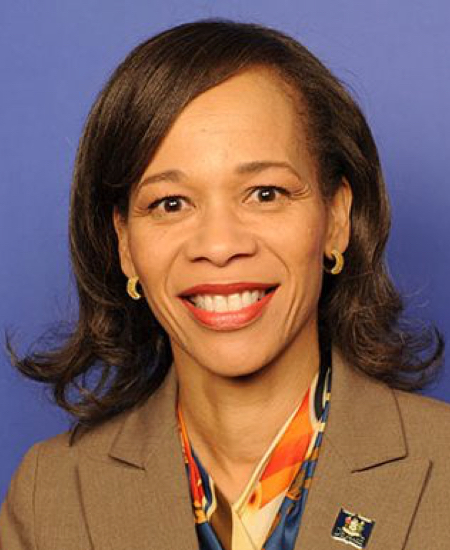
Photo of Lisa Blunt Rochester
D United States Senate · Delaware

Sen. Lisa Blunt Rochester

Compare
Total votes
2,625
all sessions
Attendance
99%
39 missed
Higher than 75% of chamber peers
With party
98%
of cast votes
Near the chamber average
Bipartisan score
1%
crosses aisle rarely
Near the chamber average
Sponsored
1,574
bills & resolutions
Near the chamber average
Committees
16
assignments
1,574 bills and resolutions

Sponsored bills

Total
1,574
Primary
114
Co-sponsor
1,460
This page
1,574
matching current filters
Co-sponsor HR 6929
In committee · United States House · Co-sponsor
Affordable Connectivity Program Extension Act of 2024

Maddy summaryThe Affordable Connectivity Program Extension Act of 2024 allocates $7 billion in funding for the Affordable Connectivity Program (ACP) during fiscal year 2024. The ACP provides subsidies to low-income households to help cover the cost of internet service and connected devices like laptops or tablets. This funding ensures the program can continue supporting eligible households throughout the year, with the money remaining available until fully spent. The bill extends existing program funding without changing eligibility criteria or service requirements.

In committee Jan 10, 2024 1 co-sponsor
Co-sponsor HR 6585
In committee · United States House · Co-sponsor
Bipartisan Workforce Pell Act

Maddy summaryThe Bipartisan Workforce Pell Act creates a new grant program providing financial aid to students enrolled in short-term, career-focused educational programs (150-600 clock hours, 8-15 weeks) that prepare students for high-demand jobs. To qualify, programs must meet specific standards including alignment with industry needs, minimum job placement rates of 70%, and median earnings that exceed local wage benchmarks. The bill requires institutions to collect and publicly report data on program outcomes including completion rates, job placement, and student earnings through the College Scorecard website. It also establishes new accreditation standards for agencies evaluating these workforce programs, with $40 million authorized for fiscal year 2025 and $30 million for each of the next four years.

In committee Dec 22, 2023 1 co-sponsor
Primary HR 6791
In committee · United States House · Lead sponsor
Artificial Intelligence Literacy Act of 2023

Maddy summaryThe Artificial Intelligence Literacy Act of 2023 creates grant programs to improve AI literacy in public schools, community colleges, and higher education. It amends the Digital Equity Act to fund specific activities like teacher training, hands-on AI labs, virtual learning platforms, and partnerships with private sector organizations. These grants directly support schools and community institutions serving students and workers, with a focus on underserved communities and addressing workforce gaps. The bill requires annual reports to Congress on grant outcomes and recommendations for expanding effective programs.

In committee Dec 15, 2023 0 co-sponsors
Co-sponsor HR 6749
In committee · United States House · Co-sponsor
Menopause Research and Equity Act of 2023

Maddy summaryThe Menopause Research and Equity Act of 2023 requires the National Institutes of Health (NIH) to evaluate existing and ongoing research on menopause, perimenopause, and mid-life women’s health, identifying gaps in knowledge and funding over the past five years. The NIH must then develop a strategic plan with health professionals (including specialists like gynecologists and endocrinologists) to address these gaps and guide future research on treatments for menopause symptoms. The bill also mandates new NIH research on causes, symptoms, and treatments for menopause-related health issues, including a study on hormonal treatments. All activities must be funded using existing NIH resources, with no new appropriations authorized. This aims to improve scientific understanding of women’s mid-life health needs.

In committee Dec 15, 2023 1 co-sponsor
Primary HR 6743
In committee · United States House · Lead sponsor
WARM Act of 2023

Maddy summaryThe WARM Act of 2023 creates a national menopause public awareness program through the CDC, allocating $70 million for 2025-2028 to increase understanding of menopause symptoms, related health conditions, and treatment options through culturally competent educational materials. It provides $31.7 million for grants to train health care providers (including physicians, nurses, and pharmacists) in managing menopausal symptoms, with priority given to institutions serving rural, Tribal, and other underserved communities. The bill also establishes regional centers of excellence to develop evidence-based curricula for health professions schools to improve menopause education. The program requires reports to Congress by 2025 and 2026 on implementation and effectiveness.

In committee Dec 15, 2023 0 co-sponsors
Co-sponsor HR 6828
In committee · United States House · Co-sponsor
Brittany Clardy Missing and Murdered Black Women and Girls Act

Maddy summaryThe Brittany Clardy Missing and Murdered Black Women and Girls Act establishes a new Office within the Department of Justice to address the disproportionate rates of missing and murdered Black women and girls in the U.S. The Office will collect and analyze data on these cases - including case resolution times, Amber Alert usage, and trafficking links - and create a public dashboard for tracking. It also creates a grant program for community organizations to provide culturally appropriate prevention services, law enforcement training, and victim support. The Office must submit biennial reports to Congress with findings and recommendations to improve the criminal justice response to these cases. This bill directly affects Black women and girls facing violence, law enforcement agencies, and community organizations providing related services.

In committee Dec 14, 2023 1 co-sponsor
Co-sponsor HRES 927
Passed · United States House · Co-sponsor
Condemning antisemitism on University campuses and the testimony of University Presidents in the House Committee on Education and the Workforce.

Maddy summaryHRES 927 is a symbolic resolution passed by the U.S. House of Representatives condemning antisemitism on college campuses and criticizing the testimony of three university presidents (Harvard’s Claudine Gay, MIT’s Sally Kornbluth, and Penn’s Elizabeth Magill) before the House Education Committee. It specifically addresses their evasive responses when asked whether calls for the genocide of Jews violate campus policies, noting their statements about "context" and lack of clear condemnation. The resolution does not create new laws or policies but formally expresses the House’s stance against antisemitism and holds university leadership accountable for their testimony. It directly affects the referenced university presidents and their institutions by publicly criticizing their handling of campus antisemitism.

Passed Dec 13, 2023 1 co-sponsor
Co-sponsor HR 4531
Passed · United States House · Co-sponsor
Support for Patients and Communities Reauthorization Act

Maddy summaryThis bill reauthorizes and extends funding for programs addressing substance use disorders and opioid addiction, including residential treatment for pregnant and postpartum women, first responder training, and community recovery initiatives. It increases funding levels for these programs, adds xylazine to Schedule III of controlled substances, and requires a study on remote monitoring for patients prescribed opioids. The bill also expands Medicaid coverage requirements for medication-assisted treatment and mandates reporting on mental health condition data alongside substance use disorder data, directly affecting individuals with substance use disorders, healthcare providers, and state and tribal governments.

Passed Dec 13, 2023 1 co-sponsor
Co-sponsor HR 3226
Passed · United States House · Co-sponsor
PREEMIE Reauthorization Act of 2023

Maddy summaryThis bill reauthorizes and extends federal funding for research and support services related to preterm birth through 2028, replacing the previous 2019-2023 funding period. Key provisions include adding chronic condition screening and treatment to maternal health education services, mandating an interagency working group on prematurity within 18 months, and requiring a National Academies study on preterm birth costs, risk factors, and program gaps. The study must assess neonatal care expenses, societal impacts, and effective prevention strategies, with a final report due within 24 months. These changes directly affect preterm infants, their families, healthcare providers, and federal agencies managing maternal health programs.

Passed Dec 12, 2023 1 co-sponsor
Co-sponsor HR 6696
In committee · United States House · Co-sponsor
Eviction Prevention Act of 2023

Maddy summaryThe Eviction Prevention Act of 2023 provides $125 million annually to states and local governments to fund legal counsel for eligible individuals (those with income below 125% of the federal poverty level) facing eviction. It establishes a national database requiring courts to collect detailed data on eviction cases, including tenant demographics, reasons for eviction, representation status, and case outcomes. The database will track court-ordered evictions, administrative evictions, and illegal evictions, with specific requirements for reporting by courts and law enforcement. This legislation authorizes $100 million annually for the database's operation through fiscal year 2028, aiming to improve understanding of eviction patterns and outcomes. The bill creates concrete mechanisms for increasing legal representation access and gathering comprehensive eviction data to inform policy decisions.

In committee Dec 11, 2023 1 co-sponsor
Showing 551 to 560 of 1,574 bills
Previous 1 … 55 56 57 … 158 Next