

Maddy summaryHR 932 repeals two key congressional authorizations for military force in Iraq: the 1991 resolution (Public Law 102-1) and the 2002 resolution (Public Law 107-243). This bill removes the legal foundation that has permitted U.S. military operations in Iraq for over two decades. It directly affects the executive branch’s authority to conduct military actions under these specific resolutions, requiring future operations to seek new congressional approval. The repeal is a procedural change that would end the statutory basis for ongoing military engagement in Iraq without altering other laws or policies.
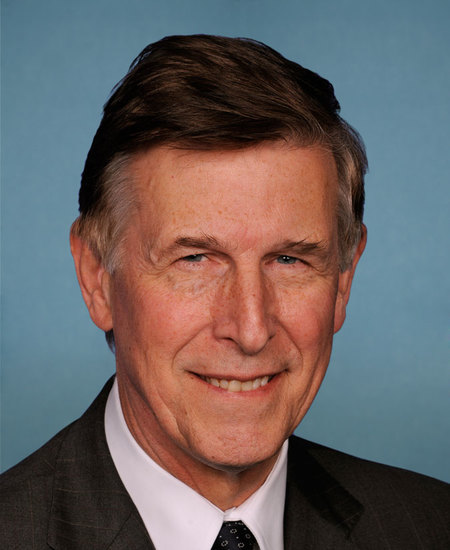
Rep. Donald S. Beyer, Jr.
Sponsored bills
Maddy summaryHR 905 expands federal protections for survivors of domestic violence and stalking by updating key definitions in U.S. Code. It broadens the definition of "intimate partner" to explicitly include current and former dating partners, and adds protections for people sharing a residence regardless of family ties. The bill also creates a new federal definition for "misdemeanor crime of stalking," requiring that such offenses involve harassment causing fear for a person, their family, cohabitant, intimate partner, or their pet/service animal. This change would trigger firearm restrictions for individuals convicted of qualifying stalking offenses, ensuring those protections apply more consistently across jurisdictions.
Presidential Tax Transparency Act This bill requires the President, the Vice President, and certain candidates for President and Vice President to disclose federal income tax returns for the ten most recent taxable years. The returns must be disclosed to the Federal Election Commission (FEC), which must make the returns publicly available after redacting information that is necessary for protecting against identity theft, such as Social Security numbers. If the tax returns are not disclosed to the FEC as required by this bill, the Internal Revenue Service must provide the returns to the FEC upon receiving a written request from the FEC.
This resolution condemns Azerbaijan's blockade of the Lachin Corridor to Nagorno-Karabakh (also known as Artsakh). The resolution calls on the U.S. government to work with international partners to deploy observers to explore opportunities for security and peaceful development. The resolution also calls on the President to (1) suspend military and security assistance from the United States to Azerbaijan, and (2) fully enforce a U.S. law prohibiting certain bilateral assistance to Azerbaijan until Azerbaijan takes demonstrable steps to cease all offensive uses of force against Armenia and Nagorno-Karabakh.
Maddy summaryHR 865, the United States Colored Troops Congressional Gold Medal Act, authorizes a posthumous Congressional Gold Medal to be presented to all African American soldiers and sailors who served with Union forces during the Civil War. The medal, designed by the Treasury Secretary, will be awarded collectively to this group in recognition of their service and bravery. After presentation, the gold medal will be donated to the Smithsonian Institution for public display, with the option to sell bronze duplicates to cover costs. This bill does not change existing laws but formally honors the historical contributions of approximately 200,000 African American soldiers in the Union Army and 19,000 in the Union Navy.
Maddy summaryThis bill expands paid family and medical leave for federal employees by increasing total entitlement from 12 to 26 weeks annually. It modifies existing laws to cover all federal workers (including those at the GAO, USPS, Library of Congress, and congressional staff), replacing "parental leave" with broader "family and medical leave" and adding 14 additional weeks for qualifying events like childbirth, adoption, or serious health conditions. Employees who already used paid leave under other programs will have their new entitlement reduced by the days already taken. The changes apply immediately to most federal employees, with specific timelines for agencies like the Veterans Affairs Department and District of Columbia courts.
Federal Police Camera and Accountability Act This bill establishes requirements for federal law enforcement officers to wear body cameras and for federal law enforcement agencies to install video cameras in patrol cars.
Maddy summaryHR 770, the ESP Family Leave Act, amends the Family and Medical Leave Act (FMLA) to create specific eligibility rules for education support professionals and school support staff in public schools and public higher education institutions. It changes the standard FMLA work-hour requirement (1,250 hours) to a new threshold: these workers qualify if they've worked at least 60% of their expected monthly hours for the previous school year. Employers must maintain records of each employee's expected monthly hours, and the bill defines "education support professionals" to include roles like paraeducators, secretaries, custodians, food service workers, security staff, and health support staff. The bill directly affects these support staff members, making it easier for them to qualify for FMLA leave under the revised hours calculation.
Maddy summaryHR 789, the Caring for All Families Act, expands the Family and Medical Leave Act to allow employees to take leave for a wider range of family members, including domestic partners, son-in-law, daughter-in-law, parent-in-law, adult children, grandparents, grandchildren, siblings, and others with "close association equivalent to family." The bill adds new provisions for employees to take up to 4 hours of leave per 30 days (24 hours annually) for school activities, routine medical appointments for family members, or visiting nursing homes for elderly individuals considered family. This legislation directly affects private sector workers covered by FMLA and federal employees, broadening who qualifies for leave and what types of family care can be accommodated. The bill amends existing FMLA definitions and requirements to include these expanded family relationships and care needs.
Maddy summaryThe Extreme Risk Protection Order Expansion Act of 2023 creates a federal grant program to help states, tribes, and local governments implement and improve Extreme Risk Protection Orders (ERPOs), which temporarily remove firearms from individuals deemed to pose a danger to themselves or others. To qualify for grants, states and tribes must enact ERPO laws meeting specific due process requirements, including notice, hearing procedures, and standards of proof. The bill amends federal law to include ERPOs in the National Instant Criminal Background Check System and requires states to report on ERPO usage, including demographic data. It also establishes "full faith and credit" for ERPOs across state lines, ensuring consistent enforcement nationwide.