

Maddy summary# Summary of the "Protecting Our Democracy Act" This comprehensive legislation aims to strengthen democratic processes, increase government transparency, and prevent foreign interference in elections. Key provisions include: ## Ethics and Transparency - **Ethics Pledge**: Requires all appointees to sign an ethics pledge committing to: - Ban on gifts from registered lobbyists - 2-year revolving door ban (prohibiting participation in matters related to former employers) - Golden parachute ban (no special payments from former employers) - Commitment to decision-making based on public interest - **Tax Transparency**: Requires presidential and vice presidential candidates to disclose 10 years of tax returns, with sitting presidents submitting returns within 30 days of enactment ## Campaign Finance and Foreign Interference - **Foreign Contact Reporting**: Requires political committees to report any contact with "covered foreign nationals" within 1 week - **Enhanced Penalties**: Criminal penalties of up to $1 million and 5 years in prison for violations - **Online Advertising Rules** ("Honest Ads Act"): - Requires clear disclosure of who paid for political ads online - Mandates machine-readable public databases of political ads - Requires visible sponsor identification that remains when ads are shared - Defines "qualified political advertisements" to include various online formats ## Preventing Patronage Systems - Limits exceptions to competitive service for federal positions - Restricts transferring positions between competitive and excepted service - Requires employee consent for position transfers ## Use of Federal Property - Prohibits holding national political conventions on federal property - Requires publicly available visitor records at White House and other official locations (with privacy exceptions) The legislation establishes detailed definitions, reporting requirements, and enforcement mechanisms across multiple agencies, with the goal of increasing transparency, preventing foreign interference, and ensuring ethical conduct in government service.
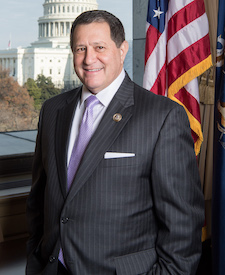
Rep. Joseph D. Morelle
Sponsored bills
Maddy summaryThis bill requires phone calls, texts, and chats to 9-8-8 (the national suicide prevention and mental health crisis hotline) to be routed to the nearest participating crisis center within 90 days of enactment, while protecting caller privacy by not revealing precise location. It mandates all phone carriers to transmit every 9-8-8 call or text - including those from prepaid or non-initialized handsets - and updates phone systems to allow direct 9-8-8 dialing without extra steps. The law affects crisis centers (by directing calls to their area), callers (through improved routing and privacy), and phone carriers (by requiring transmission compliance). These changes aim to make the 9-8-8 system more efficient and accessible for those seeking mental health support.
Maddy summaryHR 4901, the Reproductive Health Care Accessibility Act, aims to improve reproductive health care access for people with disabilities by addressing systemic barriers they face. The bill funds training for health care professionals on providing culturally competent care, creates initiatives to increase the number of health care providers with disabilities in reproductive health fields, and establishes a National Technical Assistance Center to help providers improve services. It allocates $10 million annually for these programs from fiscal years 2024 through 2028, with additional funding for a research study on effective reproductive health care approaches. The bill directly affects people with disabilities seeking reproductive health services, health care providers, and educational institutions training health care professionals.
Maddy summaryThe Communications, Video, and Technology Accessibility Act of 2023 requires video programming providers to provide closed captions and audio description for all online video content, including live and near-live programming. It mandates that video playback devices (such as smart TVs and streaming devices) include accessible controls for captions and audio description, with specific requirements for labeling and discoverability. The bill establishes advisory committees to develop technical standards for accessibility and updates requirements for video conferencing services to include built-in captioning and compatibility with assistive technologies. These provisions directly affect video service providers, device manufacturers, and video conferencing platforms, aiming to improve accessibility for people who are deaf, hard of hearing, blind, or DeafBlind.
Maddy summaryHR 4068, or "Canyon’s Law," bans the use of M-44 devices - cyanide-based predator control tools - on all public lands managed by federal agencies like the National Park Service, Fish and Wildlife Service, and Forest Service. The bill prohibits agencies from preparing, placing, or deploying these devices and requires all existing M-44s on public land to be removed within 30 days of enactment. It directly affects federal, state, and county agencies that previously used these devices to target wildlife like wolves and coyotes. The law aims to prevent accidental poisonings of people, pets, and non-target species (including endangered animals) by eliminating the use of this hazardous method on public lands.
Maddy summaryThis bill adds spotted lanternfly control to the list of high-priority research initiatives funded by the USDA. It enables federal grants for developing and sharing practical tools to combat this invasive insect pest, directly affecting agricultural researchers and farmers in affected areas (like Pennsylvania, where the pest causes significant crop damage). The key provision modifies existing law to specifically include lanternfly research under funding programs, without changing current grant rules. The bill also extends the funding authorization period for such initiatives through 2028.
Maddy summaryHRES 625 is a symbolic House resolution recognizing the essential work of congressional staff and support staff (nearly 15,000 total) who assist Members of Congress. It acknowledges their role in handling constituent services - such as passport renewals, immigration cases, and Social Security benefits - and supporting legislative operations on Capitol Hill and in local offices. The resolution does not create new policies or funding but formally thanks these staff for their contributions to constituent engagement and government functions. It was introduced in the House on July 27, 2023, and referred to the Committee on House Administration.
Maddy summaryHR 4963, the Tax Fairness for Workers Act, would restore tax deductions for certain employee expenses. It creates an above-the-line deduction for union dues and expenses paid by wage-earning employees, and allows miscellaneous itemized deductions for other work-related expenses (like uniforms or supplies) that were previously disallowed after 2017 tax law changes. These provisions directly affect employees who pay union dues or incur qualifying job-related costs. The bill amends specific sections of the Internal Revenue Code to make these deductions available for taxable years beginning after December 31, 2022. It does not change tax rates or provide new benefits, only reinstating previously eliminated deductions for eligible workers.
Maddy summaryThe Rebuild America's Schools Act of 2023 creates a $20 billion annual federal grant program to fund long-term improvements to public school facilities across the United States. It requires states to prioritize school districts serving high-poverty students (with high percentages of students eligible for free/reduced lunch) and those with deteriorating infrastructure, while mandating that recipient schools develop 10-year facilities master plans. The bill specifies that funds must be used for construction, renovation, and modernization projects that improve energy efficiency, address environmental health hazards (including lead, asbestos, and poor air quality), and ensure school safety, while requiring the use of American-made materials for construction projects.
Maddy summaryThe Preventing Election Subversion Act of 2023 restricts how statewide election officials can suspend or remove local election administrators who manage federal elections, requiring removals to be based only on "inefficiency, neglect of duty, or malfeasance in office." It allows local election administrators who believe they were improperly removed to sue in federal court and requires statewide election officials to report removals to the Department of Justice with detailed information. The bill also adds new voter protection requirements, mandating that challenges to voter eligibility be documented, supported by personal knowledge, and subject to penalty of perjury. It prohibits challenges to voter eligibility on or near election day unless the voter registered within 20 days of the election. These provisions aim to prevent political interference in election administration while ensuring fair and uniform federal election processes.