

Good Jobs for Good Airports Act This bill addresses pay, benefits, and labor standards for certain airport service workers. Airport service workers include security officers, food service workers, cleaning staff, ticketing agents, and retail service workers. Specifically, the bill establishes a minimum wage and benefit standard for such airport service workers at large, medium, and small hub airports. It also prohibits small, medium, and large hub airports from accessing federal funds for airport development projects unless the airports certify that such airport service workers are paid no less than the higher of $15 per hour, the applicable state or local minimum wage and fringe benefits, or the prevailing wage and fringe benefits required under the Service Contract Act as established by the Department of Labor.
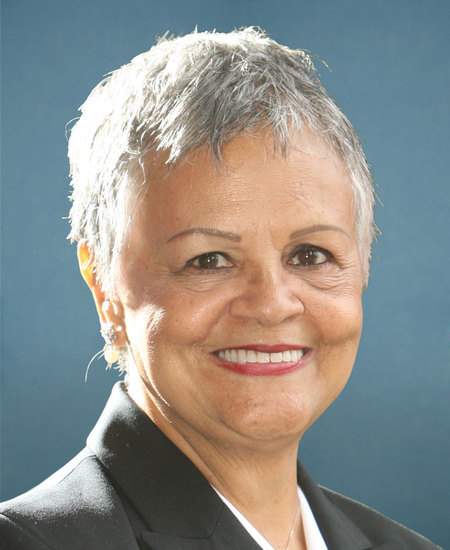
Rep. Bonnie Watson Coleman
Sponsored bills
This resolution recognizes the historical significance to the nation of Juneteenth Independence Day (commemorating the end of slavery in the United States).
Small Business Contracting Fairness Act of 2022 This bill removes the maximum annual revenue threshold that limits certain small businesses owned by socially and economically disadvantaged individuals from receiving funding under the disadvantaged business enterprise program. The program provides such small businesses the opportunity to compete for federally funded transportation contracts.
Delaware River Basin Conservation Reauthorization Act of 2022 This bill reauthorizes the Delaware River Basin Restoration Program and increases the federal cost share for certain grant projects. Specifically, the bill extends the program through FY2030 and increases the federal cost share of a grant project that serves a small, rural, or disadvantaged community to 90% of the total cost of the project. However, the federal share may be increased to 100% of the project's total cost if the grant recipient is unable to pay, or would experience significant financial hardship if required to pay, the nonfederal share. The bill also repeals the prohibition on the use of program funds for the acquisition by the federal government of any interest in land.
Lavender Offense Victim Exoneration Act of 2022 or the LOVE Act of 2022 This bill offers a formal apology from Congress for encouraging policies at the Department of State, such as the Lavender Scare, which resulted in the wrongful termination of at least 1,000 people for alleged homosexuality, and addresses related issues. The State Department must (1) review all employee terminations that occurred as a consequence of the Lavender Scare to identify those who were wrongfully terminated, and (2) issue a public report on the findings. The State Department must establish an independent Reconciliation Board to contact any employee (or a family member of a deceased employee) wrongfully terminated during the Lavender Scare and offer to change the employee's record to reflect this finding. The board must accept and review petitions from former employees who believe they were terminated due to sexual orientation. The State Department must establish a board of senior-level officials to address issues that lesbian, gay, bisexual, transgender, queer, and intersex (LGBTQI) Foreign Service employees and their families face. The board must report on improving State Department policies to prevent discrimination based on sexual orientation, gender identity, or sex characteristics. The State Department must report on (1) countries that do not issue spousal visas for Foreign Service employee spouses due to sexual orientation, gender identity, or sex characteristics; and (2) recommendations for State Department responses, such as eliminating visa reciprocity for such countries.
Recovering America’s Wildlife Act of 2022 This bill provides funding for the conservation or restoration of wildlife and plant species of greatest conservation need, including endangered or threatened species, and establishes related requirements. TITLE I--WILDLIFE CONSERVATION AND RESTORATION (Sec. 101) This title establishes and funds a subaccount of the Wildlife Conservation and Restoration Account, which was established under the Pittman-Robertson Wildlife Restoration Act. The subaccount must be used to support efforts of states, territories, or the District of Columbia to recover and manage wildlife and plant species of greatest conservation need. The Department of the Interior must use a portion of the funding from the subaccount for grants to state fish and wildlife departments, the District of Columbia fish and wildlife department, fish and wildlife departments of territories, nonprofit organizations, or regional associations of fish and wildlife departments. The grants must be used for innovative recovery efforts for species of greatest conservation need, species listed as endangered or threatened species, or the habitats of such species. Funding for the subaccount must supplement existing funds available to the states from funds distributed under the Dingell-Johnson Sport Fish Restoration Act and the Wildlife Conservation and Restoration Account. Recipients of the funding from the subaccount must match federal funds as specified by the title. The Government Accountability Office must study and report on the progress of states, territories, the District of Columbia, and Indian tribes in protecting species of greatest conservation need, endangered species, and threatened species. TITLE II--TRIBAL WILDLIFE CONSERVATION AND RESTORATION (Sec. 201) This title establishes and funds a Tribal Wildlife Conservation and Restoration Account to support Indian tribes' efforts to recover and manage wildlife and plant species of greatest conservation need. Indian tribes are not required to provide matching funds. TITLE III--ENDANGERED SPECIES RECOVERY AND HABITAT CONSERVATION LEGACY FUND (Sec. 301) This title establishes and funds through FY2026 the Endangered Species Recovery and Habitat Conservation Legacy Fund. The U.S. Fish and Wildlife Service must use the fund to (1) implement an Endangered Species Recovery Grant Program; (2) address its interagency consultation responsibilities under the Endangered Species Act of 1973; (3) work with nonfederal entities to conserve wildlife habitat and at-risk species, threatened or endangered species, or species proposed to be listed as threatened or endangered species; or (4) address the development and permitting of voluntary conservation agreements under such act. Amounts made available under the fund must supplement other federal amounts made available to carry out such activities. The President must annually submit to Congress, together with the annual budget of the United States, a list of threatened species and endangered species for which recovery plans will be developed or implemented with amounts from the Endangered Species Recovery and Habitat Conservation Legacy Fund. TITLE IV--REPORT (Sec. 401) Interior must also report on information concerning the amount of grants and contracts that were awarded or are allocated under this bill to Historically Black Colleges and Universities, Hispanic-serving educational institutions, tribally controlled colleges and universities, minority-serving educational institutions, minority-owned business enterprises, women-owned business enterprises, and community-based organizations that are principally administered by, operated by, or serving minority communities.
Assault Weapons Excise Act This bill imposes an additional 1000% excise tax on large capacity ammunition feeding devices and semiautomatic assault weapons. It exempts from such additional tax devices and weapons acquired by the United States or by a state or local government.
Fallen Heroes Flag Reauthorization Act of 2022 This bill reauthorizes through FY2027 a program through which a Member of Congress may provide, at no cost, a Capitol-flown flag to commemorate a firefighter, law enforcement officer, or other public safety officer who died in the line of duty if an immediate family member of the deceased requests such a flag.
Maddy summaryThis non-binding resolution (HR 8040) expresses Congress's view that many national security threats are non-military and calls for reducing the Pentagon's 2023 budget by $100 billion. It directs the Secretary of Defense to consider a 2021 CBO report when implementing potential cuts, while exempting specific accounts like military personnel pay and defense health programs from reductions. The resolution proposes reallocating the savings to address non-military national priorities. It does not alter actual funding but sets a policy direction for the Department of Defense budget.
Commission To Study the Potential Creation of a National Museum of Asian Pacific American History and Culture Act This bill establishes a Commission to Study the Potential Creation of a National Museum of Asian Pacific American History and Culture. The commission must (1) report recommendations for a plan of action for the establishment and maintenance of a National Museum of Asian Pacific American History and Culture in Washington, DC; (2) develop a fundraising plan to support the establishment, operation, and maintenance of the museum through public contributions; (3) obtain an independent review of this fundraising plan, including an analysis of the resources necessary to fund the construction of the museum and its operations and maintenance in perpetuity without reliance on federal funds; and (4) submit a legislative plan of action to establish and construct the museum. The commission may convene a national conference relating to the museum. The commission shall be solely responsible for acceptance of contributions to it and payment of its expenses. No federal funding may be obligated to carry out this bill.