

Maddy summaryThis bill reauthorizes the Dr. Lorna Breen Health Care Provider Protection Act, extending mental health support programs for healthcare professionals through 2030 (previously ending in 2024). It requires funded programs to specifically address reducing administrative burdens on healthcare workers while continuing to promote access to mental health and substance use disorder services. The legislation directly affects healthcare providers across the U.S. who may access these federally supported resources. Key provisions include extending funding periods and mandating that grant recipients focus on easing workplace administrative tasks, alongside maintaining existing awareness initiatives. The bill does not create new programs but continues and refines existing mental health support for the healthcare workforce.
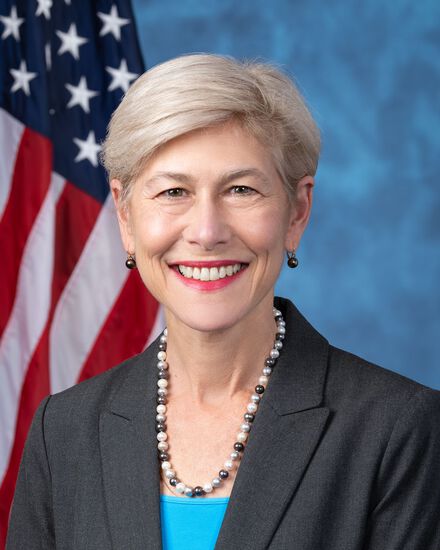
Rep. Deborah K. Ross
Sponsored bills
National Origin-Based Antidiscrimination for Nonimmigrants Act or the NO BAN Act This bill imposes limitations on the President's authority to suspend or restrict aliens from entering the United States. It also prohibits religious discrimination in various immigration-related decisions, such as whether to issue an immigrant or nonimmigrant visa, unless there is a statutory basis for such discrimination. The President may temporarily restrict the entry of any aliens or class of aliens after the Department of State determines that the restriction would address specific and credible facts that threaten U.S. interests such as public safety. The bill also imposes limitations on such restrictions, such as requiring the President, State Department, and the Department of Homeland Security (DHS) to (1) only issue a restriction when required to address a compelling government interest, and (2) narrowly tailor the suspension to use the least restrictive means to achieve such an interest. Before imposing a restriction, the State Department and DHS shall consult with Congress. The State Department and DHS shall report to Congress about the restriction within 48 hours of the restriction's imposition. If such a report is not made, the restriction shall immediately terminate. Individuals or entities present in the United States and unlawfully harmed by such a restriction may sue in federal court. The bill transfers the authority to suspend the entry of aliens traveling to the United States on a commercial airline that failed to comply with regulations related to detecting fraudulent travel documents from the Department of Justice to DHS.
This bill provides for the presentation of a Congressional Gold Medal to the Freedom Riders, in recognition of their contribution to civil rights by fighting for equality in interstate travel.
Maddy summaryHR 944, the Access to Counsel Act, requires U.S. immigration officials to provide certain immigrants a meaningful opportunity to consult with legal counsel during key immigration processes. It directly affects U.S. nationals, lawful permanent residents returning from travel, visa holders, refugees, asylees, and parolees subject to secondary or deferred inspection at ports of entry. The bill mandates that officials ensure access to counsel (including via phone) within one hour of inspection starting, allow counsel to present evidence, and accommodate in-person meetings when possible. It also requires officials to provide counsel access before accepting Form I-407 abandonment forms from lawful permanent residents, unless waived in writing. The law takes effect 180 days after enactment and preserves existing rights to counsel under other immigration laws.
Maddy summaryHR 964, the Rosa Parks Day Act, would designate Rosa Parks Day as a legal public holiday for federal employees and institutions. The bill amends Title 5 of the U.S. Code to add "Rosa Parks Day" to the list of recognized federal holidays, following Thanksgiving Day. This change would establish a new annual observance on the day designated by the President, requiring federal offices to close and employees to receive paid time off. The bill directly affects federal operations and employees, creating a new standard for federal holiday observance.
Maddy summaryHR 664, the American Seabed Protection Act, prohibits U.S. federal authorization for commercial mining of minerals on the deep seabed and Outer Continental Shelf, affecting mining companies and developers seeking permits. It bans exploration, development, and production of hardrock minerals in these areas, with exceptions only for scientific research. The bill requires the Secretary of Commerce to commission a National Academies study within 90 days to assess environmental impacts - including effects on ecosystems, carbon sequestration, fisheries, and indigenous communities - and evaluate alternatives like mineral recycling. The study must be submitted to Congress, focusing on concrete data rather than future policy. This is a substantive policy change banning seabed mining activities while mandating scientific review.
Stop Antiabortion Disinformation Act or the SAD Act This bill prohibits deceptive advertising for reproductive health services. Specifically, the bill makes it unlawful for a person (i.e., individual, partnership, corporation, association, or organization) to deceptively advertise the reproductive health services they offer, including by misrepresenting that the person (1) offers or provides contraception or abortion services (or referrals for such contraception or abortion services), or (2) employs or offers access to licensed medical personnel. The bill provides for enforcement by the Federal Trade Commission. In addition to any other penalty, violations are subject to a civil penalty that may not exceed the greater of $100,000 (adjusted annually for inflation) or 50% of the revenue earned during the preceding 12-month period by the ultimate parent entity of the person who violated the bill.
Medicare Patient Access and Practice Stabilization Act of 2025 This bill increases certain payment adjustments under the Medicare physician fee schedule for services furnished between April 1, 2025, and January 1, 2026.
Maddy summaryHR 760, the Restoring Access to Mountain Homes Act, allows FEMA to reimburse state, tribal, and local governments in North Carolina for repairing private roads and bridges damaged by Tropical Storm Helene - specifically those serving as the sole access to homes or essential services. It overrides standard FEMA rules by removing the requirement that roads must be in pre-existing good condition, enabling funding for repairs even if the infrastructure was already deteriorated. The bill requires inspections to verify needs, ensures roads stay open during repairs, and mandates documentation of costs, while clarifying that prior FEMA aid for similar repairs doesn’t count toward assistance limits. This directly affects mountain communities in North Carolina where Helene destroyed critical access routes, making recovery possible through federal reimbursement for previously ineligible private infrastructure.
Maddy summaryHCONRES 4 is a symbolic resolution expressing Congress's support for tax-exempt fraternal benefit societies (like mutual aid organizations). It recognizes these groups, which have over 7 million members nationwide, as historically and currently providing critical community benefits - including life/health insurance, charitable work, and volunteer services - valued at over $3.8 billion annually. The resolution affirms that their tax-exempt status under Section 501(c)(8) of the Internal Revenue Code remains beneficial and should continue to be promoted. This is a non-binding expression of congressional sentiment, not a policy change.