

Maddy summaryThis bill removes federal restrictions that previously limited methadone prescribing for opioid use disorder, allowing certified addiction specialists and program employees to prescribe methadone through pharmacies for up to 30 days per electronic prescription. It directly affects patients with opioid use disorder who can now access treatment more flexibly outside traditional clinic settings, and healthcare providers who gain new prescribing authority. Key provisions include requiring electronic prescriptions, mandating patient informed consent about confidentiality differences, and permitting telehealth for counseling and ancillary services. The bill also requires annual reports to Congress tracking registered providers and patients served.
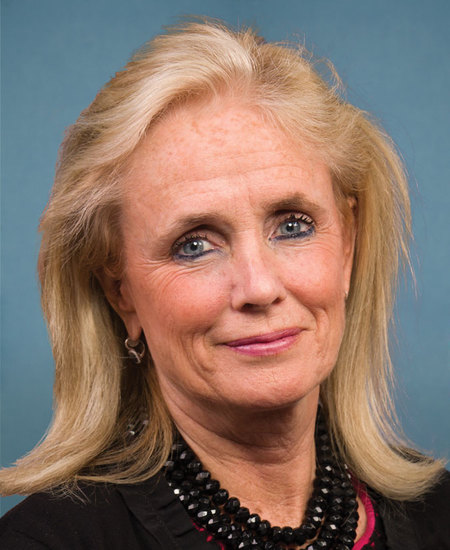
Rep. Debbie Dingell
Sponsored bills
Maddy summaryHR 1328, the Medical Device Nonvisual Accessibility Act of 2023, requires certain home-use medical devices (like blood pressure monitors and sleep apnea machines) to include nonvisual accessibility features - such as voice commands or audio feedback - by 2025. It directly affects blind or low-vision users who rely on these devices for independent, safe, and private care at home. The bill mandates that devices classified as Class II or III (and cleared via FDA processes) must meet accessibility standards ensuring equal usability for blind or low-vision individuals, with limited waivers allowed for manufacturers facing undue hardship. The FDA will develop and enforce these standards within two years, consulting with accessibility experts and blind users.
Maddy summaryThe Paycheck Fairness Act (HR 17) strengthens equal pay protections by amending the Fair Labor Standards Act. It prohibits pay discrimination based on sex, pregnancy, childbirth, sexual orientation, gender identity, and sex characteristics. The bill modifies employer defenses for pay differences to require demonstration that any disparity is job-related, consistent with business necessity, and accounts for the entire pay differential. It also prohibits employers from relying on wage history when making hiring decisions or setting pay, enhances penalties for violations, and requires the EEOC to collect compensation data disaggregated by sex, race, and national origin.
Maddy summaryHCONRES 22 is a symbolic resolution recognizing the persistent gender pay gap in the U.S., documenting that women earn significantly less than men across racial groups (e.g., Black women earn 67 cents for every dollar earned by White men). It highlights the economic impact of this disparity, noting women lose over $958 billion annually in wages and face barriers like occupational segregation and workplace harassment. The resolution does not create new laws or policies but formally acknowledges the issue and reaffirms Congress’s commitment to addressing the gap. It references specific Equal Pay Days (e.g., March 14 for all women) to underscore the time women must work to earn what men did the previous year.
Maddy summaryHR 1478 requires federal firearm dealers to implement physical security measures, including locked cabinets, security systems, and video surveillance, to prevent gun thefts. The bill mandates quarterly inventory checks, extends background check record retention from 24 hours to 90 days, and repeals restrictions that prevented the ATF from disclosing crime gun trace data. It increases penalties for violations, including fines up to $20,000 and license suspension or revocation for repeated failures. The bill directly affects all federally licensed firearm dealers, manufacturers, and importers by holding them accountable for security failures and recordkeeping. This legislation aims to reduce gun trafficking by strengthening enforcement and transparency in the firearm industry.
Maddy summaryThe Stop Corporate Capture Act requires agencies to disclose conflicts of interest when industry-funded studies or research are submitted for rulemaking consideration. It mandates that such studies be made publicly available and requires agencies to assess the social equity impacts of proposed rules. The bill creates an Office of the Public Advocate to help improve public participation in rulemaking, particularly for historically excluded groups. These provisions aim to increase transparency in regulatory decision-making and ensure rulemaking considers broader public interests beyond corporate interests.
Maddy summaryHR 1447 prevents employers from ending health insurance coverage for workers during a lawful strike or a lockout (when an employer stops work to pressure union demands). It directly affects unionized workers participating in strikes or facing lockouts, ensuring they maintain healthcare coverage during these labor disputes. The bill adds penalties: employers violating this rule face up to $75,000 per violation for lockouts ($150,000 for repeat offenses or serious harm) and up to $50,000 per violation for strikes ($100,000 for repeat offenses or serious harm). These penalties apply to employers who cut healthcare during strikes or lockouts, with the National Labor Relations Board enforcing the fines.
Maddy summaryHR 1434, the "Stop Our Sexual Assault in the Military Act," requires active-duty members of the U.S. Armed Forces to receive monthly self-defense training focused on preventing sexual assault as part of their regular physical training. This training replaces one day of existing monthly physical training, without increasing the total required training days. The bill directly affects all active-duty military personnel by integrating this specific self-defense component into their standard monthly training schedule. It mandates this change through a new provision (Section 2018) added to Title 10 of the U.S. Code. The law focuses solely on implementing this training requirement, with no other substantive policy changes described.
Maddy summaryThe STEM RESTART Act creates a federal grant program to help mid-career workers, particularly women and people from underrepresented racial groups, return to STEM careers. It provides funding for small and medium-sized businesses to establish "returnship" programs that offer above-entry-level positions with full benefits for 10 weeks or more. The program requires grantees to track participants' demographics and employment outcomes, with $50 million authorized annually from 2024-2028. These returnships must provide compensation equivalent to full-time employees with similar experience, including benefits like health care and child care. The bill targets workers who left the workforce but want to return, especially those from rural areas or underrepresented populations.
Maddy summaryHR 1387, the Civics Learning Act of 2023, amends the Elementary and Secondary Education Act to strengthen civics education in public schools. It requires states to prioritize innovative civics teaching - including lessons on the Constitution, civil rights history, and community engagement - and allocates $70 million for grants to schools, with specific funding targets (30% for elementary, 30% for middle, max 40% for high school). The bill directly affects public elementary, middle, and high schools, particularly those serving high-need communities, by mandating new curriculum activities like service learning, student governance participation, and after-school programs. Grants must include reporting on how schools meet civics education goals, with the Department of Education required to submit annual progress reports to Congress.