

Maddy summaryHRES 166 is a non-binding House resolution expressing U.S. support for the Iranian people's desire for a democratic, secular, and nonnuclear republic. It condemns the Iranian regime's terrorism, regional proxy wars, internal suppression of ethnic and religious minorities, and human rights abuses - including executions and repression of women-led protests. The resolution calls for holding the regime accountable through sanctions, supports the Ten-Point Plan for Iran’s democratic transition, and urges protection for Iranian political refugees in Albania. It does not create new laws but affirms U.S. policy alignment with Iranian protesters' demands.
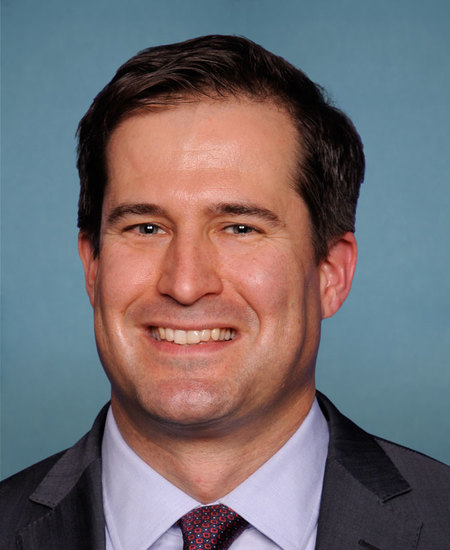
Rep. Seth Moulton
Sponsored bills
Maddy summaryThis bill changes rules for prescribing certain medications used to treat substance use disorders. It allows healthcare providers to use telehealth for the initial patient evaluation instead of requiring an in-person visit, but only for drugs approved by the FDA for addiction treatment (schedules III-V). The telehealth must meet specific standards, including real-time audio/video communication. This affects doctors and other practitioners who prescribe these medications for substance use disorders.
Maddy summaryThis bill amends Medicare rules to allow nurse practitioners and physician assistants to certify diabetic shoe coverage for Medicare beneficiaries with diabetes, expanding the current requirement that only physicians could provide this documentation. It directly affects Medicare patients needing specialized footwear due to diabetes and healthcare providers like NPs and PAs who would now be authorized to meet the certification requirement. The key change modifies Section 1861(s)(12) of the Social Security Act to insert "nurse practitioner, or physician assistant" in all relevant sections of the documentation rules. This update simplifies access to covered diabetic shoes by broadening which healthcare professionals can issue the necessary certification.
Maddy summaryHR 1573, the Military and Educational Data Integration Act, requires the Secretaries of Defense and Homeland Security to create a secure process for state education agencies to access specific demographic data about military members and applicants who graduated from high school in that state. The data includes educational attainment, military branch, test scores, and separation dates, allowing states to integrate this information into their education systems. The bill mandates strict privacy protections, requiring confidential transmission, compliance with existing privacy laws, and secure data handling practices. It does not change military recruitment policies or create new programs, focusing solely on enabling data sharing between military and education agencies.
Maddy summaryEthan's Law requires gun owners to store firearms securely in homes where minors live or where residents are legally prohibited from owning guns. It makes it unlawful to leave firearms unsecured if a minor or ineligible person could access them, with fines of $500 per violation and harsher penalties if injury or death occurs. The bill creates a federal grant program to help states implement similar secure storage laws and treats unsafe storage as negligence in legal cases. It directly affects households with children or residents who cannot legally possess firearms, aiming to reduce accidental shootings and unauthorized access.
Maddy summaryHRES 160 designates January 2025 as "National Mentoring Month" to highlight the positive impact of mentoring relationships on young people. The resolution emphasizes how mentoring improves academic performance, mental health, career readiness, and social skills - particularly for underserved youth - and addresses the "mentoring gap" where one in three young people lacks a supportive adult outside their family. It calls for expanding mentoring programs in schools, communities, and workplaces without creating new laws or funding. As a symbolic resolution, it aims to raise public awareness and encourage participation in existing mentoring initiatives.
Maddy summaryHRES 154 is a symbolic resolution commemorating Ukraine's sacrifices 3 years after Russia's February 24, 2022, full-scale invasion. It condemns Russia's aggression, recognizes the human and material toll of the war (including civilian casualties and infrastructure damage), and reaffirms U.S. support for Ukraine's sovereignty and territorial integrity. The resolution does not create new policies or funding but expresses congressional solidarity with Ukraine through ceremonial recognition and condemnation of Russian actions. It was introduced by Rep. Kaptur and co-sponsors on February 24, 2025.
Pay Our Coast Guard Parity Act of 2025 This bill provides continuing appropriations to the Coast Guard for pay and benefits when there is a Coast Guard-specific funding lapse. Under the bill, a Coast Guard-specific funding lapse occurs when (1) a bill providing appropriations for the Coast Guard for a fiscal year has not been enacted before the beginning of that fiscal year, and no joint resolution providing continuing appropriations for the Coast Guard is in effect; and (2) a bill providing appropriations for the Department of Defense (DOD) for the fiscal year has been enacted before the beginning of the fiscal year, or a joint resolution providing continuing appropriation for DOD is in effect. If a Coast Guard-specific funding lapse occurs, the bill provides appropriations to the Coast Guard for pay and allowances for military members of the Coast Guard who perform active service or inactive-duty training; pay and benefits for certain civilian employees and contract employees; the payment of a death gratuity; payments for travel related to funerals, the dignified transfer of remains, and unit memorial services; and the temporary continuation of the basic allowance for housing for dependents of members of the Coast Guard dying on active duty. The bill generally provides the appropriations to the Coast Guard until the earlier of the enactment of specified Coast Guard appropriations legislation, the termination of the availability of appropriations for DOD, or two weeks after the beginning of the Coast Guard-specific funding lapse.
Maddy summaryHR 1456, the Gun Trafficker Detection Act, requires private firearm owners (non-licensed individuals) to report lost or stolen firearms to the Attorney General within 48 hours via a new web portal. It imposes civil penalties of up to $1,000 for first violations and $5,000 for repeat violations, and prohibits individuals with two or three penalty assessments from receiving firearms for 1 year or 5 years, respectively. The bill mandates law enforcement agencies to use 5% of crime grant funds to study lost/stolen firearm data collection and updates the National Instant Background Check System to include these new restrictions. It directly affects private gun owners and law enforcement agencies, focusing on reporting compliance and background check adjustments.
Maddy summaryHR 1502 authorizes the creation of a Congressional Gold Medal to honor the volunteers and communities (primarily from Nebraska, Colorado, and Kansas) who supported the North Platte Canteen during World War II. The bill directs the Treasury Secretary to design and strike the medal, which will be presented to the individuals who contributed to the canteen’s operations and then permanently displayed at the Lincoln County Historical Museum in North Platte, Nebraska. It also permits the sale of bronze duplicates to cover production costs, with proceeds going to the U.S. Mint. This is a commemorative measure recognizing historical service, not a policy change affecting current laws or programs.