

Maddy summaryThis bill, HR 1097 (Everett Alvarez, Jr. Congressional Gold Medal Act of 2023), authorizes the award of a Congressional Gold Medal to Everett Alvarez, Jr., in recognition of his service as a U.S. Navy pilot and Vietnam War prisoner of war. It directly honors Alvarez, who was the first U.S. pilot shot down in the Vietnam War, spent over 8.5 years in captivity, and later served in the Peace Corps and Veterans Administration. The bill’s key mechanism is directing the U.S. Mint to strike a gold medal bearing his name and image, with bronze duplicates available for sale to cover costs. It does not create new policies or affect any group beyond the honoree.
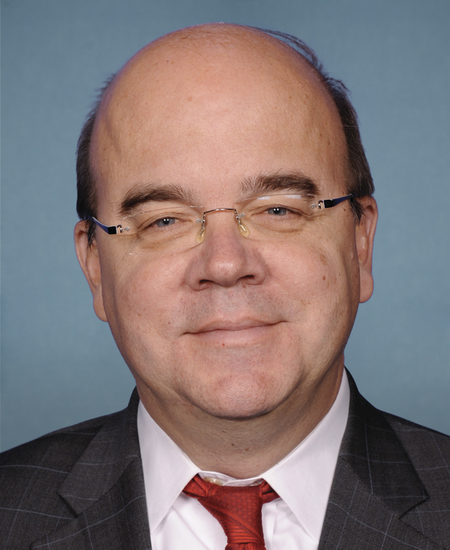
Rep. James P. McGovern
Sponsored bills
Maddy summaryThis bill establishes US policy to support Southern Mongolians' cultural, linguistic, and religious rights in China, directing the US government to condemn human rights abuses and work with international partners to advocate for these rights. Key provisions include requiring annual reports identifying officials responsible for human rights violations, establishing a Mongolian-language Voice of America service, and directing cultural preservation efforts through institutions like the Smithsonian. The bill specifically addresses policies in China that have restricted Mongolian language education, forced resettlement of nomadic communities, and limited religious practices. It also mandates the US to work with international financial institutions to support projects that respect Southern Mongolian cultural traditions and livelihoods. The bill sets guidelines for US diplomatic engagement but does not directly alter Chinese policies or impose restrictions on China.
Maddy summaryThis bill creates a task force within Homeland Security to reunite children separated from parents or guardians at the U.S.-Mexico border between January 20, 2017, and January 20, 2021, under the Zero-Tolerance Policy. The task force must identify all affected children, recommend legal pathways for reunification (including parole, visas, or services like mental health support), and consult with affected families and organizations. It must report to Congress every 60 days and will sunset within 120 days of all reunifications or by January 20, 2039, whichever comes first. The bill directly affects children separated during that specific policy period and requires federal agencies to coordinate on practical solutions.
Maddy summaryThe Keep It in the Ground Act of 2023 prohibits the U.S. government from issuing new leases or renewing/reinstating nonproducing leases for fossil fuels (including oil, gas, coal, tar sands, and oil shale) on federal lands and waters. It specifically bans new offshore leasing in the Arctic, Atlantic, Pacific, and Gulf of Mexico oceans, as well as onshore leasing under the Mineral Leasing Act. The bill directly affects fossil fuel companies seeking federal leases by blocking new development and preventing extensions of inactive leases. Key provisions require the Secretary of the Interior to cancel certain existing offshore leases in the Beaufort Sea, Cook Inlet, and Chukchi Sea within 60 days of enactment. Exceptions only apply for imminent national security threats or to avoid breaching existing lease contracts.
Maddy summaryHR 10456, the SAFE SEX Workers Study Act, requires the Department of Health and Human Services and the Department of Justice to study the impacts of the SESTA/FOSTA law on sex workers and human trafficking investigations. The HHS study will examine how the loss of online platforms (like Backpage) affected sex workers' health, safety, economic stability, and access to harm reduction services. The Justice Department will assess how SESTA/FOSTA changed human trafficking investigations, prosecutions, and law enforcement practices. Both reports must be completed within one year of the bill's enactment and made publicly available.
Maddy summaryThis bill requires states to prohibit physicians from performing specific non-emergency surgeries on foster children under age 6 who have variations in sex characteristics (commonly called intersex traits), unless the procedure addresses an immediate life threat. It targets procedures like clitoral reduction, gonadectomy, and vaginoplasty that are often done without consent on infants. States must enforce this through licensing penalties, and it applies only to children in foster care as a condition for receiving federal foster care funding. The bill explicitly states it does not restrict medically necessary surgeries or procedures for transgender youth.
Maddy summaryThis bill (HR 10237) requires U.S. Customs and Border Protection (CBP) to create new guidelines within 180 days for handling personal belongings of individuals arrested, restrained, or confined by CBP. The guidelines must ensure detainees can keep as much property as operationally feasible, return all stored items upon release, and specify essential categories like medical devices, IDs, phones, and legal documents that must remain with or be returned to the individual. CBP must also provide written receipts for stored items, detail circumstances for discarding property, and track compliance through annual reports to Congress. The bill mandates consultation with advocacy groups and includes oversight by the Comptroller General to review implementation and effects on CBP operations.
Maddy summaryThis bill requires Medicare providers to inform patients about breast reconstruction coverage before performing a mastectomy. Specifically, it mandates that providers must tell patients their Medicare coverage includes breast reconstruction surgery following a medically necessary mastectomy (covered under Medicare's existing national policy 140.2) and document this discussion in the patient's medical record. The requirement applies to all mastectomies performed on or after one year after the bill's enactment. It directly affects Medicare beneficiaries undergoing mastectomies and the healthcare providers who perform these procedures, ensuring patients are aware of existing coverage options. The bill does not change Medicare's coverage rules but ensures patients receive clear information about available benefits.
Maddy summaryThe HOPE Act of 2024 aims to simplify access to government benefits for low-income individuals by creating digital "HOPE Accounts" through pilot programs. These accounts would allow people to deposit paychecks, apply for multiple benefits (like SNAP, WIC, and healthcare) through a single smartphone app, access job training resources, and receive subsidized devices and internet if needed. The bill targets individuals below 200% of the federal poverty line, including those experiencing food insecurity, living in high-poverty areas, or with disabilities. Pilot projects would be funded through competitive grants to states and local governments from 2025-2030, with requirements to improve accessibility, maintain program integrity, and protect privacy. The legislation requires annual reports to Congress on how effectively the pilot programs reduce application barriers and administrative costs.
Maddy summaryThe Pharmacists Fight Back Act (HR 9096) sets new rules for Pharmacy Benefits Managers (PBMs) working with federal health care programs like Medicare Part D and Medicaid. It requires PBMs to reimburse in-network pharmacies at a rate covering the drug's actual cost plus a small fee (capped at $25), and to reduce patient cost-sharing by at least 80% of rebates received from drug manufacturers. The bill bans PBMs from steering patients to specific pharmacies, charging patients more than pharmacies are paid, or using rebates to lower pharmacy payments after claims are processed. It also mandates public reporting of drug pricing data to improve transparency, ensuring patients and pharmacies receive fairer treatment under federal health programs.