

Maddy summaryThis bill creates a new federal tax credit for family child care providers who operate from their primary residence and hold state licenses. It allows qualifying providers to claim up to $5,000 in startup costs per year, including licensing fees, supplies, insurance, safety equipment, furniture, and required home renovations. The credit applies only once per provider (no repeat claims) and expires after 7 years. It directly benefits small-scale, licensed family child care providers serving at least two non-family children, aiming to reduce their initial business setup costs.
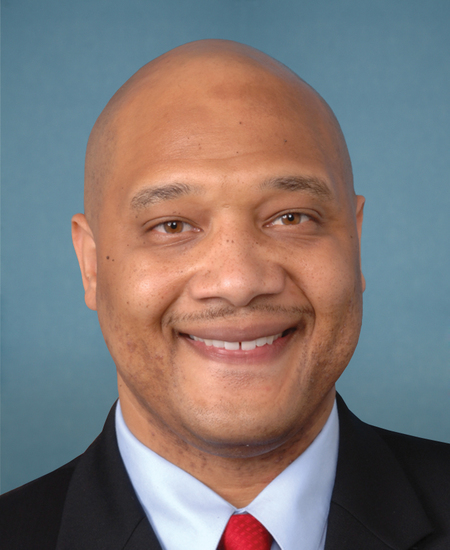
Rep. André Carson
Sponsored bills
Maddy summaryHR 8005, the Child Exploitation and Artificial Intelligence Expert Commission Act of 2024, establishes a 13-member commission to investigate how artificial intelligence is used in child exploitation crimes and recommend solutions to improve law enforcement's ability to prevent, detect, and prosecute such crimes. The commission, appointed by congressional leaders with expertise in law enforcement, AI, or child welfare, must submit a final report to Congress within two years detailing findings and recommendations for legal or technical improvements. This bill does not create new laws but focuses on identifying legal barriers and developing actionable solutions for law enforcement agencies. The commission will operate independently without federal government employees serving as members.
Maddy summaryThis bill requires the Secretary of Agriculture to annually assess U.S. reliance on critical farm inputs - such as fertilizers, seeds, veterinary drugs, and agricultural equipment - that could be disrupted if China exploits supply chains. It mandates identifying domestic production capacity, supply chain vulnerabilities, and recommending ways to reduce dependency through onshore or nearshore production. The assessment must protect private company data, prohibiting disclosure of identifiable information and ensuring only anonymized aggregate data is used or shared. The law focuses on supply chain security for American agriculture without compelling businesses to provide sensitive information.
Maddy summaryThis bill authorizes $5 billion annually (2025-2034) for three key housing programs - Home Investment Partnerships, Community Development Block Grants, and the Housing Trust Fund - but restricts funding to areas already designated with a "high housing cost adjustment" by HUD. It mandates a two-year assessment by the Secretary of Housing and Urban Development to evaluate how area median income (AMI) calculations impact affordability, particularly in high-cost urban areas, including analyzing ZIP code-level metrics and alternatives to AMI. The study must examine rent burdens, income limits for tax-subsidized housing, and the specific effects of high-cost adjustments in places like New York City. The bill directly affects low-income and middle-class families in urban areas where housing costs significantly exceed local median income, aiming to inform potential reforms to housing affordability metrics.
Maddy summaryHRES 1128 is a non-binding resolution recognizing the Muslim holy month of Ramadan and extending best wishes for Eid al-Fitr. It formally acknowledges Ramadan's significance as a period of fasting and spiritual renewal for Muslims worldwide, and expresses solidarity with Muslim communities in the United States and globally. The resolution does not create new laws or policies - it is purely ceremonial, affirming respect for the observance without any concrete policy changes or direct effects on individuals or groups. Introduced by Representatives Dingell, Tlaib, Carson, Grijalva, Cárdenas, Omar, and Schakowsky on April 10, 2024, it serves as a symbolic gesture of inclusion.
This resolution recognizes the anniversary of the Civil Rights Act of 1866 and its impact on establishing that all Americans are protected equally under the law.
Maddy summaryThis bill prohibits the U.S. Census Bureau from asking questions about citizenship, nationality, or immigration status on the main decennial census questionnaire (used every 10 years to count the population). It directly affects all households participating in the decennial census by removing these questions from the standard form. The bill specifically exempts the American Community Survey (ACS), which continues to collect such data for statistical purposes. The key mechanism is amending Title 13 of the U.S. Code to add this prohibition, ensuring the main census remains focused solely on population count.
Maddy summaryThe STAMP Act of 2024 bans state and local governments from taxing menstrual products. It prohibits taxes on items like pads, tampons, menstrual cups, discs, and period underwear that meet industry standards. The law directly affects consumers purchasing these products and state/local governments that previously imposed such taxes. It takes effect 120 days after enactment, removing tax burdens on menstrual products nationwide.
Maddy summaryThis bill requires federal agencies to include specific equity goals in their planning documents. Agencies must set at least one goal (or 20% of total goals, whichever is greater) focused on improving services for underserved communities and individuals, defined as groups systematically denied full participation in economic, social, and civic life. Agencies must also consult with community groups, local governments, and research partners when developing these plans. The law amends existing planning requirements under Titles 5 and 31 of the U.S. Code to implement these changes.
Maddy summaryHR 7874 would require the U.S. to terminate its 1984 tax treaty with China if China's military attacks Taiwan. The bill mandates that the President notify the Treasury Secretary within 30 days of such an attack, triggering formal treaty termination through diplomatic channels. It also requires the President to inform specific congressional committees about the termination. This bill directly affects U.S.-China tax relations but does not change current tax laws or rates.