

Maddy summaryHR 1457, the "IDs for an Inclusive Democracy Act," requires the Social Security Administration to issue free federal identification cards within three years. These cards would be accepted as valid ID for the same purposes as state driver's licenses, including gender identity options (male, female, or X) chosen by the applicant. The bill establishes a process for applying via the U.S. Postal Service, with options for in-person service, online, or mail-in applications. It also mandates a public education campaign and special validity rules for minors (under 18) and seniors (65+), ensuring the ID remains valid without renewal after age 65.
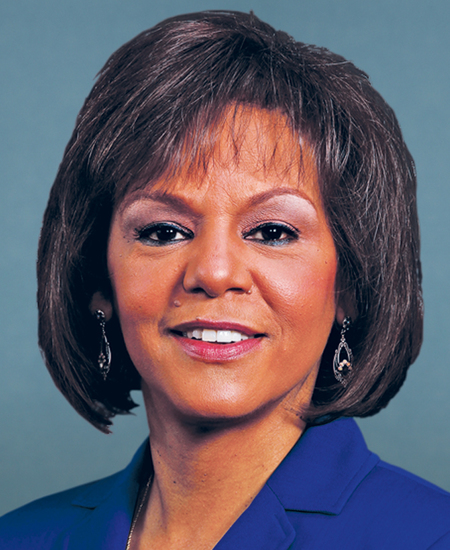
Rep. Robin L. Kelly
Sponsored bills
Maddy summaryHR 1410 expands access to mental health care for 9/11 responders and survivors by allowing licensed mental health providers (not just physicians) to conduct initial health evaluations and certifications under the World Trade Center Health Program. It adjusts the program’s funding formula to account for changing enrollment numbers by linking annual funding to the previous year’s enrollment ratio, and clarifies that deceased individuals are excluded from enrollment counts. The bill also extends the timeframe for adding new health conditions to the program’s list and requires a 2028 report assessing long-term funding needs through 2090. These changes aim to streamline eligibility, improve care access, and ensure sustainable funding for the program.
Maddy summaryThis bill authorizes a ceremonial gold medal to honor former President Jimmy Carter, recognizing his service as the 39th U.S. President and his post-presidential work. It directs the Treasury to strike a gold medal bearing his name and image, to be presented posthumously to the Carter Center in Atlanta (where he and his wife Rosalynn founded the organization). Bronze duplicates may be sold to cover costs, with proceeds going to the U.S. Mint fund. The bill does not create new laws or affect any policies, as it is purely a commemorative gesture.
This concurrent resolution declares that Congress should not impose any new performance fee, tax, royalty, or other charge relating to the public performance of sound recordings on a local radio station for broadcasting sound recordings over the air, or on any business for such public performance of sound recordings.
Maddy summaryThis bill (HR 1314, TIPS Act) requires employers to pay tipped workers the standard federal minimum wage instead of the current lower rate (currently $2.13/hour), directly affecting workers in hospitality, food service, and similar roles. It also creates a new tax deduction for cash tips received in qualifying jobs (e.g., restaurants, hotels), allowing workers to deduct these tips from taxable income up to $112,500 in adjusted gross income. The deduction applies only to tips from unrelated customers without business ownership stakes, excluding credit card tips. The tax provisions take effect for 2026 tax years.
Maddy summaryThe Black History Matters Act directs the National Museum of African American History and Culture to study how public elementary and secondary schools teach Black history across the U.S. The study will identify which schools require this education, assess teaching quality through classroom discussions and materials, and examine how schools measure student learning. It requires the Director to complete the study within three years of the bill’s passage and submit a report to Congress within 180 days of completion. The bill does not change school curricula but aims to gather data on existing practices to inform future education policies. This study directly affects all public schools covered under the Elementary and Secondary Education Act.
Maddy summaryThe Office of Gun Violence Prevention Act of 2025 would create a new office within the Department of Justice to coordinate federal efforts on reducing gun violence. The office, led by a Director appointed by the Attorney General, would integrate existing DOJ programs, evaluate data gaps, and develop evidence-based recommendations for Congress and the President. It would also establish an advisory council including survivors of gun violence, public health officials, and community representatives to guide its work. The office would produce annual reports detailing gun violence trends and policy proposals, while collaborating with agencies like Health and Human Services and the FBI.
Maddy summaryHR 1277, the First Rhode Island Regiment Congressional Gold Medal Act, authorizes a single gold medal to honor the First Rhode Island Regiment for its service during the Revolutionary War. The bill commemorates the regiment as one of the first integrated military units in U.S. history, formed in 1778 when Rhode Island allowed enslaved and Indigenous men to enlist and gain freedom upon service. The medal, designed by the Treasury Secretary, will be displayed at the Rhode Island State Library, with Congress encouraging its availability for research and display at relevant historical sites. This is a commemorative measure with no direct policy impact or financial provisions for individuals, focusing solely on historical recognition.
Maddy summaryHR 1251, the All Access Act of 2025, requires Members of Congress (House members and Senators) to present official identification to enter federal public buildings during regular business hours. For access outside these hours, Members must notify the building head at least 12 hours in advance. The bill establishes clear, procedural access rules for congressional members but does not create new policies or affect the public. It is a straightforward procedural measure governing Member access to federal facilities.
Maddy summaryThis bill proposes a constitutional amendment stating that only "natural persons" (living humans) have rights protected by the U.S. Constitution, explicitly denying constitutional rights to corporations, LLCs, and other artificial entities. It would require governments to regulate campaign contributions and spending to prevent money from influencing elections, banning the view that spending to influence elections constitutes protected speech under the First Amendment. The amendment would not affect the constitutional right to a free press. This change would directly impact how corporations and other non-human entities can legally challenge laws or regulations in court.