Issue · Criminal Justice

Criminal Justice

Every criminal justice bill, vote, and legislator stance in Indiana, automatically classified by Maddy, our AI policy reader.

Total bills
38
2026 Regular Session
Top supporter
Rodney Pol
100% support rate
Top opponent
Elizabeth Rowray
0% support rate
Ranked legislators
10
5 support · 5 oppose
Key legislators

Who's moving criminal justice in Indiana

Legislators moving criminal justice in Indiana
Legislator Party Stance Support rate Votes
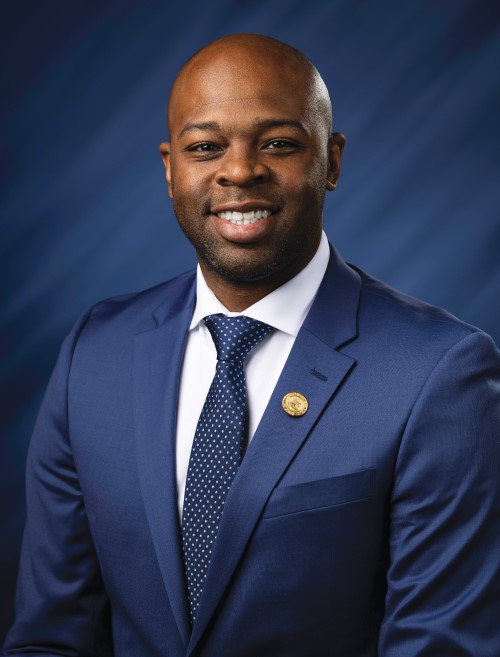
Rodney Pol
Rodney Pol Senate · District 4
D
Strong +
100% 23
John Bartlett
John Bartlett House · District 95
D
Support
70% 75
Alex Burton
Alex Burton House · District 77
D
Support
70% 72
Vernon Smith
Vernon Smith House · District 14
D
Support
70% 74
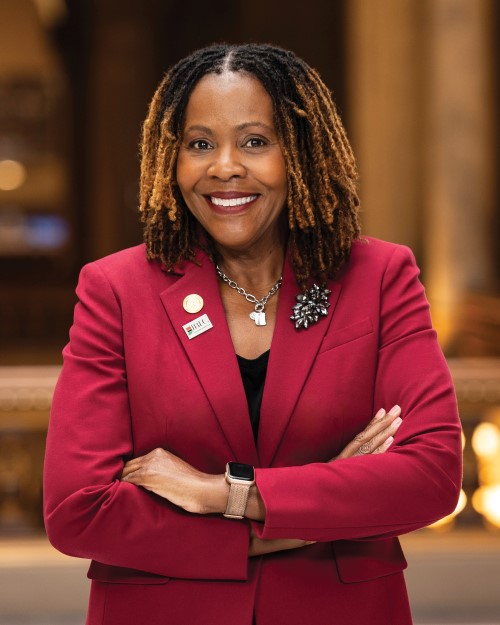
Robin Shackleford
Robin Shackleford House · District 98
D
Support
70% 74
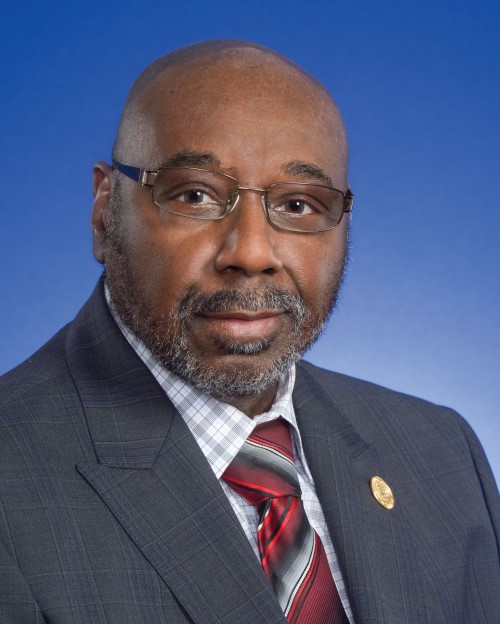
Elizabeth Rowray
Elizabeth Rowray House · District 35
R
Strong −
0% 62
Ed Clere
Ed Clere House · District 72
I
Strong −
10% 75
Heath VanNatter
Heath VanNatter House · District 38
R
Strong −
12% 71
Mike Aylesworth
Mike Aylesworth House · District 11
R
Strong −
20% 75
Shane Lindauer
Shane Lindauer House · District 63
R
Oppose
25% 69
Showing 21–30 of 38 bills

All criminal justice bills

in committee · Indiana · House Jan 5, 2026

HB 1172: Rape kits.

Requires the superintendent of the state police department to: (1) obtain data from law enforcement agencies concerning medical forensic examination kits in the agencies' possession; and (2) report a summary of the data to the legislative council.
in committee · Indiana · Senate Jan 15, 2026

SB 286: Cannabis regulation.

Permits the use of cannabis by: (1) a person at least 21 years of age; and (2) a person with a serious medical condition as determined by the person's physician. Establishes the adult use cannabis excise tax, and requires a retailer to transfer the tax to the department of state revenue for deposit in the state general fund. Exempts veterans from payment of the sales tax on medical or adult use cannabis. Establishes a cannabis program (program) to permit the cultivation, processing, testing, transportation, and sale of cannabis by holders of a valid permit. Establishes the Indiana cannabis commission (ICC) as a state agency to oversee, implement, and enforce the program, and establishes the ICC advisory committee to review the effectiveness of the program. Requires that permit holders take steps to prevent diversion of cannabis to unauthorized persons. Requires that cannabis and cannabis products be properly labeled, placed in child resistant packaging, and tested by an independent testing laboratory before being made available for purchase. Prohibits packaging cannabis in a manner that is appealing to children. Authorizes research on cannabis in accordance with rules set forth by the ICC. Establishes a procedure for the expungement of a cannabis related conviction if the act constituting the conviction becomes legal. Makes conforming amendments.
signed · Indiana · House Mar 3, 2026

HB 1250: Public safety procedures.

Requires the department of correction to electronically notify, at least seven days in advance, the: (1) county sheriff; (2) prosecuting attorney; and (3) chief of police; of the county or municipality into which the department will release a serious violent felon, including a juvenile adjudicated for an act that would be a serious violent felony, and of the county or municipality where the serious violent felon or juvenile committed the offense. Requires the department of correction to notify a registered victim through the department's automated victim notification system. Requires: (1) a court; and (2) the prosecuting attorney or the prosecuting attorney's victim assistance program; to notify a victim of the automated victim assistance notification program, and provides that a victim has the right to be informed, upon request, about the progress of the criminal case involving the victim. Requires that, before hiring a person as a law enforcement officer, a law enforcement hiring department or agency shall request from prior law enforcement employers all documents relating to disciplinary action or internal investigations that involve the person. (Under current law, a hiring agency must request all findings and orders).
Sub-Topics Juvenile Justice Probation & Parole Victims' Rights Tags Public Safety
in committee · Indiana · House Jan 8, 2026

HB 1367: Involuntary treatment of substance use disorder.

Allows an individual's spouse, legal guardian, friend, relative, or medical service provider to petition a court for involuntary substance use disorder treatment. Requires a petition to include certain information and allows a court to dismiss a petition, without prejudice, if it does not contain the required information. Requires the court to appoint a public defender if the individual subject to a petition seeking involuntary substance use disorder treatment is not represented by an attorney. Requires a court to order the individual to be evaluated by a medical provider if the court finds that: (1) the individual has a substance use disorder; (2) because of the individual's substance use disorder, the individual is experiencing impaired judgment and is unable to independently maintain the individual's activities of daily living or is a danger to self or others; and (3) the individual refuses to voluntarily participate in substance use disorder treatment. Allows a court to order a local law enforcement agency to consider whether an individual meets the criteria for emergency detention under certain circumstances. Requires a medical provider who completes an evaluation concerning an individual's need for substance use disorder treatment to submit the evaluation to the court. Specifies that after receiving an evaluation from a medical provider, the court may dismiss the petition or set a hearing for further evidence to be presented about the individual's need for substance use disorder treatment. Requires a court to order involuntary outpatient substance use disorder treatment for a period, not to exceed 90 days, if medical evidence supports that the individual requires immediate treatment for a substance use disorder and the individual has refused treatment.
in committee · Indiana · Senate Jan 8, 2026

SB 201: Protecting children from family violence.

Amends the definition of "domestic or family violence" to include additional acts or behaviors that are not necessarily physical. Prohibits a court from returning certain children to the child's parent, guardian, or custodian unless appropriate safety conditions are ordered. Requires the office of judicial administration to develop a training program, which must include certain topics relating to domestic or family violence. Makes technical and conforming changes.
in committee · Indiana · House Jan 6, 2026

HB 1301: Sentence modification.

Requires the department of correction to issue a certificate of eligibility for rehabilitative release (certificate) to certain convicted persons. Provides that a certificate must be issued to the following: (1) A person sentenced for a crime other than murder who is at least 60 years of age, and has served at least 20 years in the department of correction. (2) A person serving a sentence for murder who is at least 62 years of age, and has served at least 30 years in the department of correction. Allows a convicted person who has received a certificate to file a petition for sentence modification without the consent of the prosecuting attorney. Provides certain criteria that the court must consider when ruling on a petition for sentence modification. Allows a court to grant a petition for sentence modification if the court finds, by clear and convincing evidence, that: (1) the convicted person is no longer a danger to public safety; (2) the convicted person has demonstrated significant rehabilitative efforts, including participation in educational, vocational, and therapeutic programs; and (3) the interest of justice supports sentence modification. Allows the state public defender to represent a convicted person on a petition for sentence modification that is based upon a certificate. Allows certain convicted persons to file a petition for sentence reduction. Requires a petition for sentence reduction to identify information related the convicted person, sentence sought to be reduced, and evidence in support of the request. Allows a court to dismiss an incomplete petition or set a hearing on a properly filed petition. Requires that notice of a hearing be served on the petitioner, convicted person, counsel, department of correction, prosecuting attorney, and the victim or witness. Requires a court to appoint a public defender to represent the convicted person. Provides that the court is to take certain factors into consideration when deciding a petition for sentence reduction. Specifies that if the evidence supports that the convicted person does not present a significant safety risk to the community, there is a rebuttable presumption that the convicted person's sentence should be reduced by at least 20%. Requires the court to issue a final appealable order with findings of fact.
signed · Indiana · Senate Mar 4, 2026

SB 9: Victim impact statements.

Requires a defendant to be present in the courtroom while a victim makes a statement concerning the crime and the sentence, unless the defendant presents a safety risk or causes a significant disruption. Provides that if a defendant fails to appear at sentencing and is later taken into custody, the court may hold a hearing to permit the victim to makes a statement concerning the crime and the sentence in the presence of the defendant.
in committee · Indiana · House Jan 5, 2026

HB 1123: Police investigations relating to prostitution.

Provides that, after June 30, 2026, a law enforcement agency may not authorize the use of public funds by a law enforcement officer to pay for or engage in sexual intercourse, other sexual conduct, or the fondling of the law enforcement officer's or another individual's genitals as part of an investigation of: (1) prostitution; (2) making an unlawful proposition; or (3) promoting prostitution as a Level 5 felony. Provides that a law enforcement officer who knowingly or intentionally: (1) engages in sexual intercourse or other sexual conduct with an individual; (2) has an individual fondle or agree to fondle the genitals of the law enforcement officer; or (3) fondles the genitals of an individual under certain circumstances relating to the law enforcement officer's official duties; commits unlawful sexual conduct by a law enforcement officer, a Level 5 felony. Makes exceptions.
signed · Indiana · Senate Mar 5, 2026

SB 92: Community corrections trust funds.

Authorizes a county that operates a community corrections program to establish a county community corrections trust fund (fund). Specifies the funding sources and permissible uses of the fund. Specifies reporting and auditing requirements relating to the administration of the fund. Makes technical corrections to a reference to community corrections programs located in the civil procedure law.
in committee · Indiana · House Jan 8, 2026

HB 1073: Rape kit processing.

Requires the state police department (department) to use part of an appropriation from House Enrolled Act 1001 (2025) to process rape kits and to eliminate the backlog of untested rape kits. Permits the department to issue grants to law enforcement agencies and testing labs to eliminate the backlog of untested rape kits. Requires the department to make a report to the general assembly by October 1, 2027, concerning the status of untested rape kits.
Showing 21 to 30 of 38 bills
Previous 1 2 3 4 Next