Issue · Technology

Technology (Artificial Intelligence)

Every technology bill, vote, and legislator stance in Illinois, automatically classified by Maddy, our AI policy reader.

Total bills
55
104th Regular Session
Top supporter
Rita Mayfield
100% support rate
Top opponent
Travis Weaver
0% support rate
Ranked legislators
10
5 support · 5 oppose
Key legislators

Who's moving artificial intelligence in Illinois

Legislators moving artificial intelligence in Illinois
Legislator Party Stance Support rate Votes
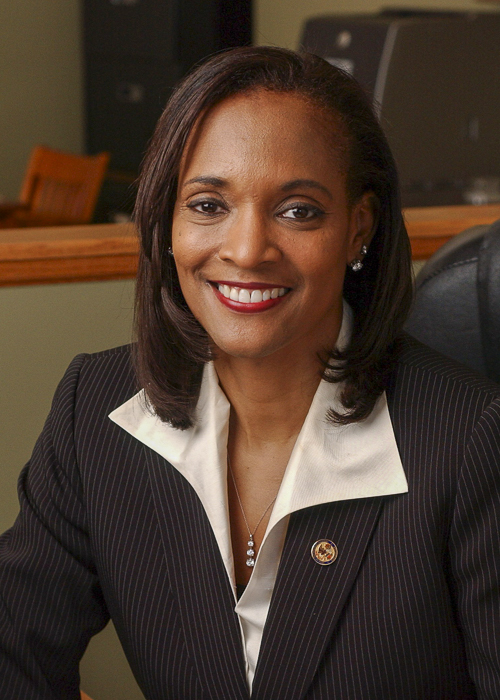
Rita Mayfield
Rita Mayfield House · District 60
D
Strong +
100% 6
Anthony DeLuca
Anthony DeLuca House · District 80
D
Strong +
100% 4
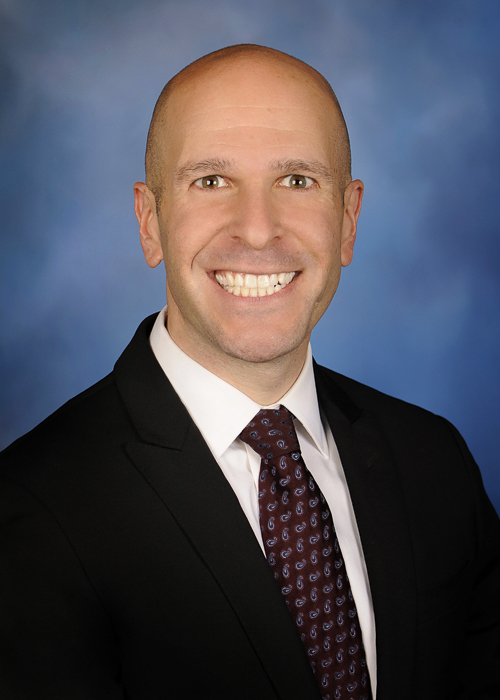
Bob Morgan
Bob Morgan House · District 58
D
Strong +
100% 3
Camille Lilly
Camille Lilly House · District 78
D
Strong +
100% 3
Harry Benton
Harry Benton House · District 97
D
Strong +
100% 3
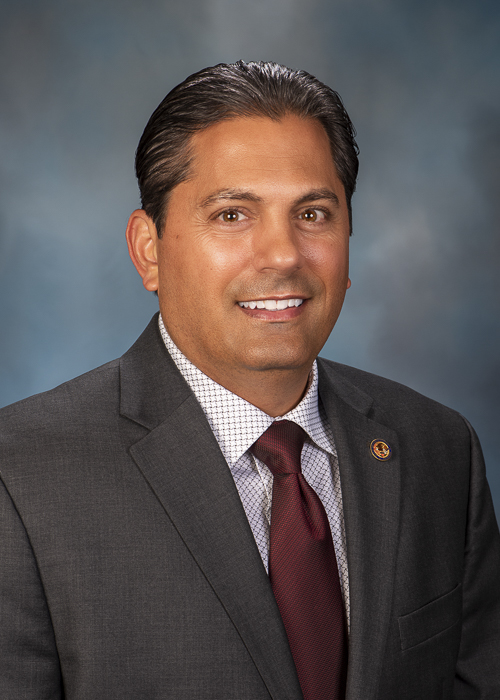
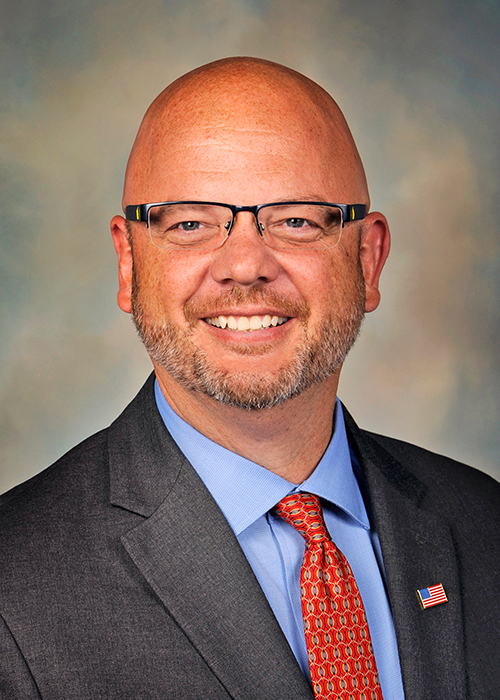
Travis Weaver
Travis Weaver House · District 93
R
Strong −
0% 5
Jeff Keicher
Jeff Keicher House · District 70
R
Strong −
0% 4
Norine Hammond
Norine Hammond House · District 94
R
Strong −
0% 4
Adam Niemerg
Adam Niemerg House · District 102
R
Strong −
0% 3
Dennis Tipsword
Dennis Tipsword House · District 105
R
Strong −
0% 3
Showing 11–20 of 55 bills

All technology bills

in committee · Illinois · House Mar 27, 2026

HB 4711: PROVENANCE DATA REQUIREMENTS

Creates the Provenance Data Requirements Act. Provides that a generative artificial intelligence tool provider shall apply provenance data, either directly or through the use of third-party technology, to wholly-generated synthetic content generated by the provider's generative artificial intelligence tool. Sets forth additional requirements on generative artificial intelligence tool providers, large online platforms, and manufacturers of capture devices. Defines terms.
in committee · Illinois · House Mar 27, 2026

HB 5113: SCH CD-AI USE IN EDUC COMM

Amends the School Code. Requires the State Board of Education to establish an Artificial-Intelligence Use in Education Commission to collect information and submit recommendations relative to best educational practices and policies for smartphone and artificial-intelligence use in schools and compile research and collaborate to learn more on what recommendations are most effective for student-learning outcomes. Sets forth the Commission's membership, meetings, responsibilities, and support and reporting requirements. Repeals the provisions on January 1, 2030. Effective January 1, 2027.
in committee · Illinois · Senate May 22, 2026

SB 3444: AI MODEL SAFETY

Creates the Artificial Intelligence Safety Act. Provides that a developer of a frontier artificial intelligence model shall not be held liable for critical harms caused by the frontier model if the developer did not intentionally or recklessly cause the critical harms and the developer publishes a safety and security protocol and transparency report on its website. Provides that a developer shall be deemed to have complied with these requirements if the developer: (1) agrees to be bound by safety and security requirements adopted by the European Union; or (2) enters into an agreement with an agency of the federal government that satisfies specified requirements. Sets forth requirements for safety and security protocols and transparency reports. Provides that the Act shall no longer apply if the federal government enacts a law or adopts regulations that establish overlapping requirements for developers of frontier models.
in committee · Illinois · Senate May 22, 2026

SB 3502: AI PRODUCT LIABILITY ACT

Creates the Artificial Intelligence Design Requirements Act. Sets forth provisions concerning product liability actions brought against a developer of an artificial intelligence system for defective design, failure to contain adequate instructions or warnings, and failure to conform to an express warranty. Provides that a deployer of an artificial intelligence system shall be deemed to be liable as a developer for harm caused by a product if: (1) the deployer makes material and substantial change to the product or (2) the deployer intentionally misuses the product contrary to the express warranty and that use was the proximate cause of harm to the plaintiff. Sets forth provisions concerning applicability and enforcement.
in committee · Illinois · Senate May 22, 2026

SB 3368: CHATBOT RESPONSE LIABILITY ACT

Creates the Chatbot Response Liability Act. Provides that a proprietor of a chatbot that is used as an alternative to a human representative or that provides any substantive response, information, advice, or action may not disclaim liability if the chatbot provides materially misleading, incorrect, contradictory, or harmful information that results in financial loss or other demonstrable harm or that results in bodily harm to the covered user or any third party. Provides that a proprietor of a chatbot shall provide clear, conspicuous, and explicit notice to covered users that the covered users are interacting with an artificial intelligence chatbot program rather than a human. Sets forth requirements for proprietors of companion chatbots, including parental consent for the use of companion chatbots by minors. Requires the Attorney General to adopt rules to determine commercially reasonable and technically feasible methods for proprietors of companion chatbots to comply with the Act. Effective one year after becoming law.
in committee · Illinois · House Feb 10, 2026

HB 5106: CRIM CD-DEEPFAKE-HARASS

Amends the Criminal Code of 2012. Provides that a person also commits harassment through electronic communications when he or she uses electronic communication to transmit to any person a deepfake with intent to harass. Defines "deepfake".
in committee · Illinois · Senate Feb 5, 2026

SR 610: PD365/ISBE-ARTIFICIAL INTEL

Supports the principles put forth by Illinois ASCD/PD365 regarding the ethical and effective use of artificial intelligence in K-12 classrooms. Urges the Illinois State Board of Education (ISBE), in collaboration with school districts, educators, technology experts, and stakeholder organizations, to develop statewide guidelines for the ethical and responsible use of artificial intelligence in education, including protections for student data, expectations for algorithmic transparency, monitoring for bias, and the incorporation of digital and AI literacy into Illinois curricula to ensure students can thoughtfully and ethically engage with emerging technologies. Encourages investment in educator professional development and equitable access to technology, including broadband infrastructure, one-to-one devices, and AI-enabled tools to ensure that all Illinois educators and students are prepared to use artificial intelligence responsibly, effectively, and fairly across all schools.
in committee · Illinois · House Mar 27, 2026

HB 4985: SURVEILLANCE-BASED PRICING

Creates the Surveillance-Based Price Discrimination Act. Provides that a person shall not use surveillance data as part of an automated decision system to inform the individualized price assessed to a consumer for goods or services. Sets forth exemptions to the provision. Provides that the Attorney General shall enforce the Act. Sets forth provisions concerning private rights of action and penalties for violations.
in committee · Illinois · Senate May 22, 2026

SB 3601: PROFESSIONAL AI OVERSIGHT ACT

Creates the Professional AI Oversight Act. Defines terms. Provides that a licensee shall prominently disclose when a person who is paying for a service provided by the licensee is interacting with artificial intelligence. Provides that the disclosure shall (i) be provided verbally at the start of an oral exchange or conversation and in writing before a written exchange and (ii) notify the person of the specific purpose of the artificial intelligence that will be used in the interaction. Sets forth rulemaking authority for the Department of Financial and Professional Regulation. Provides that any individual, corporation, or entity found in violation of the Act shall pay a civil penalty to the Department in an amount not to exceed $2,500 per violation, as determined by the Department, with penalties assessed based on the degree of harm and the circumstances of the violation. Provides that an individual, corporation, or entity that is found in violation of the Act shall pay the civil penalty within 60 days after the date of the issuance of an order by the Department imposing the civil penalty. Provides that the Department's order shall constitute a judgment and may be filed and executed in the same manner as any judgment from a court of record. Provides that the Department may investigate any actual, alleged, or suspected violation of the Act. Amends the Consumer Fraud and Deceptive Business Practices Act. Provides that it is an unlawful practice within the meaning of the Act for any person to use, prompt, or otherwise cause artificial intelligence to interact with a person while engaging in trade and commerce without clearly and conspicuously disclosing to the person with whom the artificial intelligence interacts, if asked or prompted by that person, that the person is interacting with artificial intelligence and not a human. Effective January 1, 2027.
in committee · Illinois · House Feb 6, 2026

HB 4799: AI SAFETY MEASURES ACT

Creates the Transparency in Frontier Artificial Intelligence Act. Requires large frontier artificial intelligence developers to adopt and publish a frontier artificial intelligence framework addressing catastrophic risk management, transparency, and cybersecurity. Mandates reporting of critical safety incidents to the Attorney General and establishes civil penalties for noncompliance. Directs the Department of Innovation and Technology to review and recommend updates to definitions and standards. Creates a consortium to develop ILCompute, a public cloud computing resource that advances the development and deployment of artificial intelligence that is safe, ethical, equitable, and sustainable. Exempts specified information under the Freedom of Information Act. Makes conforming changes to the Freedom of Information Act.
Showing 11 to 20 of 55 bills
Previous 1 2 3 6 Next