Issue · Technology

Technology

Every technology bill, vote, and legislator stance in Illinois, automatically classified by Maddy, our AI policy reader.

Total bills
42
104th Regular Session
Top supporter
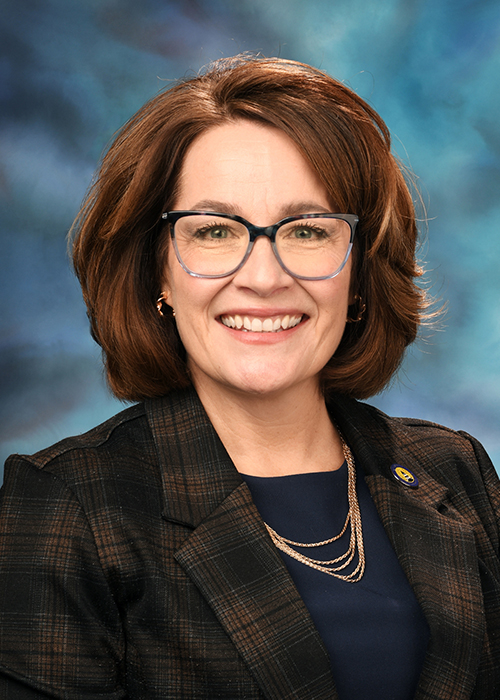
Lakesia Collins
100% support rate
Top opponent
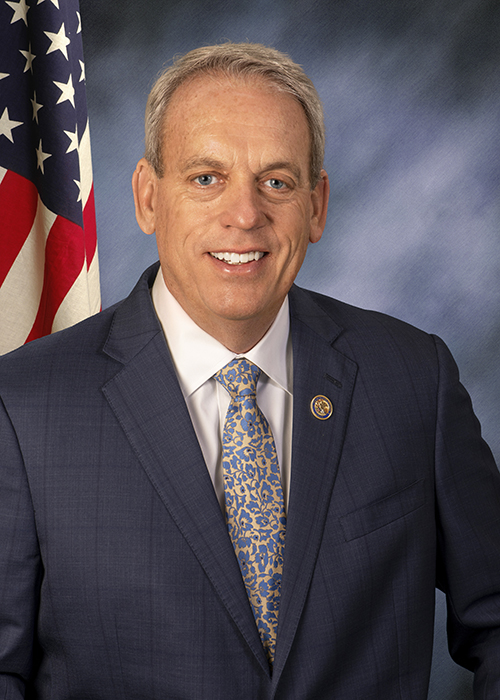
Dale Fowler
0% support rate
Ranked legislators
10
5 support · 5 oppose
Key legislators

Who's moving technology in Illinois

Legislators moving technology in Illinois
Legislator Party Stance Support rate Votes
Lakesia Collins
Lakesia Collins Senate · District 5
D
Strong +
100% 48
Doris Turner
Doris Turner Senate · District 48
D
Strong +
100% 45
Mike Halpin
Mike Halpin Senate · District 36
D
Strong +
100% 52
Kimberly Lightford
Kimberly Lightford Senate · District 4
D
Strong +
100% 76
Meg Loughran Cappel
Meg Loughran Cappel Senate · District 49
D
Strong +
100% 49
Dale Fowler
Dale Fowler Senate · District 59
R
Strong −
0% 51
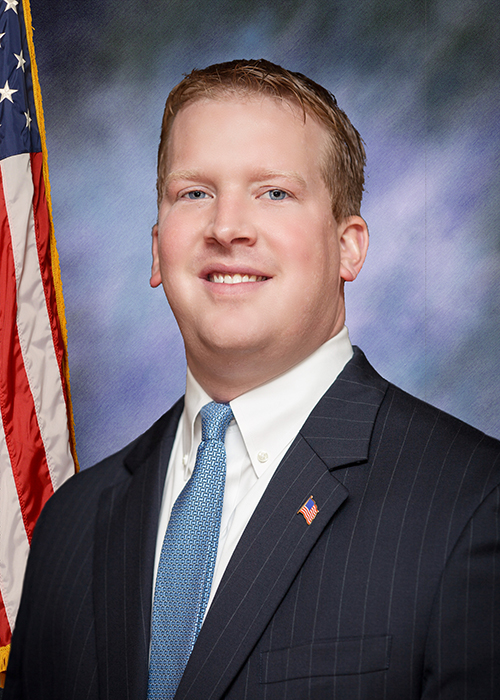
Jason Plummer
Jason Plummer Senate · District 55
R
Strong −
0% 51
Regan Deering
Regan Deering House · District 88
R
Strong −
0% 110
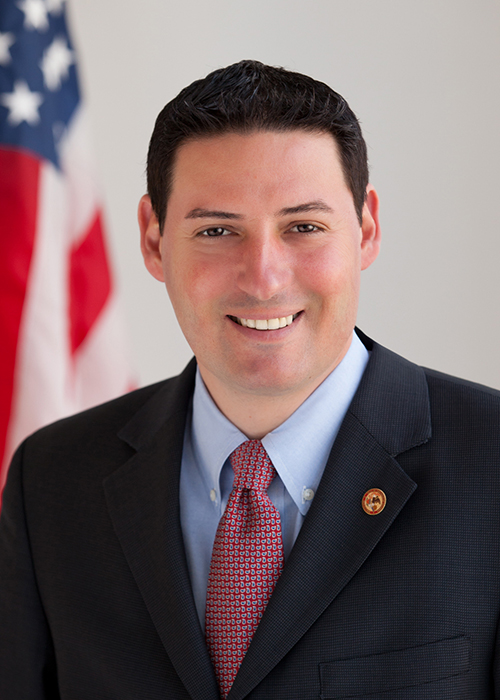
John Cabello
John Cabello House · District 90
R
Strong −
0% 120
Adam Niemerg
Adam Niemerg House · District 102
R
Strong −
0% 117
Showing 11–20 of 42 bills

All technology bills

in committee · Illinois · Senate Feb 6, 2026

SB 3856: BIPA-SECURITY PURPOSE

Amends the Biometric Information Privacy Act. Defines "security purpose" to mean for the purpose of preventing or investigating retail theft, fraud, or any other misappropriation or theft of a thing of value. Provides that security purpose includes protecting property from trespass, controlling access to property, or protecting any person from harm, including stalking, violence, or harassment, and includes assisting a law enforcement investigation. Waives certain requirements for collecting, capturing, or otherwise obtaining a person's or a customer's biometric identifier or biometric information under certain circumstances relating to security purposes. Effective immediately.
in committee · Illinois · House Mar 27, 2026

HB 5066: SOCIAL MEDIA AGE RESTRICTION

Creates the Social Media Age Restriction Act. Provides that an operator of a social media platform shall take reasonable steps, including the implementation of an age assurance system, to prevent a child from creating or maintaining an account on the social media platform. Provides that an operator may enter into an agreement with application distribution services or device manufacturers to allow for user information to be shared for age assurance purposes. Provides that the provision does not apply to a parent or guardian who allows a child to use an account held by the parent or guardian. Sets forth provisions concerning a 30-day cure period and civil penalties. Provides that an operator shall have 180 days after the effective date of the Act to comply with the requirements of the Act. Effective immediately.
in committee · Illinois · Senate Feb 5, 2026

SB 3551: GOVT COMMUNICATION SECURITY

Creates the Government Communications Transparency and Security Act. Prohibits a government entity, government officer, or government employee from downloading, installing, accessing, activating, or using an end-to-end encryption platform with autodeletion on a government communication device. Prohibits an Internet service provider, telecommunications carrier, server operator, mobile application marketplace, or digital platform doing business in the State from enabling the download, installation, activation, or operation of an end-to-end encryption platform with autodeletion on a government communication device. Requires Internet service providers, telecommunications carriers, and digital platforms to implement reasonable technological measures to block access to, installation of, or operation of end-to-end encryption platforms with autodeletion on government communication devices. Establishes penalties for violations. Authorizes the Attorney General or an Illinois taxpayer to bring suit to enforce the Act, with recovery of attorney's fees and costs. Requires the Department of Innovation and Technology to adopt rules. Defines terms. Effective January 1, 2027.
Sub-Topics Telecommunications
in committee · Illinois · Senate Feb 6, 2026

SB 3960: SCH CD-WIRELESS COMM DEVICE

Amends the School Code. Requires, on or before the 2027-2028 school year, each school board to adopt and implement a wireless communication device policy that limits the use of wireless communication devices by students during instructional time to the greatest extent possible. Provides that the wireless communication device policy shall be developed in consultation with the parent-teacher advisory committee. Establishes exceptions for wireless communication device use during instructional time. Requires each school board to review its wireless communication device policy in consultation with the parent-teacher advisory committee at least once every 3 years and make any necessary and appropriate revisions to the policy. Provides that a school district shall publicly post the policy on its website. Provides that, if the school district does not operate a website, then the school district shall provide a copy of the policy to the parents or guardians of every student enrolled in the school district. Effective immediately.
in committee · Illinois · Senate May 22, 2026

SB 3027: NO AI IN HEALTH CARE PRICING

Amends the Fair Patient Billing Act. Provides that "artificial intelligence" has the meaning given to that term in the Illinois Human Rights Act. Prohibits all hospitals from using artificial intelligence to set or influence health care pricing or billing.
in committee · Illinois · Senate Apr 17, 2026

SB 2907: MUNI CD-UTILITY INFO

Amends the Illinois Municipal Code. Provides that the following information for a customer premises shall not be deemed customer-specific information for the purpose of a request for information from a municipality conducting an audit of a public utility: (i) the premises address and zip code; (ii) the classification of the premises as designated by the public utility, such as residential, commercial, or industrial; (iii) monthly usage information sufficient to calculate taxes due, in therms, kilowatts, minutes, or other such other unit of measurement used to calculate the taxes; (iv) the taxes actually assessed, collected, and remitted to the municipality; (v) the first date of service for the premises, if that date occurred within the period being audited; and (vi) any tax exemption claimed for the premises and any additional information that supports a specific tax exemption, if the municipality requests that information, including the customer name and other relevant data. Provides that a municipality may request certain customer-specific information from a utility for the purpose of conducting an audit of the utility's taxes and the enforcement of any related tax claim.
in committee · Illinois · Senate May 22, 2026

SB 2993: AI-PRESCRIBING MEDICATION

Amends the Medical Practice Act of 1987. Provides that "artificial intelligence" has the meaning given to that term in the Illinois Human Rights Act. Prohibits a person licensed under the Act from allowing artificial intelligence to prescribe medication if the person licensed under the Act does not maintain full control and responsibility for the prescription. Establishes penalty provisions for violations of provisions concerning the use of artificial intelligence to prescribe medication. Grants the Department of Financial and Professional Regulation investigatory authority for those violations and rulemaking authority regarding the authorized use of artificial intelligence to prescribe medication. Effective immediately.
in committee · Illinois · Senate May 21, 2025

SB 1754: EAVESDROP-STATEWIDE GRAND JURY

Amends the Criminal Code of 2012. Provides that the offense of methamphetamine trafficking may be tried in any county. Permits the Attorney General to authorize certain eavesdropping requests from law enforcement. Amends the Code of Criminal Procedure of 1963. Permits the Attorney General or an Assistant Attorney General authorized by the Attorney General to authorize an application to a circuit judge or an associate judge assigned by the Chief Judge of the circuit for, and such judge may grant in conformity with the Judicial Supervision of the Use of Eavesdropping Devices Article of the Code, an order authorizing or approving the use of an eavesdropping device by a law enforcement officer or agency having the responsibility for the investigation of any felony under Illinois law where any one party to a conversation to be monitored, or previously monitored in the case of an emergency situation, has consented to such monitoring. Amends the Statewide Grand Jury Act. Provides that a Statewide Grand Jury may investigate, indict, and prosecute theft, retail theft, Internet offenses, continuing financial crimes enterprise, vehicular hijacking, aggravated vehicular hijacking, vehicular invasion, burglary, residential burglary, and home invasion if the offense involves acts occurring in more than one county of the State.
Sub-Topics Judges
in committee · Illinois · Senate Feb 6, 2025

SB 2104: PHARMACEUTICALS-SOCIAL MEDIA

Creates the Sale of Pharmaceuticals on Social Media Act. Provides that, notwithstanding any other provision of law, no individual shall sell or advertise the sale of a pharmaceutical on social media unless the individual has completed a verification process with specified requirements. Defines terms.
Sub-Topics Social Media
in committee · Illinois · House Mar 21, 2025

HB 3667: BIPA-SECURITY PURPOSES

Amends the Biometric Information Privacy Act. Changes the definitions of "biometric identifier" and "written release". Defines "biometric lock", "biometric time clock", "person", and "security purpose". Provides that if the biometric identifier or biometric information is collected or captured for the same repeated process, the private entity is only required to inform the subject or receive consent during the initial collection. Waives certain requirements for collecting, capturing, or otherwise obtaining a person's or a customer's biometric identifier or biometric information under certain circumstances relating to security purposes. Provides that nothing in the Act shall be construed to apply to information captured by a biometric time clock or biometric lock that converts a person's biometric identifier or biometric information to a mathematical representation. Repeals the right of action under the Act. Effective immediately.
Showing 11 to 20 of 42 bills
Previous 1 2 3 5 Next