Issue · Criminal Justice

Criminal Justice (Law Enforcement)

Every criminal justice bill, vote, and legislator stance in Illinois, automatically classified by Maddy, our AI policy reader.

Total bills
99
104th Regular Session
Top supporter
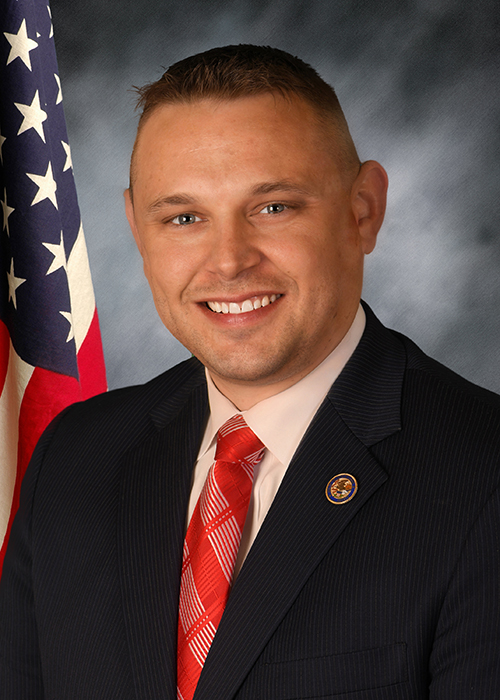
Gregg Johnson
100% support rate
Top opponent
John Cabello
0% support rate
Ranked legislators
10
5 support · 5 oppose
Key legislators

Who's moving law enforcement in Illinois

Legislators moving law enforcement in Illinois
Legislator Party Stance Support rate Votes
Gregg Johnson
Gregg Johnson House · District 72
D
Strong +
100% 8
Adriane Johnson
Adriane Johnson Senate · District 30
D
Strong +
100% 6
Will Guzzardi
Will Guzzardi House · District 39
D
Strong +
100% 6
Bob Morgan
Bob Morgan House · District 58
D
Strong +
100% 5
Doris Turner
Doris Turner Senate · District 48
D
Strong +
100% 5
John Cabello
John Cabello House · District 90
R
Strong −
0% 7
Neil Anderson
Neil Anderson Senate · District 47
R
Strong −
0% 5
Jed Davis
Jed Davis House · District 75
R
Strong −
0% 4
Andrew Chesney
Andrew Chesney Senate · District 45
R
Strong −
0% 3
Brad Halbrook
Brad Halbrook House · District 107
R
Strong −
0% 3
Showing 51–60 of 99 bills

All criminal justice bills

in committee · Illinois · House Mar 27, 2026

HB 4578: ENDANGERING CHILD & EVIDENCE

Amends the Criminal Code of 2012. Provides that a second or subsequent violation of endangering the life or health of a child or a similar statute of this State or any other state of an offense that is substantially equivalent to the offense of endangering the life or health of a child is a Class 3 felony. Provides that in addition to any other penalty provided by law, upon conviction for endangering the life or health of a child, the court may order the convicted person to undergo a psychological or psychiatric evaluation and to undergo any treatment at the convicted person's expense that the court determines to be appropriate after due consideration of the evaluation. Provides that the special probation provisions are not applicable to a person convicted of a second or subsequent violation of endangering the life or health of a child or child abandonment or similar statutes of other states. Amends the Code of Criminal Procedure of 1963. Provides that in a prosecution for a physical or sexual act perpetrated upon or against a youth who is a victim of trafficking in persons, involuntary servitude, and related offenses, provides for the admission of certain evidence as an exception to the hearsay rule. Amends the Bill of Rights for Children. Provides that a child reported to the Department of Children and Family Services or law enforcement to be a victim of a physical act or a youth who is a victim of trafficking in persons, involuntary servitude, and related offenses, whose case is accepted by either agency for investigation has the right to have that child's forensic interview conducted by a forensic interviewer from a children's advocacy center accredited according to the Children's Advocacy Center Act and serving the child's area or jurisdiction where the incident occurred, when such service is accessible based on the children's advocacy center's available resources. Amends the Privacy of Child Victims of Criminal Sexual Offenses Act. In a prosecution or investigation of sexual abuse against children under 18 years of age, permits disclosure to a multidisciplinary team member, as defined in the Children's Advocacy Center Act, and to a nonoffending parent or guardian of the identity of any child who is a victim of such criminal sexual offense or alleged criminal sexual offense. Defines "child" and "youth".
in committee · Illinois · House Feb 3, 2026

HB 4624: BODY CAMERA FOOTAGE-DISCLOSURE

Amends the Law Enforcement Officer-Worn Body Camera Act. Makes changes concerning the circumstances under which officer-worn body camera footage may be disclosed under the Freedom of Information Act. Requires a requester of officer-worn body camera footage under the Freedom of Information Act to certify specified information with the request. Exempts officer-worn body camera footage from disclosure if it reveals certain information, depicts certain information, involves an active investigation, relates to pending criminal charges, would prejudice a jury or compromise prosecution, will be used for a listed forbidden purpose, or is otherwise exempt. Requires a law enforcement agency to make available for inspection and copying officer-worn body camera footage that is not exempt from disclosure. Allows a law enforcement agency to deny a request that violates certain provisions or standards established under certain provisions. Provides that a public body, law enforcement agency, or employee acting in good faith reliance is not subject to civil liability solely for denying or limiting access to a body-worn camera recording, as long as the denial or limitation is based on a reasonable interpretation of applicable law. Repeals the provisions added to the Officer-Worn Body Camera Act by the amendatory Act 5 years after the amendatory Act's effective date.
in committee · Illinois · House Mar 27, 2026

HB 4408: FOIA-VICTIM INFORMATION

Amends the Freedom of Information Act. Provides that records in the possession of any public body created in the course of administrative enforcement proceedings, and any law enforcement or correctional agency for law enforcement purposes, that contain the name, address, or other identifying information or contact information of a person who is under the age of 18 years old and who is a victim of sexual abuse, sexual assault, or sexual violence are exempt from inspection and copying under certain provisions regarding a public body redacting the exempt information.
in committee · Illinois · House Mar 27, 2026

HB 4446: POLICE BODY CAMERA RECORD

Amends the Law Enforcement Officer-Worn Body Camera Act. In provisions concerning whether recordings made with the use of an officer-worn body camera are subject to disclosure under the Freedom of Information Act, provides that any recording disclosed under the Freedom of Information Act may, rather than shall, be redacted to remove identification of any person that appears on the recording and is not an officer, a subject of the encounter, or directly involved in the encounter. Provides that nothing in the provisions shall prohibit the disclosure of any recording or portion of any recording regardless of whether it would be exempt from disclosure under the Freedom of Information Act, rather than require the disclosure of any recording or portion of any recording which would be exempt from disclosure under the Freedom of Information Act.
in committee · Illinois · House Mar 27, 2026

HB 4224: CD CORR-COMMITTED-REMOTE WORK

Amends the Unified Code of Corrections. Provides that the Department of Corrections shall establish a remote work policy for committed persons in the Department's custody to allow those persons to obtain gainful employment by private, approved employers. Establishes eligibility requirements for the program. Establishes conditions for employers who hire committed persons for remote work. Provides that a committed person may be terminated from the committed person's remote work employment at any time for any reason at the complete discretion of the Director of Corrections or the facility chief administrative officer, or their designees. Provides that all monetary compensation shall be directly deposited by the employer into the committed person's Illinois Department of Corrections account. Provides that the employer must pay the committed person employed remotely the same wage as the committed person's non-committed counterparts that work in the same role, have the same tenure, or as otherwise determined by Department policy. Provides that a committed person may appeal a decision to deny or withdraw approval to search for remote work, apply for remote work, or accept an offer for a remote work position or a decision to terminate them from a remote work position by submitting a written letter to the Deputy Director via the U.S. Postal Service or certified mail. Effective January 1, 2027.
in committee · Illinois · House Mar 27, 2026

HB 4234: POLICE-EPILEPSY TRAINING

Amends the Illinois Police Training Act. Provides that the Illinois Law Enforcement Training Standards Board shall develop or approve a course to assist law enforcement officers in identifying and interacting with individuals with epilepsy. Provides that the course must be fully consistent with the best practice guidelines issued by the Centers for Disease Control and Prevention. Provides that the Board shall conduct or approve the epilepsy identification and treatment training course no later than 2 years after the effective date of the amendatory Act. Provides that the Board may consult with the Department of Public Health or the Department of Human Services to develop and update the curriculum as needed. Provides that, every 3 years, a law enforcement officer shall complete training on identifying and interacting with individuals with epilepsy.
in committee · Illinois · House Mar 27, 2026

HB 4249: POLICE OFFICER TRAUMA TRAINING

Amends the Illinois Police Training Act. Provides that the Illinois Law Enforcement Training Standards Board shall develop or approve a standard curriculum for certified training programs in the recognition of trauma-informed responses to traumatic events, adverse childhood experiences, and toxic stress among law enforcement. Provides that the training shall include (1) teaching officers how to define and distinguish between acute trauma, chronic trauma, cumulative occupational stress, adverse childhood experiences, and toxic stress; (2) teaching officers to recognize trauma-related responses in themselves and others through behavioral, cognitive, emotional, and physiological indicators of traumatic stress, including how these indicators may present during calls for service and during officer-public interaction; (3) teaching officers the impact of trauma and how occupational trauma exposure, moral injury, burnout, toxic work environments, and cumulative stress affect decision making, communication, performance, and well-being; (4) education on the effects of psychological safety on organizational culture of law enforcement and the immediate work environment; (5) ways to improve psychological safety through trauma-informed communication and interaction skills, such as reducing escalation and engaging peers and other officers in a compassionate, culturally responsive, and nonjudgmental manner; (6) techniques for compassionate, sensitive, and nonjudgmental service delivery, including trauma-responsive communication and de-escalation; (7) procedures for recognizing and responding to traumatically triggering situations and emphasize tools and techniques for achieving situationally optimal outcomes; and (8) comprehensive strategies and tools to manage the impact of trauma, cumulative occupational stress, adverse childhood experiences and toxic stress. Provides that the training must be presented in all full and part-time basic law enforcement academies on or before July 1, 2027. Provides that law enforcement agencies must present the training to all law enforcement officers within 3 years after the effective date of the amendatory Act. Provides that the Board shall evaluate training effectiveness through post-training assessments, ongoing officer feedback, wellness and safety metrics, and annual public reporting.
in committee · Illinois · House Oct 15, 2025

HB 4127: CRIM CD-FAIL TO ASSIST PERSON

Amends the Criminal Code of 2012. Provides that a person commits failure to assist a person suffering a life-threatening injury or great bodily harm when he or she: (1) reasonably believes that another person residing in the same dwelling or whom the person personally visits in the dwelling is suffering a life-threatening injury or great bodily harm; and (2) knowingly fails to notify, as soon as possible after discovering the other person in that condition, a law enforcement agency or other public or private entity providing emergency medical technician services located within the municipality or unincorporated area where the person suffering the life-threatening injury or great bodily harm is found. Provides that if there is no law enforcement agency or other public or private entity providing emergency medical technician services located in the municipality or unincorporated area, then the notification shall be made to the agency or entity located within the same or nearest county to the discovery of the person suffering a life-threatening injury or great bodily harm. Provides that a violation is a Class 4 felony. Provides that if the violation results in the death, the person is guilty of a Class X felony.
Sub-Topics Law Enforcement
signed · Illinois · Senate Aug 1, 2025

SB 1195: TRAUMA-INFORMED RESPONSE

Creates the First Responder Trauma-Informed Response Training Act, which may be referred to as Anna's Law. Provides that, prior to the onboarding processes of a first responder, the individual must complete mandatory pass or fail trauma-informed response training, as established by the Department of Public Health. Provides that a first responder must also complete the pass or fail trauma-informed response training every 18 months after beginning work as a first responder. Provides that, if more than 18 months have elapsed after beginning work as a first responder and the first responder has not completed the retraining, the first responder may not perform trauma-related duties, such as responding to emergency calls, taking statements from victims, or interviewing victims. Provides that, if a first responder who is certified or licensed by the State or a subdivision of the State has not completed the required trauma-informed response retraining, the first responder may be decertified by the certifying entity or the first responder's license may be revoked by the licensing entity if retraining is not completed. Limits the concurrent exercise of home rule powers. Defines terms. Makes conforming changes in the Illinois Police Training Act and the Emergency Medical Services (EMS) Systems Act, including requiring the Department of Public Health to adopt rules to implement the trauma-informed response training and providing that the rules may allow or require the use of a training program from a university, college, or not-for-profit entity.
Showing 51 to 60 of 99 bills
Previous 1 5 6 7 10 Next