Issue · Criminal Justice

Criminal Justice (Law Enforcement)

Every criminal justice bill, vote, and legislator stance in Illinois, automatically classified by Maddy, our AI policy reader.

Total bills
73
104th Regular Session
Top supporter
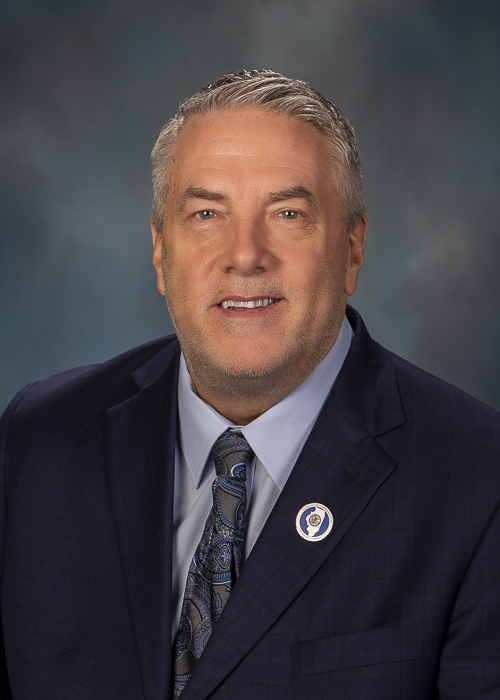
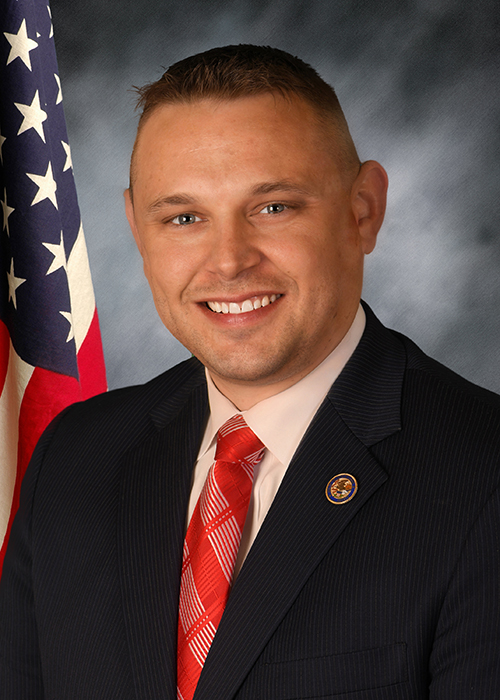
Gregg Johnson
100% support rate
Top opponent
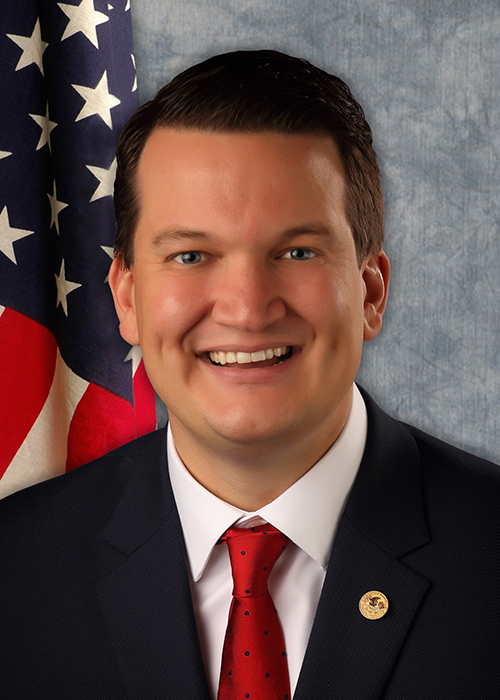
John Cabello
0% support rate
Ranked legislators
10
5 support · 5 oppose
Key legislators

Who's moving law enforcement in Illinois

Legislators moving law enforcement in Illinois
Legislator Party Stance Support rate Votes
Gregg Johnson
Gregg Johnson House · District 72
D
Strong +
100% 8
Adriane Johnson
Adriane Johnson Senate · District 30
D
Strong +
100% 6
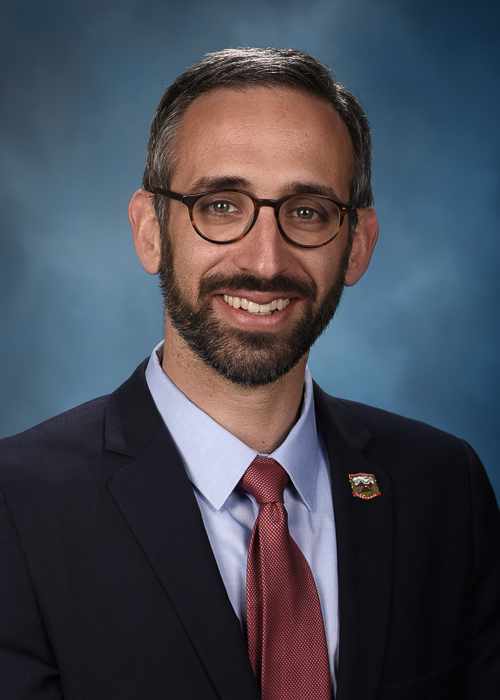
Will Guzzardi
Will Guzzardi House · District 39
D
Strong +
100% 6
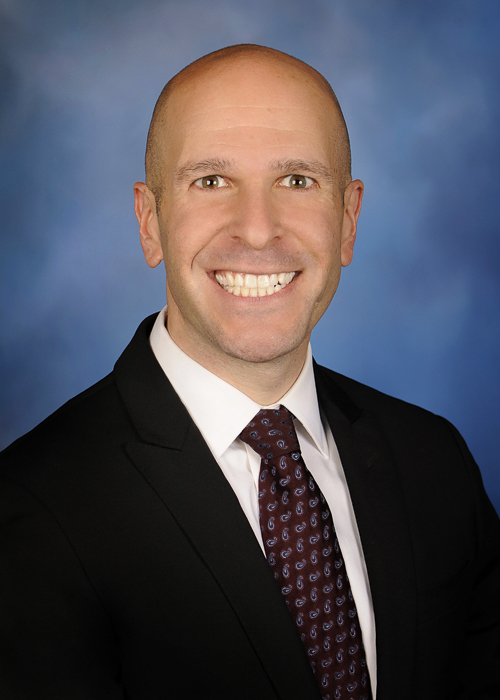
Bob Morgan
Bob Morgan House · District 58
D
Strong +
100% 5
Doris Turner
Doris Turner Senate · District 48
D
Strong +
100% 5
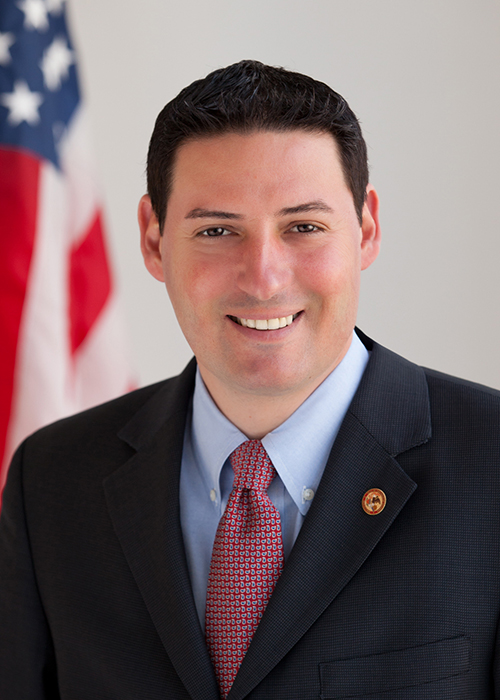
John Cabello
John Cabello House · District 90
R
Strong −
0% 7
Neil Anderson
Neil Anderson Senate · District 47
R
Strong −
0% 5
Jed Davis
Jed Davis House · District 75
R
Strong −
0% 4
Andrew Chesney
Andrew Chesney Senate · District 45
R
Strong −
0% 3
Brad Halbrook
Brad Halbrook House · District 107
R
Strong −
0% 3
Showing 21–30 of 73 bills

All criminal justice bills

in committee · Illinois · Senate Feb 6, 2026

SB 3826: HATE CRIMES-UNIFORM REPORTING

Amends the Uniform Crime Reporting Act. Provides that each law enforcement agency shall submit a report to the Illinois State Police after receiving a complaint of a hate crime or other bias-related complaint within 2 weeks of receiving the complaint. Describes information to be contained in the report. Provides that, when handling a hate crime or bias-related complaint, each law enforcement agency shall (1) approach victims in a sensitive and supportive manner; (2) reassure victims that appropriate investigative and enforcement methods will be used by the law enforcement agency to properly address the bias incident; (3) as required by the facts and circumstances surrounding the suspected or confirmed bias incident, ensure that a thorough and complete initial response investigation and a follow-up investigation are conducted, including providing for appropriate community relations activities and crime prevention programs; (4) refer the victims and the witnesses to the appropriate Office of Victim-Witness Advocacy or the Division on Civil Rights; (5) interact with concerned community service organizations, civic groups, and religious institutions regarding the bias incident; and (6) effectively calm victims and reduce their fear and alienation through direct, ongoing official communication regarding the bias incident. Provides that the Illinois State Police must identify patterns and analyze the information reported to it for the purpose of connecting the information to other reported crimes or incidents, create a reporting form or process to receive this information, review all reports, and disseminate to potentially affected law enforcement agencies and create a process for the sharing of all the reported incidents with law enforcement agencies across the State. Provides that each law enforcement agency shall identify a point of contact in regard to hate crime reporting within the agency and provide the Illinois State Police with that person's name and contact information. Provides that the Illinois State Police shall adopt rules identifying other bias-related complaints that must be reported. Makes a conforming change. Amends the Freedom of Information Act to exempt reports and information received under the hate crime and bias-related incident reporting under the Uniform Crime Reporting Act.
in committee · Illinois · Senate Apr 17, 2026

SB 4082: $FY27 ATTORNEY GENERAL

SB 4082 is an appropriations bill allocating $100.7 million from the General Revenue Fund to cover the Illinois Attorney General's operational expenses for fiscal year 2027. It also directs specific funding from other sources - like $11 million for crime victim assistance, $5 million for equal justice programs, $2.5 million for Medicaid fraud enforcement, and $7 million for child support enforcement - to support targeted AG office functions. The bill does not create new policies but provides dedicated funding streams for existing programs under the Attorney General’s jurisdiction. It takes effect July 1, 2026, and affects all state-level law enforcement and victim services administered by the Attorney General’s office.
in committee · Illinois · House Feb 19, 2026

HB 5666: $FY27 LETSB OCE

Makes appropriations for the ordinary and contingent expenses of the Illinois Law Enforcement Training Standards Board for the fiscal year beginning July 1, 2026, as follows: Other State Funds $133,287,910; Federal Funds $8,000,000; Total $141,287,910.
Sub-Topics Law Enforcement
in committee · Illinois · House Mar 27, 2026

HB 5088: FAIL RPT SEXUAL ABUSE CHILD

Amends the Criminal Code of 2012. Provides that a person over the age of 18 commits failure to report sexual abuse of a child when he or she is aware of, has a reasonable belief, or personally observes (rather than just personally observes) sexual abuse, between a person who he or she knows is over the age of 18 and a person he or she knows is a child under the age of 13, and knowingly fails to report the sexual abuse to law enforcement.
Sub-Topics Law Enforcement
in committee · Illinois · Senate Mar 27, 2026

SB 3930: DRONE SAFETY & INTERFERENCE

Creates the Drone Safety and Interference Prevention Act. Creates the offenses of (1) unlawful imaging of an emergency response activity; (2) unlawful operation over critical infrastructure facilities; and (3) unlawful operation of a drone over a correctional institution or facility. Defines these offenses and establishes penalties. Provides that a private person or entity operating a drone in the State is prohibited from equipping or using on the drone any firearm, weaponized laser, kinetic impact projectile, chemical agent or irritant, or any other lethal or non-lethal weapon. Provides that a law enforcement officer may seize a drone and any attached equipment, including any image-capturing devices, storage media, or weapons, if the officer has probable cause to believe the drone was used or operated in violation of the Act. Provides that any drone or equipment seized under the Act is subject to forfeiture in accordance with the Criminal Code of 2012 and the Forfeiture Article of the Code of Criminal Procedure of 1963, as applicable. Provides that the State may use forfeited drones and equipment for law enforcement purposes, including training and counter-drone operations. Provides that prior to forfeiture, the court shall provide notice and an opportunity for hearing to the owner or operator of the drone, unless the drone was abandoned or unclaimed. Provides that, if the court determines, by a preponderance of the evidence, that the drone was used in violation of the Act, the drone shall be forfeited to the State. Provides that any images or data seized under the provision shall be retained only if there is a reasonable suspicion they contain evidence of a crime. Provides that all other data must be deleted within 30 days unless relevant to an ongoing investigation. Provides that the State, any unit of local government, any law enforcement agency or any officers or agents of those entities that are acting reasonably and in good faith to enforce the Act are not civilly liable for damage to or loss of a drone, except for willful or wanton misconduct. Provides that the Act shall be enforced by State and local law enforcement agencies. Provides that enforcement data under the Act shall be reported through the Illinois State Police's existing Uniform Crime Reporting program. Contains a severability provision. Effective January 1, 2027.
in committee · Illinois · House Feb 6, 2026

HB 4881: BUDGETING FOR RESULTS-ANALYSIS

Amends the State Budget Law of the Civil Administrative Code of Illinois. Sets forth additional requirements for the benefit cost analysis performed by the Budgeting for Results Commission as part of its annual report. Provides that the benefit cost analysis conducted for any crime prevention programs shall include data and information provided by crime prevention programs, victims rights groups, and law enforcement agencies in the State.
signed · Illinois · House Jul 31, 2026

HB 4842: FIRST RESPONDER-STRESS SERVICE

Amends the First Responders Suicide Prevention Act. Provides that confidentiality protections under the Act apply regardless of whether the peer support person is employed by, or affiliated with, the same agency as the first responder receiving support. Provides that, except in specified circumstances, all communications, records, notes, reports, or information disclosed during, or in connection with, a critical incident stress management session is confidential and may not be disclosed by any CISM practitioner. Provides that a CISM practitioner may not be compelled to testify or disclose any communication, record, note, report, or information disclosed during, or in connection with, a critical incident stress management session in any administrative, civil, or criminal proceeding. Provides that the confidentiality protections under the provisions apply whether or not the CISM practitioner is affiliated with the same agency as the individual receiving services. Provides that any communication described in the provisions is subject to subpoena for good cause shown. Provides that the confidentiality protections under the provisions do not apply to (1) any threat of suicide or homicide made by a participant in a peer support counseling session or any information conveyed in a peer support counseling session related to a threat of suicide or homicide; (2) any information mandated by law or agency policy to be reported, including, but not limited to, domestic violence, child abuse or neglect, or elder abuse or neglect; (3) any admission of criminal conduct; or (4) an admission or act of refusal to perform duties to protect others or the employee of the emergency services provider or law enforcement agency. Defines "CISM practitioner" and "CISM services".
in committee · Illinois · Senate Mar 27, 2026

SB 4043: LAW ENFORCEMENT TRAINING

Amends the Illinois Police Training Act. Restructures the rules and standards of the Illinois Law Enforcement Training Standards Board for basic training schools. Provides that the Board shall be responsible for establishing basic curriculum for law enforcement officers, county correctional officers, and court security officers. Provides that the Board shall certify in-service courses to be delivered by Mobile Training Units, the Illinois Law Enforcement Training and Standards Board Executive Institute, and other providers. Provides that the curriculum for probationary law enforcement officers shall include courses concerning foundations of law enforcement, human behaviors, investigations, fundamentals of criminal law, law enforcement patrol, law enforcement officer tactics, and officer wellness. Requires the Board to establish minimum basic training requirements that probationary county corrections officers and probationary court security officers must satisfactorily complete before the probationary county corrections officers and probationary court security officers are eligible for permanent employment as county corrections officers or probationary court security officers. Provides that the Board shall adopt rules and minimum standards for the 30 hours of in-service trainings that officers must complete every 3 years. Provides that, annually, a law enforcement officer must satisfactorily complete trainings in law updates, firearm requalification, and officer wellness and mental health. Requires notice of the inactivation to be provided by the Board to the current and prior employer. Provides that a person hired to serve as a court security officer must obtain from the Board a certificate (i) attesting to the officer's successful completion of the training course; (ii) attesting to the officer's satisfactory completion of a training program of similar content and number of hours that has been found acceptable by the Board under the provisions of this Act; or (iii) attesting to the Board's determination that the training course is unnecessary because of the person's extensive prior law enforcement experience.
signed · Illinois · Senate Jul 31, 2026

SB 3597: LAW ENFORCEMENT-VARIOUS

Amends the Illinois State Police Law. Provides that the Division of Patrol shall enforce the motor carrier safety provisions of the Illinois Vehicle Code and serve as the lead State agency for administering the commercial vehicle safety plan of the Federal Motor Carrier Safety Administration. Adds human trafficking, sexual assault, and sexual abuse in-service training requirements for Illinois State Police officers. Provides that the Division of Statewide 9-1-1 shall cooperate with federal and State authorities that are engaged in aeronautics and that request to use the Illinois State Police's radio network system. Provides that the State Police shall maintain a statewide statistical police contact recordkeeping system (rather than develop a separate statewide statistical police recordkeeping system) for the study of juvenile delinquency. Provides that, with the permission (rather than written permission) of a child's parent or guardian, the Illinois State police may collect (rather than retain) the fingerprints or DNA (rather than only the fingerprint record) of the child. Specifies that the fingerprints or DNA may be retained by the child's parent or guardian and later used for specified purposes. Amends the Intergovernmental Drug Laws Enforcement Act. Provides that a Metropolitan Enforcement Group may enforce crimes concerning terrorism and threats to public officials and human service providers. Amends the Code of Criminal Procedure of 1963. In provisions concerning criminal prosecutions for violations of the Cannabis Control Act, the Illinois Controlled Substances Act, or the Methamphetamine Control and Community Protection Act and criminal prosecutions for reckless homicide, or driving under the influence of alcohol, other drug, or combination of both, or in any civil action held under a statutory summary suspension or revocation hearing, deletes provisions requiring specified information to be attached to laboratory report from the Illinois State Police, Division of Forensic Services. Amends the Freedom from Drone Surveillance Act. In provisions requiring the chief executive officer of a law enforcement agency to report the use of a drone to the State's Attorney under specified circumstances, adds language allowing the report to be made by the chief executive officer's designee. Makes other and conforming changes. Effective immediately.
in committee · Illinois · House Apr 17, 2026

HB 5155: INCARCERATED INDIVIDUALS DATA

Creates the Incarceration Demographic Data Transparency Act. Provides that for each person confined for any length of time in a State correctional institution or county jail demographic data shall be collected. Provides that the data shall consist of the race, ethnicity, and gender of confined persons. Provides that the Department of Corrections shall establish uniform statewide standards for the collection of demographic data that: (1) are consistent with applicable federal civil rights reporting requirements; (2) promote accuracy and consistency across jurisdictions; and (3) protect the dignity, privacy, and safety of confined individuals. Provides that the Department shall collect and maintain demographic data for all covered individuals confined in State correctional facilities. Provides that each county sheriff shall collect demographic data for covered individuals confined in county jails and shall submit such data to the Department in the form and manner prescribed by the Department. Provides that demographic data shall be submitted and reported at least quarterly and shall include: (1) snapshot population counts; and (2) admissions and releases occurring during the reporting period. Provides that the Department shall publish demographic data collected under the Act on a publicly accessible website in a searchable and downloadable manner. Provides that publicly reported data shall: (1) be aggregated and de-identified; and (2) exclude or suppress categories where disclosure would create a reasonable risk of identifying an individual. Provides that nothing in the Act authorizes the public release of personally identifiable information. Provides that the Department shall oversee implementation and compliance with the Act and provide guidance, reporting templates, and technical assistance to county sheriffs as necessary to implement the Act. Provides that the implementation of the Act is subject to appropriation. Provides that no criminal penalty shall apply to good-faith errors, technical mistakes, or omissions that are promptly corrected upon notice. Provides that the criminal penalties provided in this provision do not preclude administrative sanctions, civil penalties, injunctive relief, or other remedies authorized by law.
Showing 21 to 30 of 73 bills
Previous 1 2 3 4 8 Next