Issue · Criminal Justice

Criminal Justice (Domestic Violence)

Every criminal justice bill, vote, and legislator stance in Illinois, automatically classified by Maddy, our AI policy reader.

Total bills
49
104th Regular Session
Top supporter
Maurice West
100% support rate
Top opponent
David Friess
0% support rate
Ranked legislators
10
5 support · 5 oppose
Key legislators

Who's moving domestic violence in Illinois

Legislators moving domestic violence in Illinois
Legislator Party Stance Support rate Decisive votes
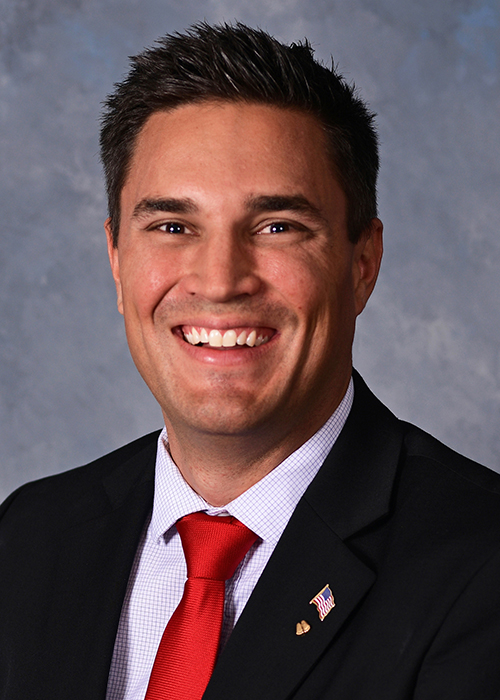
Maurice West
Maurice West House · District 67
D
Strong +
100% 10
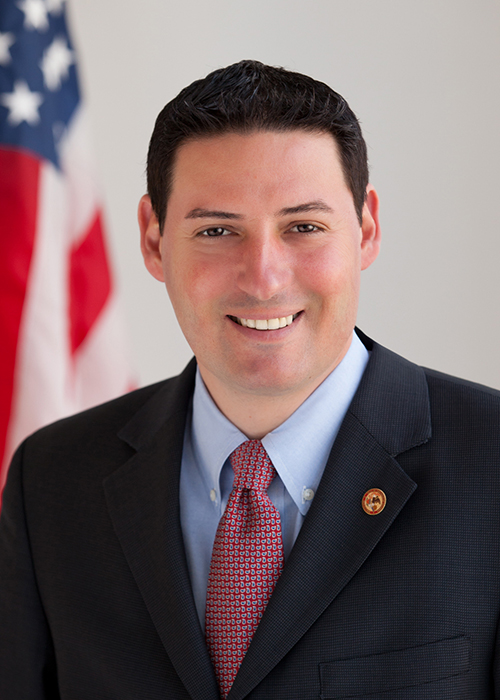
Mike Crawford
Mike Crawford House · District 31
D
Strong +
100% 10
Ann Williams
Ann Williams House · District 11
D
Strong +
100% 9
Kelly Cassidy
Kelly Cassidy House · District 14
D
Strong +
100% 9
Bob Morgan
Bob Morgan House · District 58
D
Strong +
100% 8
David Friess
David Friess House · District 115
R
Strong −
0% 10
Adam Niemerg
Adam Niemerg House · District 102
R
Strong −
0% 7
C.D. Davidsmeyer
C.D. Davidsmeyer House · District 100
R
Strong −
0% 7
Jed Davis
Jed Davis House · District 75
R
Strong −
0% 7
John Cabello
John Cabello House · District 90
R
Strong −
0% 7
Showing 11–20 of 49 bills

All criminal justice bills

signed · Illinois · House Aug 7, 2026

HB 4949: FAMILY JUSTICE CENTERS ACT

Creates the Family Justice Centers Act. Authorizes cities, counties, the State, and community-based nonprofits to establish multiagency, multidisciplinary Family Justice Centers to serve survivors of domestic violence, sexual violence, stalking, and human trafficking. Sets requirements for center operations, including survivor consent and confidentiality policies, privacy protections, collaboration with law enforcement and community providers, operating agreements, survivor feedback processes, and annual training standards. Provides a framework for coordinated service delivery among participating agencies. Declares findings. Defines terms.
in committee · Illinois · Senate Feb 4, 2026

SB 3345: CRIM CD-DOMESTIC ASSAULT

Amends the Criminal Code of 2012. Creates the offense of domestic assault. Provides that a person commits the offense when, without lawful authority, he or she knowingly engages in conduct that places any family or household member in reasonable apprehension of great bodily harm, or permanent disability or disfigurement. Provides that if the defendant is arrested for domestic assault, upon release of the defendant from custody pending trial, the court, at the preliminary examination, shall order that the defendant refrain from contact or communication with the victim of the domestic assault and refrain from entering or remaining at the victim's residence for a minimum of 72 consecutive hours. Provides that domestic assault is a Class A misdemeanor. Defines "family or household member".
in committee · Illinois · Senate Feb 6, 2026

SB 3941: PERSISTENT DV OFFENDER ACT

Creates the Persistent Domestic Violence Offender Database Act. Requires the Illinois State Police to establish and maintain a Statewide Persistent Domestic Violence Offender Database for the purpose of identifying persistent domestic violence offenders. Requires the Illinois State Police to maintain the database based upon information supplied by the court clerks and information available to the Illinois State Police from the Department of Corrections and local law enforcement agencies. Requires the Illinois State Police to make the information contained in the database accessible to the public on the agency's Internet home page and update that information as it deems necessary. Sets forth the information that must be stored in the database. Provides that if a person is convicted of a domestic violence offense and the person convicted has at least one prior conviction for a domestic violence offense or if a person has an order of protection granted against them and the person has at least one prior order of protection granted against them, then the court shall, upon proof of any prior domestic violence offense convictions or order of protection, order the person to register as a persistent domestic violence offender. Requires the court clerk to forward to the Illinois State Police a certified copy of the qualifying conviction or order of protection and the date of birth of any person ordered to register as a persistent domestic violence offender. Contains provisions on registration fees. Requires the Illinois State Police to remove a registered person's name and other information from the database after a specified number of years following the person's last conviction. Provides that the Act applies only to persons convicted of a domestic violence offense or to persons against whom an order of protection is granted on or after January 1, 2027; however, a prior conviction is not required to occur on or after January 1, 2027.
signed · Illinois · Senate Jul 31, 2026

SB 3329: DOM VIOLENCE ORDER-VIOLATION

Amends the Code of Criminal Procedure of 1963 and the Illinois Domestic Violence Act of 1986. Provides that a person commits the crime of violation of an order of protection under the Criminal Code of 1961 or the Criminal Code of 2012 if the person, in violation of an order to surrender the person's firearms and firearm parts, knowingly transfers a firearm or firearm parts to the respondent or otherwise allows the respondent access to a firearm or firearm parts. Provides that, if the law enforcement agency seeks to correct or negate the warrant for the seizure of the respondent's firearms and firearm parts, it shall take reasonable steps to notify the petitioner before appearing before the court. Makes technical changes.
signed · Illinois · House Jul 31, 2026

HB 4842: FIRST RESPONDER-STRESS SERVICE

Amends the First Responders Suicide Prevention Act. Provides that confidentiality protections under the Act apply regardless of whether the peer support person is employed by, or affiliated with, the same agency as the first responder receiving support. Provides that, except in specified circumstances, all communications, records, notes, reports, or information disclosed during, or in connection with, a critical incident stress management session is confidential and may not be disclosed by any CISM practitioner. Provides that a CISM practitioner may not be compelled to testify or disclose any communication, record, note, report, or information disclosed during, or in connection with, a critical incident stress management session in any administrative, civil, or criminal proceeding. Provides that the confidentiality protections under the provisions apply whether or not the CISM practitioner is affiliated with the same agency as the individual receiving services. Provides that any communication described in the provisions is subject to subpoena for good cause shown. Provides that the confidentiality protections under the provisions do not apply to (1) any threat of suicide or homicide made by a participant in a peer support counseling session or any information conveyed in a peer support counseling session related to a threat of suicide or homicide; (2) any information mandated by law or agency policy to be reported, including, but not limited to, domestic violence, child abuse or neglect, or elder abuse or neglect; (3) any admission of criminal conduct; or (4) an admission or act of refusal to perform duties to protect others or the employee of the emergency services provider or law enforcement agency. Defines "CISM practitioner" and "CISM services".
in committee · Illinois · House Mar 27, 2026

HB 4668: DOMESTIC VIOLENCE-LETHALITY

Amends the Illinois State Police Law and the Illinois Police Training Act to require instruction during training on the policies and procedures for administering a lethality assessment, including referrals to domestic violence services. Amends the Illinois Domestic Violence Act of 1986. Provides that, on or before January 1, 2028, every law enforcement agency shall provide to all of its law enforcement officers instruction on the policies and procedures for administering a lethality assessment as part of basic training. Provides that, on or before July 1, 2028, a law enforcement officer investigating an alleged incident of domestic violence shall administer a lethality assessment if the allegation of domestic violence is against an intimate partner, regardless of whether an arrest is made. Provides that if a victim does not, or is unable to, provide information to a law enforcement officer sufficient to allow the law enforcement officer to administer a lethality assessment, the law enforcement officer must document the lack of a lethality assessment in the written police report and refer the victim to the nearest locally certified domestic violence center. Prohibits a law enforcement officer from including in or attaching to a probable cause statement, written police report, or incident report the domestic violence center to which a victim was referred. Prohibits a law enforcement officer from administering a lethality assessment if the law enforcement officer has not received training on administering a lethality assessment. Makes a conforming change in the Freedom of Information Act.
signed · Illinois · Senate Aug 18, 2026

SB 3048: DOMESTIC VIOLENCE-LETHALITY

Amends the Illinois State Police Law and the Illinois Police Training Act to require instruction during training on the policies and procedures for administering a lethality assessment, including referrals to domestic violence services. Amends the Illinois Domestic Violence Act of 1986. Provides that, on or before January 1, 2028, every law enforcement agency shall provide to all of its law enforcement officers instruction on the policies and procedures for administering a lethality assessment as part of basic training. Provides that, on or before July 1, 2028, a law enforcement officer investigating an alleged incident of domestic violence shall administer a lethality assessment if the allegation of domestic violence is against an intimate partner, regardless of whether an arrest is made. Provides that if a victim does not, or is unable to, provide information to a law enforcement officer sufficient to allow the law enforcement officer to administer a lethality assessment, the law enforcement officer must document the lack of a lethality assessment in the written police report and refer the victim to the nearest locally certified domestic violence center. Prohibits a law enforcement officer from including in or attaching to a probable cause statement, written police report, or incident report the domestic violence center to which a victim was referred. Prohibits a law enforcement officer from administering a lethality assessment if the law enforcement officer has not received training on administering a lethality assessment. Makes a conforming change in the Freedom of Information Act.
in committee · Illinois · Senate Mar 27, 2026

SB 2934: IDVA-ELECTRONIC SERVICE

Amends the Attorney General Act. Requires the Attorney General to develop and provide guidance for electronic service by law enforcement of orders of protection issued under the Illinois Domestic Violence Act of 1986. Amends the Illinois Domestic Violence Act of 1986. Provides that if petitioner is granted a stay-away order, the court may order local law enforcement, to the extent possible, to periodically monitor the petitioner's residence, periodically patrol near the petitioner's residence, and investigate whether a violation of the order of protection has occurred. Permits electronic service of an order of protection after 2 unsuccessful attempts of personal service. Provides the circumstances in which electronic service may be used. Makes other changes.
in committee · Illinois · House Apr 22, 2026

HB 4312: DOM VIOLENCE-ORD PROT

Amends the Code of Criminal Procedure of 1963. Changes the definitions of "harassment" to include, among other actions, doxing, electronic tracking, and nonconsensual creation, dissemination, or threatening the dissemination of electronically generated or digitally altered content pertaining to the petitioner. Requires a county (not just counties with more than 250,000 in population) to provide remote access to a hearing on a protective order to include relevant witnesses besides the petitioner and respondent. Creates additional remedies for the court to grant in a domestic violence order of protection. Requires that any motion to extend a plenary order must be filed on or before the expiration date, and the plenary order remains in effect after filing until its original expiration date or until the motion is presented or heard, whichever is later. Requires a plenary order to be extended if the court finds that since entry of the plenary order there has been no material change in the relevant circumstances as required by law, and an extension of a plenary order may be granted for any fixed period of time or indefinitely until the plenary order is vacated or modified. Provides that if the motion to extend the plenary order is uncontested, petitioner's motion or affidavit stating that there has been no material change in relevant circumstances since entry of the order and stating the reason for the requested extension is sufficient for the court to extend the plenary order for any length of time, including indefinitely. Provides that the court may grant a contested request for an extension of the plenary order for more than 2 years for good cause. Provides that a violation of the original order or a subsequent incident of abuse is not required to grant the extension or determine the length of the extension, and compliance with the original order does not negate the basis or length of the extension. Amends the Illinois Domestic Violence Act of 1986. Makes conforming changes.
in committee · Illinois · Senate Jan 29, 2026

SB 3092: CRIM CD-STALKING-TRACKING DEV

Amends the Criminal Code of 2012. Provides that a person commits stalking when he or she uses any electronic tracking system or acquires tracking information to determine the targeted person's location, movement, or travel patterns without the targeted person's consent and the person knows or should know that the use of the electronic tracking system or the acquisition of tracking information would cause a reasonable person to fear for his or her safety or the safety of a third person. Defines "electronic tracking system".
Sub-Topics Domestic Violence
Showing 11 to 20 of 49 bills
Previous 1 2 3 … 5 Next