Issue · Criminal Justice

Criminal Justice

Every criminal justice bill, vote, and legislator stance in Illinois, automatically classified by Maddy, our AI policy reader.

Total bills
513
104th Regular Session
Top supporter
Joyce Mason
100% support rate
Top opponent
Marty McLaughlin
0% support rate
Ranked legislators
10
5 support · 5 oppose
Key legislators

Who's moving criminal justice in Illinois

Legislators moving criminal justice in Illinois
Legislator Party Stance Support rate Votes
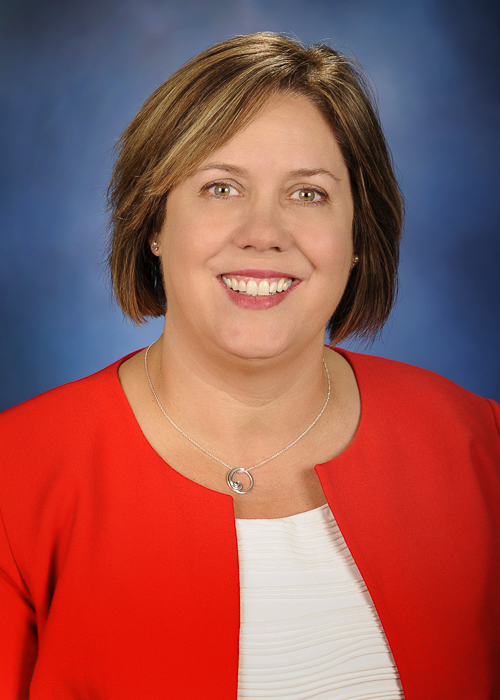
Joyce Mason
Joyce Mason House · District 61
D
Strong +
100% 124
Don Harmon
Don Harmon Senate · District 39
D
Strong +
100% 45
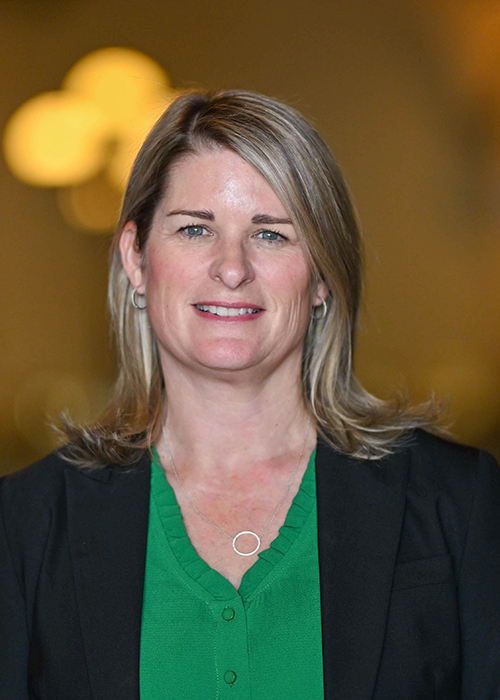
Doris Turner
Doris Turner Senate · District 48
D
Strong +
100% 47
LJ
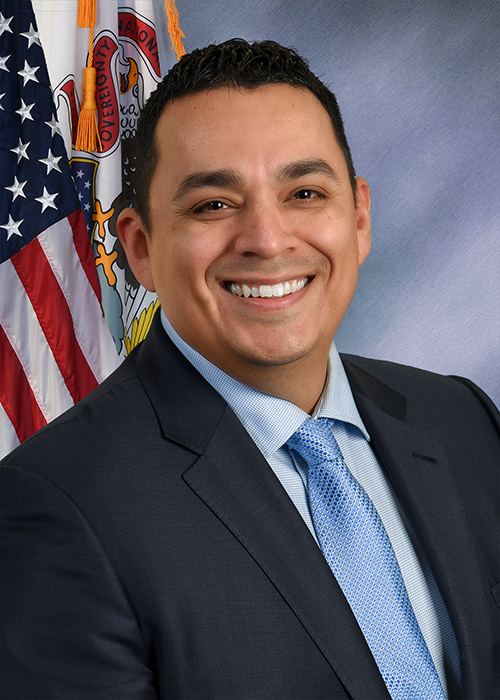
Lilian Jiménez House · District 4
D
Strong +
99% 195
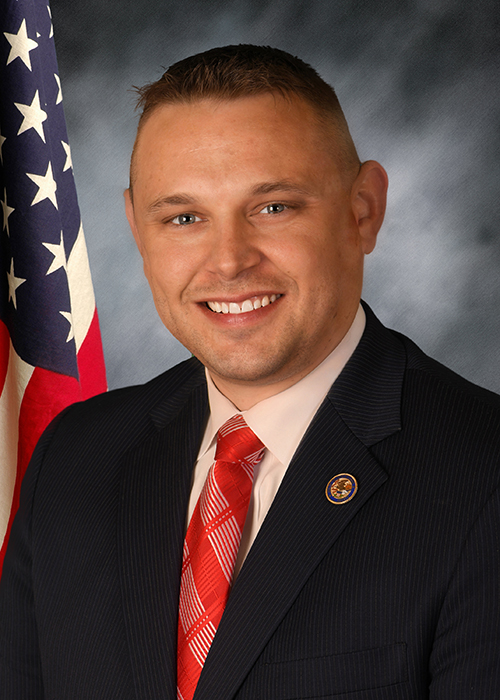
Maurice West
Maurice West House · District 67
D
Strong +
99% 185
Marty McLaughlin
Marty McLaughlin House · District 52
R
Strong −
0% 129
Li Arellano
Li Arellano Senate · District 37
R
Strong −
0% 57
Brad Halbrook
Brad Halbrook House · District 107
R
Strong −
2% 131
Regan Deering
Regan Deering House · District 88
R
Strong −
2% 124
Neil Anderson
Neil Anderson Senate · District 47
R
Strong −
3% 100
Showing 141–150 of 513 bills

All criminal justice bills

in committee · Illinois · Senate Feb 25, 2026

SB 4135: $FY27 LETSB OCE

Makes appropriations for the ordinary and contingent expenses of the Illinois Law Enforcement Training Standards Board for the fiscal year beginning July 1, 2026, as follows: Other State Funds $133,287,910; Federal Funds $8,000,000; Total $141,287,910.
Sub-Topics Law Enforcement
in committee · Illinois · Senate May 21, 2026

SB 4074: $FY27 DHS-PRETRIAL SUCCESS

SB 4074 appropriates $15 million from the General Revenue Fund to the Illinois Department of Human Services (DHS) for the Pretrial Success Program, effective July 1, 2026. This bill provides funding for an existing program focused on pretrial services, though the bill text does not detail specific program activities or direct beneficiaries. It is a straightforward funding measure with no new policy requirements or eligibility criteria described. The appropriation is scheduled to begin in fiscal year 2027.
Sub-Topics Appropriations Revenue
in committee · Illinois · Senate Jul 20, 2026

SB 3862: CRIM CD&PRO-PUBLIC CORRUPTION

Amends the Criminal Code of 2012. In the Illinois Street Gang and Racketeer Influenced and Corrupt Organizations Law, expands the definition of "predicate activity" to include bribery, official misconduct, solicitation misconduct (State government), solicitation misconduct (local government), and legislative misconduct. Extends the repeal of the Illinois Street Gang and Racketeer Influenced and Corrupt Organizations Law to January 1, 2035 (rather than July 1, 2027). Amends the Code of Criminal Procedure of 1963. Expands the authority of the State's Attorney to seek a court order authorizing the interception of a private communication when no party has consented to the interception and the interception may provide evidence of, or may assist in the apprehension of a person who has committed, is committing, or is about to commit an offense to include predicate activity under the Illinois Street Gang and Racketeer Influenced and Corrupt Organizations Law. Effective immediately.
Sub-Topics Courts
in committee · Illinois · Senate Feb 25, 2026

SB 4077: $FY27 SUPREME COURT

Appropriates the sum of $573,827,400, or so much thereof as may be necessary from the General Revenue Fund to the Supreme Court for operational expenses, awards, grants, permanent improvements, and probation reimbursements for the fiscal year ending June 30, 2027. Appropriates other sums for other Supreme Court projects and programs. Effective July 1, 2026.
in committee · Illinois · Senate Jul 2, 2026

SB 3317: $SAFER PATHWAYS

Appropriates the sum of $2,100,000 from the General Revenue Fund to the Illinois Criminal Justice Information Authority for a grant to Safer Pathways to support the Supportive Reentry Network Collaborative. Effective July 1, 2026.
in committee · Illinois · House Mar 27, 2026

HB 4583: CD CORR-SUBSTANCE USE DISORDER

Amends the Unified Code of Corrections. Provides that the Department of Corrections shall ensure all persons under its care are assessed for substance use disorder, as defined in the Substance Use Disorder Act. Provides that this process includes screening and assessment for opioid use disorders. Provides that for a committed person diagnosed with opioid use disorder, the Department shall offer, or facilitate access to, all medication-assisted treatment options deemed appropriate by an authorized health care professional. Provides that the Department shall not impose limitations on the types of medication assisted treatment that may be recommended by an authorized health care professional as part of a treatment plan. Provides that an individual receiving medication-assisted treatment prior to being committed to a Department of Corrections facility shall be entitled to, upon request, continue such treatment in the medication assisted treatment program for any period of time deemed medically necessary by an authorized health care professional. Provides that no person shall be denied participation in medication-assisted treatment program on the basis of a positive drug screening upon entering the Department's custody; nor shall any person receive a disciplinary infraction for such positive drug screen. Provides that no person shall be denied participation in medication-assisted treatment based on prior success or failure of any medication-assisted treatment program. Provides that for each Parole District, the Department shall develop a plan to facilitate access to medication-assisted treatment for persons diagnosed with opioid use disorder in the community following release. Provides that the Department may adopt rules for the implementation of these provisions. Effective January 1, 2027.
in committee · Illinois · Senate May 22, 2026

SB 2840: FOID CARDS-REINSTATEMENT

Amends the Firearm Owners Identification Card Act. Provides that the Illinois State Police shall not deny an application for a Firearm Owner's Identification Card or revoke a Firearm Owner's Identification Card on the basis of: (1) any conviction, adjudication, or delinquency finding that has been vacated, reversed, or set aside by a court; or (2) any record that has been expunged, sealed, or otherwise ordered removed under the Criminal Identification Act or Juvenile Court Act of 1987. Provides that the Illinois State Police shall eliminate from all internal databases any of these records within 45 days after receipt of the court order. Provides that use of any such record in connection with a Firearm Owner's Identification Card determination is prohibited. Provides that when a circuit court issues a final order directing the Illinois State Police to issue or reinstate a Firearm Owner's Identification Card of a person whose application for a card has been denied or whose card has been revoked, the Illinois State Police shall comply with the order and issue the card within 30 days after receipt of the order, unless the Illinois State Police files a petition for review in the Appellate Court within that 30-day period. Provides that if the Illinois State Police fails to comply with that provision, the person's application for a Firearm Owner's Identification Card shall be automatically granted by the Illinois State Police by operation of law or the person's Firearm Owner's Identification Card shall be automatically restored by operation of law on the 31st day after receipt of the order. Provides for the submission of certain quarterly reports by the Illinois State Police to the General Assembly and to the Governor. Effective immediately.
in committee · Illinois · Senate May 22, 2026

SB 2954: FINANCE-CANNABIS REGULATION

Amends the State Finance Act. Creates the Prison Education Fund. Provides that moneys in the Prison Education Fund shall be used by the Illinois Community College Board and the Board of Higher Education to make grants to prison education programs that award associate degrees or bachelor's degrees to currently incarcerated students. Makes changes concerning the allocation of money from the Cannabis Regulation Fund. Provides that 0.5% of the moneys in the Cannabis Regulation Fund, after certain allocations have been made, shall be transferred from the Cannabis Regulation Fund to the Prison Education Fund.
in committee · Illinois · House Mar 27, 2026

HB 4668: DOMESTIC VIOLENCE-LETHALITY

Amends the Illinois State Police Law and the Illinois Police Training Act to require instruction during training on the policies and procedures for administering a lethality assessment, including referrals to domestic violence services. Amends the Illinois Domestic Violence Act of 1986. Provides that, on or before January 1, 2028, every law enforcement agency shall provide to all of its law enforcement officers instruction on the policies and procedures for administering a lethality assessment as part of basic training. Provides that, on or before July 1, 2028, a law enforcement officer investigating an alleged incident of domestic violence shall administer a lethality assessment if the allegation of domestic violence is against an intimate partner, regardless of whether an arrest is made. Provides that if a victim does not, or is unable to, provide information to a law enforcement officer sufficient to allow the law enforcement officer to administer a lethality assessment, the law enforcement officer must document the lack of a lethality assessment in the written police report and refer the victim to the nearest locally certified domestic violence center. Prohibits a law enforcement officer from including in or attaching to a probable cause statement, written police report, or incident report the domestic violence center to which a victim was referred. Prohibits a law enforcement officer from administering a lethality assessment if the law enforcement officer has not received training on administering a lethality assessment. Makes a conforming change in the Freedom of Information Act.
passed · Illinois · Senate Jun 30, 2026

SB 2741: CRIM CD-HATE CRIME&HARASSMENT

Amends the Criminal Code of 2012. Combines harassment by telephone and harassment through electronic communications into one statute. Provides that a person also commits the offense by knowingly making any comment, request, suggestion, or proposal with the intent to harass another and that comment, request, suggestion, or proposal is not necessary to accomplish a purpose that is reasonable under the circumstances, that would cause a reasonable person emotional distress and does cause emotional distress to another.
Sub-Topics Civil Rights
Showing 141 to 150 of 513 bills
Previous 1 14 15 16 52 Next