Issue · Criminal Justice

Criminal Justice

Every criminal justice bill, vote, and legislator stance in Illinois, automatically classified by Maddy, our AI policy reader.

Total bills
513
104th Regular Session
Top supporter
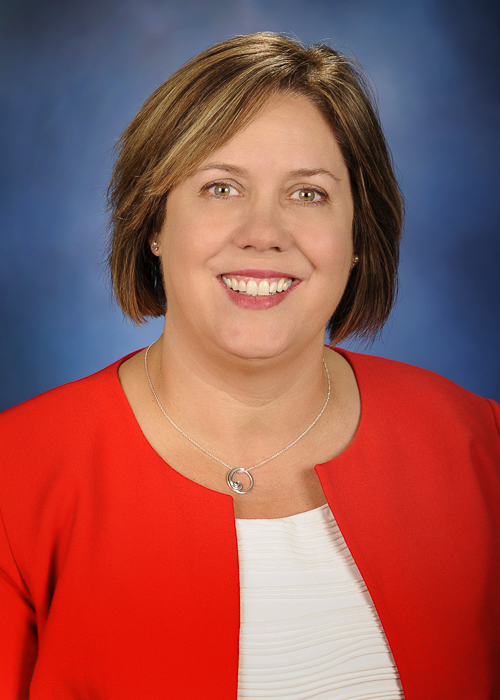
Joyce Mason
100% support rate
Top opponent
Marty McLaughlin
0% support rate
Ranked legislators
10
5 support · 5 oppose
Key legislators

Who's moving criminal justice in Illinois

Legislators moving criminal justice in Illinois
Legislator Party Stance Support rate Votes
Joyce Mason
Joyce Mason House · District 61
D
Strong +
100% 124
Don Harmon
Don Harmon Senate · District 39
D
Strong +
100% 45
Doris Turner
Doris Turner Senate · District 48
D
Strong +
100% 47
LJ
Lilian Jiménez House · District 4
D
Strong +
99% 195
Maurice West
Maurice West House · District 67
D
Strong +
99% 185
Marty McLaughlin
Marty McLaughlin House · District 52
R
Strong −
0% 129
Li Arellano
Li Arellano Senate · District 37
R
Strong −
0% 57
Brad Halbrook
Brad Halbrook House · District 107
R
Strong −
2% 131
Regan Deering
Regan Deering House · District 88
R
Strong −
2% 124
Neil Anderson
Neil Anderson Senate · District 47
R
Strong −
3% 100
Showing 131–140 of 513 bills

All criminal justice bills

in committee · Illinois · House Apr 17, 2026

HB 5155: INCARCERATED INDIVIDUALS DATA

Creates the Incarceration Demographic Data Transparency Act. Provides that for each person confined for any length of time in a State correctional institution or county jail demographic data shall be collected. Provides that the data shall consist of the race, ethnicity, and gender of confined persons. Provides that the Department of Corrections shall establish uniform statewide standards for the collection of demographic data that: (1) are consistent with applicable federal civil rights reporting requirements; (2) promote accuracy and consistency across jurisdictions; and (3) protect the dignity, privacy, and safety of confined individuals. Provides that the Department shall collect and maintain demographic data for all covered individuals confined in State correctional facilities. Provides that each county sheriff shall collect demographic data for covered individuals confined in county jails and shall submit such data to the Department in the form and manner prescribed by the Department. Provides that demographic data shall be submitted and reported at least quarterly and shall include: (1) snapshot population counts; and (2) admissions and releases occurring during the reporting period. Provides that the Department shall publish demographic data collected under the Act on a publicly accessible website in a searchable and downloadable manner. Provides that publicly reported data shall: (1) be aggregated and de-identified; and (2) exclude or suppress categories where disclosure would create a reasonable risk of identifying an individual. Provides that nothing in the Act authorizes the public release of personally identifiable information. Provides that the Department shall oversee implementation and compliance with the Act and provide guidance, reporting templates, and technical assistance to county sheriffs as necessary to implement the Act. Provides that the implementation of the Act is subject to appropriation. Provides that no criminal penalty shall apply to good-faith errors, technical mistakes, or omissions that are promptly corrected upon notice. Provides that the criminal penalties provided in this provision do not preclude administrative sanctions, civil penalties, injunctive relief, or other remedies authorized by law.
passed · Illinois · House May 21, 2026

HB 5434: CRIMINAL JUSTICE TASK FORCE

Creates the Emerging Adult Criminal Justice Task Force Act. Establishes the Emerging Adult Criminal Justice Task Force within the Illinois Criminal Justice Information Authority. Provides that the Task Force shall hold public meetings. Requires at least 3 meetings of the Task Force to be held in different regions of Illinois. Provides that the first meeting of the Task Force shall be held within 60 days after the appointment of its members. Provides that the Task Force shall review Illinois law and practices affecting emerging adults across pretrial, sentencing, corrections, supervision, and reentry. Provides that the Task Force shall develop recommendations for statutory, policy, and programmatic improvements to the Illinois criminal justice system. Allows any Task Force member to prepare a written dissent or statement of concern regarding any finding or recommendation. Provides that the Task Force shall submit an interim report summarizing preliminary findings, analyses, and recommendations, to the Governor and the General Assembly, no later than January 31, 2027. Provides that the Task Force shall submit a final report, including all final findings and recommendations, draft statutory language, and estimated fiscal impacts, no later than December 1, 2027. Repeals the Act on June 30, 2028. Effective immediately.
in committee · Illinois · Senate May 6, 2026

SB 4127: $FY27 CJIA OCE

Makes appropriations for the ordinary and contingent expenses of the Illinois Criminal Justice Information Authority for the fiscal year beginning July 1, 2026, as follows: General Funds $100,538,850; Other State Funds $232,067,751; Federal Funds $164,461,967; Total $497,068,568.
in committee · Illinois · House Apr 17, 2026

HB 5383: DUI TREATMENT COURT ACT

Creates the DUI Treatment Court Act. Provides that the Chief Judge of each judicial circuit may establish a DUI court program in compliance with the Problem-Solving Court Standards. Provides that, at the discretion of the Chief Judge, the DUI court program may be operated in one or more counties of the circuit. Allows defendants from all counties within the circuit to participate. Provides that DUI court programs must be certified by the Illinois Supreme Court. Provides that persons who committed specified offenses are excluded from the DUI court program. Provides that a judge assigned to preside over a DUI treatment court shall have experience, training, and continuing education in specified topics. Provides, subject to appropriation, for mandatory education seminars for DUI court prosecutors and public defenders. Provides that a defendant may be admitted into a DUI court program upon the consent of the defendant and with the approval of the court only if the person has been charged with driving under the influence or aggravated driving under the influence. Provides that, subject to certain limitations, the court may vacate or successfully terminate the participant's sentence or otherwise discharge the participant from any further proceedings upon successful completion of the terms and conditions of the program.
Sub-Topics Courts Judges
in committee · Illinois · House May 13, 2026

HB 5261: CRIM CD&CD CORR-FELONY MURDER

Amends the Criminal Code of 2012 and the Unified Code of Corrections. Eliminates felony murder as an element of first degree murder. Creates felony murder as a separate class of felony. Provides that a person commits felony murder when he or she, acting alone or with one or more participants, commits or attempts to commit a forcible felony, other than second degree murder, and in the course of or in furtherance of that crime or flight from that crime, he or she or another participant causes the death of a person, other than one of the participants. Provides that the sentence of imprisonment for felony murder shall be a determinate sentence of not less than 8 years and not more than 40 year, subject to the parole review provisions for persons who committed the offense when under 21 years of age. Provides that an extended term sentence for felony murder shall be not less than 16 years and not more than 80 years. Amends various Acts to make conforming changes.
Sub-Topics Probation & Parole
in committee · Illinois · Senate Feb 25, 2026

SB 4137: $FY27 PRB OCE

Makes appropriations for the ordinary and contingent expenses of the Prisoner Review Board for the fiscal year beginning July 1, 2026, as follows: General Funds $6,458,800; Other State Funds $185,000; Total $6,643,800.
in committee · Illinois · House Mar 27, 2026

HB 5588: RESTORATIVE JUSTICE COMMUN CT

Creates the Restorative Justice Community Court Act. Provides that the chief judge of each judicial circuit shall establish at least one Restorative Justice Community Court and may establish additional satellite Restorative Justice Community Courts. Provides that Restorative Justice Community Courts shall be planned, operated, and evaluated in accordance with the Illinois Supreme Court Problem-Solving Court standards and shall obtain certification and maintain compliance with the requirements of the Administrative Office of the Illinois Courts. Provides that referral to the Restorative Justice Community Court may be initiated by the court; the defendant; counsel for the defendant; probation, pretrial services, or Restorative Justice Community Court staff; or the State's Attorney. Provides that, upon admission to a Restorative Justice Community Court, the court shall enter an order staying the criminal proceedings and tolling the speedy-trial period. Provides that, upon a finding by the court that a participant has successfully completed all conditions of a Restorative Justice Community Court Agreement, including obligations to repair harm, participate in restorative processes, and comply with services and supports identified in the restorative agreement, the court shall: (1) dismiss the charge or charges underlying the participant's admission to the Restorative Justice Community Court in the interests of justice and (2) enter an order dismissing the charge or charges and expunging the record of arrest and court proceedings in accordance with the Criminal Identification Act without any statutory waiting period. Amends the Code of Criminal Procedure of 1963 to make conforming changes. Effective January 1, 2027.
in committee · Illinois · Senate Feb 4, 2026

SB 3390: PROSTITUTION DECRIMINALIZATION

Provides that the Act may be referred to as the Keeping Sex Workers Safe Act. Creates the Sex Workers' Bill of Rights Act. Provides that sex workers shall not be subject to criminal prosecution for engaging in consensual sex work. Provides that law enforcement agencies are prohibited from arresting, charging, or prosecuting individuals solely for performing or engaging in sex work. Provides that sex workers, whether employed, contracted, or self-employed, shall be afforded the same rights and protections as other workers under Illinois law, including, but not limited to: (1) minimum wage and hour protections; (2) protection against discrimination, harassment, and unsafe working conditions; (3) access to workers' compensation and health benefits if applicable; and (4) protection of privacy and freedom from surveillance. Provides that employers, clients, or those benefiting from the services of sex workers must ensure safe working conditions, including protection from violence, exploitation, and human trafficking. Provides that sex workers operating as independent contractors shall be treated as legitimate sole proprietors or businesses under Illinois law. Provides that sex workers have the right to control their work, negotiate fair contracts, and receive payment for their services without interference or exploitation. Provides that sex workers shall not be discriminated against in access to housing, public services, financial services, or healthcare based on their occupation. Provides that all laws protecting workers from discrimination on the basis of sex, race, gender identity, sexual orientation, or other protected characteristics shall apply equally to sex workers. Defines "sex work" and "sex worker". Amends the Criminal Code of 2012. Repeals the offenses of prostitution and patronizing a prostitute. Amends various Acts to make conforming changes. Effective immediately.
in committee · Illinois · Senate Jul 20, 2026

SB 3369: CRIM CD-BRIBERY&LEG MISCONDUCT

Amends the Criminal Code of 2012. Provides that bribery and legislative misconduct include the receipt of property or personal advantage after the improper act has been performed (rather than just the intent to influence the improper act). Provides that the provisions do not apply to the promise, tender, acceptance, or receipt of any campaign contributions that are permissible under the Election Code.
in committee · Illinois · House Apr 17, 2026

HB 5057: CRIME VICTIMS-COMPENSATION

Amends the Crime Victims Compensation Act. Removes the requirements to report the crime within 72 hours of its occurrence or within 7 days for other specified crimes. Removes language that requires certification from a mental health provider to come from a provider who has not before and will not again provide care to the victim or applicant. Provides that confidentiality is not waived between a health care provider and the victim or applicant if a mental health provider, medical provider, or other third party provides documentation of the crime for the purposes of compensation eligibility. Requires the Attorney General to make and publish on its website the form the mental health provider must use to certify the evaluation of the victim or applicant. Requires the Comptroller to issue payment within 2 business days of approval of an emergency award by the Court of Claims. Provides that emergency awards may be issued to the applicant for the purpose of paying funeral and burial expenses directly to a funeral home for expenses that have been incurred or that the applicant has been quoted and for relocation expenses incurred or due to be incurred by an applicant. Provides that if the amount of emergency compensation exceeds the actual amount the applicant incurs, the difference shall be repaid to the State. Makes other changes.
Sub-Topics Courts Victims' Rights
Showing 131 to 140 of 513 bills
Previous 1 13 14 15 52 Next