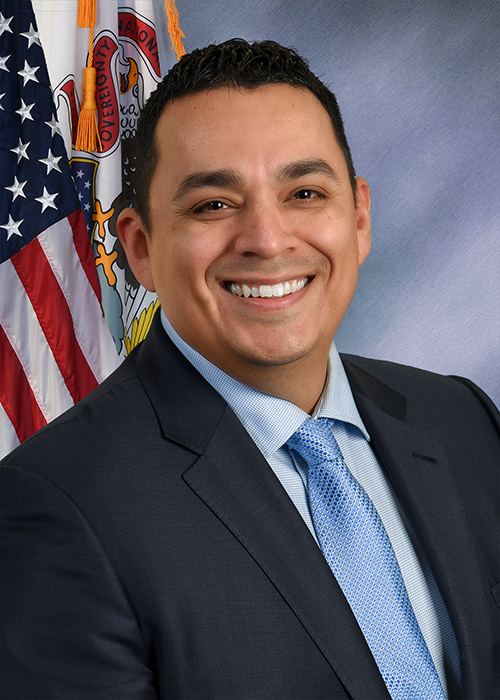
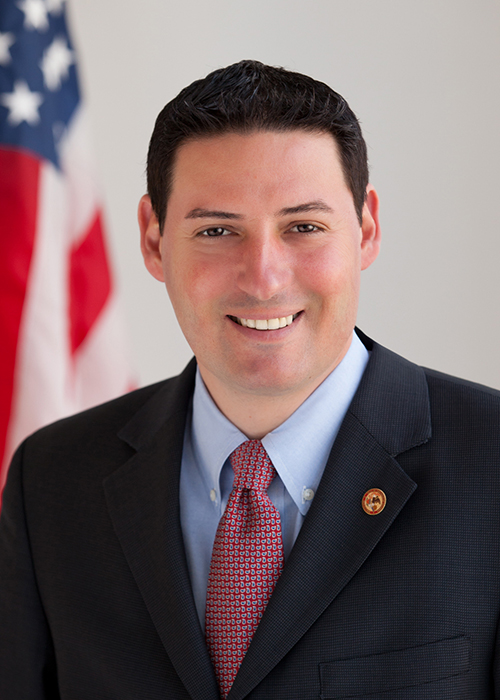
This bill appoints Stephanie Love-Patterson as a member of the Prisoner Review Board, a body responsible for overseeing the rights and conditions of incarcerated individuals. The legislation follows a standard confirmation process where the executive branch recommends her selection, and the legislature votes to approve the appointment. Once confirmed, Love-Patterson will serve on the board to help review cases and ensure fair treatment within the prison system. This change directly affects the composition of the board but does not alter the underlying laws or policies governing prisoner rights.
Amends the Illinois State Police Law of the Civil Administrative Code of Illinois. Provides that required hate crime training so Illinois may include material to help officers distinguish hate crimes from other crimes, understand and assist the victims of hate crimes, and ensure the accurate reporting of hate crimes, provides that the Illinois State Police shall biannually review the hate crime training curriculum. Provides the Illinois State Police may consult with the commission on discrimination and hate crimes to update the curriculum as needed. Amends the Illinois Police Training Act. Provides that the Illinois Law Enforcement Training Standards Board shall conduct or approve training programs in crimes motivated by bias. Includes requirements for the training programs. Requires the training for new law enforcement officers and the completion of continuing education credits for current law enforcement officers who complete the training.
Amends the Unified Code of Corrections. Creates the Juvenile Detention Center Strategic Utilization Task Force to review and study the necessity of juvenile detention centers, complaints that arise out of the county juvenile detention centers in the State, and community-based alternatives to juvenile detention. Includes provisions about Task Force membership and duties. Provides that on or before January 1, 2026, the Task Force shall publish a final report of its findings and recommendations. Repeals the provisions on January 1, 2027. Effective immediately.
Amends the Juvenile Court Act of 1987. Provides that a minor found to be guilty may be committed to the Department of Juvenile Justice if the minor is at least 14 (rather than 13) years and under 20 years of age, provided that the commitment to the Department of Juvenile Justice shall be made only if the minor was found guilty of a felony offense or first degree murder. Provides that when a minor of the age of at least 14 (rather than 13) years is adjudged delinquent for the offense of first degree murder, the court shall declare the minor a ward of the court and order the minor committed to the Department of Juvenile Justice until the minor's 21st birthday, without the possibility of aftercare release, furlough, or nonemergency authorized absence for a period of 5 years from the date the minor was committed to the Department of Juvenile Justice. Amends the Juvenile Court Act of 1987. Provides that on or after July 1, 2026 and before July 1, 2027, any minor 12 years of age or older arrested pursuant to the Act if there is probable cause to believe that the minor is a delinquent minor and that secure custody is a matter of immediate and urgent necessity, in light of a serious threat to the physical safety of a person or persons in the community or in order to secure the presence of the minor at the next hearing, as evidenced by a demonstrable record of willful failure to appear at a scheduled court hearing within the past 12 months, may be kept or detained in an authorized detention facility. Provides that on or after July 1, 2027, minors age 12 years of age and under 13 years of age and charged with first degree murder, aggravated criminal sexual assault, aggravated battery in which a firearm was used in the offense, or aggravated vehicular hijacking, may be kept or detained in an authorized detention facility. Provides that no minor under 13 (rather than under 12) years of age shall be detained in a county jail or a municipal lockup for more than 6 hours. Provides that instead of detention, minors under the age of 13 who are in conflict with the law may be held accountable through a petition under the Minors Requiring Authoritative Intervention Article of the Act, or may be held accountable through a community mediation program.
Amends the School Code. Provides that the State Board of Education shall require that each school district annually report the number of students who were referred to a law enforcement agency or official and the number of instances of referrals to law enforcement that students received. Provides that on or before January 31, 2027 and on or before January 31 of each subsequent year, the State Board of Education shall prepare a report on student referrals to law enforcement in all school districts in the State. Requires a parent-teacher advisory committee to develop policy guideline procedures to establish and maintain a reciprocal reporting system between the school district and local law enforcement agencies regarding both criminal and civil offenses (rather than only criminal offenses) committed by students. Removes language providing that a student may not be issued a monetary fine or fee as a disciplinary consequence. Instead, prohibits school personnel from issuing a monetary fine, fee, ticket, or citation for a municipal code violation. Provides that school personnel (rather than a school district) may not refer a truant, chronic truant, or truant minor to any other local public entity, school resource officer, or peace officer (rather than only to any other local public entity) for that local public entity, school resource officer, or peace officer to issue the child a fine or fee as punishment for truancy. Effective immediately.
Creates the State Public Defender Act. Creates the Office of State Public Defender as an agency of State government. Provides that the Office of State Public Defender shall be an independent agency within the judicial branch of government and the Office's records shall be subject to the Freedom of Information Act. Provides that the Office of State Public Defender shall be under the supervision and direction of the State Public Defender. Sets forth the powers and duties of the State Public Defender, including the duties of the initial State Public Defender. Provides that the initial State Public Defender shall be appointed by the Supreme Court. Sets forth specified duties and responsibilities of the initial State Public Defender. Creates the State Public Defender Commission. Sets forth membership and duties of the Commission. Amends the Public Defender and Appointed Counsel Division of the Counties Code. Provides that any 2 or more counties of this State that are within the same judicial circuit may by joint resolution of the several county boards involved create a common Office of public defender for the counties so joined or allow representation in one county by the public defender appointed in the collaborating county (rather than 2 or more adjoining counties within the same judicial circuit may create a common Office of public defender). Provides that, when a vacancy occurs in the position of public defender, the State Public Defender shall nominate and the State Public Defender Commission shall appoint a properly qualified public defender using the application and selection process developed under the State Public Defender Act. Removes certain differences based upon county populations. Removes provisions relating to the Public Defender Quality Defense Task Force. Provides that a public defender may be removed only for good cause or dereliction of duty after notice and a hearing before the State Public Defender Commission (rather than by the president of the county board after a notice and hearing of the county board). Modifies how a public defender is compensated and how moneys in the Public Defender Fund may be used. Makes other changes. Amends various Acts to make conforming changes.
Amends the Illinois Insurance Code. Provides that an insurer or producer authorized to issue policies of insurance in the State may not make a distinction or otherwise discriminate between persons, reject an applicant, cancel a policy, or demand or require a higher rate of premium for reasons based solely upon the basis that an applicant or insured has been convicted of a felony.
Amends the Unified Code of Corrections. In the provision concerning parole review of persons under the age of 21 at the time of the commission of an offense, provides that any date after serving the minimum term of years to become eligible for parole review or up to 3 years prior to becoming eligible for parole review, the eligible person may file his or her petition for parole review with the Prisoner Review Board. Provides that within 30 days of receipt of this petition, the Prisoner Review Board shall determine whether the petition is appropriately filed, and if so, shall set a date for parole review 3 years from receipt of the petition or the date the person is eligible for parole review, whichever date is sooner, and notify the Department of Corrections within 10 business days. Provides that in no such circumstance shall the hearing be scheduled sooner than one year from the date of the determination that the petition is appropriately filed.
Amends the Illinois Criminal Justice Information Act. Authorizes the Illinois Criminal Justice Information Authority to: (1) use the services of, and enter into necessary agreements with, outside entities for the purpose of evaluating grant applications and for the purpose of administering or monitoring compliance with grant agreements; (2) make grants to community-based organizations, local government agencies, non-profit organizations, or other eligible entities for specified criminal justice and public safety programs; and (3) adopt rules necessary to carry out the Authority's responsibilities under the Act. Effective immediately.
Amends the Freedom of Information Act. Exempts images from cameras under the Expressway Camera Act and all automated license plate reader (ALPR) information used and collected by the Illinois State Police from inspection and copying. Amends the Expressway Camera Act. Provides that, as used in the Act, "forcible felony" means trafficking in persons and involuntary servitude (in addition to other specified offenses). Includes the counties of Lee, Ogle, and Whiteside in the program to increase cameras along expressways and the State highway system. Provides that images from the cameras, including, but not limited to, images of license plates collected by state-operated cameras and cameras operated by the Illinois State Toll Highway Authority, may be used by any law enforcement agency conducting an active law enforcement investigation. Removes provision allowing images from the cameras to be used by any law enforcement agency conducting an active law enforcement investigation. Provides that all images from the cameras that are exported through a law enforcement database shall be deleted from that law enforcement database within 120 days, unless the images are relevant to an ongoing investigation or pending criminal trial. Provides that any forcible felony, gunrunning, or firearms trafficking offense, as specified, respectively, committed on an expressway monitored by a camera system funded by money from the Road Fund or money from the Illinois State Toll Highway Authority and investigated by officers of the Illinois State Police may be prosecuted by the Attorney General or the State's Attorney where the offense was committed. Provides that the Act supersedes provisions in the Toll Highway Act regarding the confidentiality of personally identifiable information obtained through electronic toll collection systems. Provides that the Act is repealed on July 1, 2028 (rather than July 1, 2025). Effective immediately.