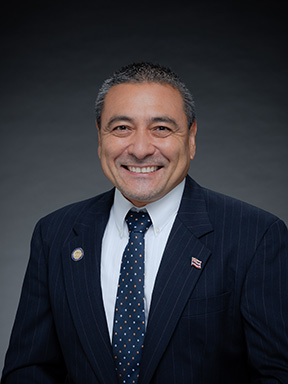
SB 2570 allocates extra funding for the state Judiciary to cover operations during the 2025-2027 fiscal biennium. It provides supplemental budget money specifically for court systems, judges, and related judicial services. This bill directly affects the Judiciary branch by ensuring continued funding for its core functions. The legislation is procedural, focusing solely on financial allocation without creating new policies or regulations.
Allows a court to consider relevant evidence and make a determination to grant, deny, or set conditions of bail. Requires that a defendant is to be presumed entitled to bail unless certain conditions are met. Requires a court to set aside the forfeiture of bail if the defendant voluntarily appears before the court or is surrendered by the surety or bail agent within ninety days after a failure to appear. Requires a court to obtain the consent of the surety or bail agent to reinstate bail. Clarifies qualifications for bail agents, insurers, and sureties. Clarifies the process for the discharge of bail agents, insurers, and sureties. Allows a court discretion to determine whether the forfeiture of bail is appropriate. Requires a motion by the principal to set aside an order of forfeiture to provide the surety or insurer with prompt notice affording opportunity to join the motion. Allows courts discretion to reinstate a bond or recognizance or return the bond or recognizance to the appropriate party after vacating a judgment of forfeiture.
Beginning 7/1/2027, requires the Judiciary to develop, implement, and administer an automated court appearance reminder system that generates text message or electronic mail notifications for upcoming court appearances in certain types of cases. Requires persons making an arrest or issuing a citation to obtain, to the extent practicable, the offender's mobile telephone number and electronic mail address. Appropriates funds. Effective 7/1/3000. (HD1)
Limits the maximum term of imprisonment for misdemeanors that are not crimes of violence, or for offenses that are not crimes of violence punishable by up to or not exceeding one year, to three hundred sixty-four days. Allows individuals previously sentenced to a one-year term of imprisonment for an offense that is not a crime of violence to apply to the trial court for reconsideration of the sentence to conform to the revised maximum penalty. (CD1)
Allows a party aggrieved by the judgment of a circuit court on a minimum term order to appeal to the Intermediate Appellate Court. Requires prisoners to be represented by counsel in any petition challenging the minimum term proceedings. Requires the Supreme Court to establish rules. Establishes grounds for challenging a minimum term order. Appropriates funds. Effective 3/22/2075. (SD1)
Establishes the procedure that a circuit court shall follow upon the reversal or vacation of an individual's judgment of conviction on grounds consistent with innocence, and where the charges were dismissed. Requires the State to pay advance compensation to any petitioner who was convicted in a court of the State, imprisoned for at least one year, and whose judgment of conviction was reversed or vacated, or was pardoned, on grounds consistent with innocence. Requires the Comptroller to issue a warrant for payment of advance compensation to a petitioner. Requires the Department of Human Services, in collaboration with the Department of Corrections and Rehabilitation, to contract with a community-based agency to assign a case manager to a petitioner upon the petitioner's release. Requires the State to provide medical coverage to a person for a certain duration upon the reversal or vacation of the person's judgment of conviction on grounds consistent with innocence and where the charges were dismissed. Provides that the Judiciary and Department of Corrections and Rehabilitation shall retain jurisdiction over the person for the purposes of effectuating this process. Authorizes the State to seek reimbursement from the applicable county for any losses incurred by the State pursuant to this process. Requires the Department of the Attorney General to submit an annual report to the Legislature. Clarifies eligibility to seek compensation for individuals whose judgment of conviction was reversed or vacated, or who were pardoned, on grounds consistent with innocence, and where the charges were dismissed. Shifts the burden of proof to the State to prove by a preponderance of evidence that the reversal or vacation of the judgment of conviction for a petitioner, or the pardoning of the petitioner, was inconsistent with innocence. Effective 7/1/3000. (HD2)
Increases the rate of compensation and maximum allowable amounts per case for court-appointed counsel in criminal proceedings. Appropriates funds. Effective 4/23/2057. (SD1)
Requires the Judiciary to contract with a collection agency or licensed attorney to collect delinquent court-ordered fees, fines, sanctions, and court costs. Repeals the authority of the Judiciary to contract with a collection agency or licensed attorney to collect delinquent restitution. Expressly allows courts to specify a period of time or installments for payment of fees and restitution. Requires district courts to hold payment compliance hearings once per year or as soon as practicable, until all fees, fines, and restitution are fully paid, and requires a defendant in district court to appear and show cause if the defendant fails to pay in full within a time specified by the court or fails to pay three consecutive installments. Makes conforming amendments to related statutes. Appropriates funds. Effective 7/1/3000. (HD2)
HB 675 requires judges to determine a defendant's ability to pay bail before setting an amount. This directly affects defendants who cannot afford bail, potentially preventing them from being jailed solely due to poverty. The bill mandates judges to make specific findings about financial circumstances during bail hearings. It aims to modify current bail procedures by focusing on a defendant's economic situation rather than defaulting to cash bail. (Note: This is a procedural bill affecting court practices, not a substantive policy change.)
Limits the maximum term of imprisonment for misdemeanors, or for offenses punishable by up to or not exceeding one year, to three hundred sixty-four days. Allows individuals previously sentenced to a one-year term of imprisonment to apply to the court for a sentence modification to conform to the new limit. Effective 7/1/3000. (HD1)