








Issue · Labor & Employment

Labor & Employment

Every labor & employment bill, vote, and legislator stance in Connecticut, automatically classified by Maddy, our AI policy reader.

Total bills
12
2026 Regular Session
Top supporter
Steve Stafstrom
100% support rate
Top opponent
Craig Fishbein
0% support rate
Ranked legislators
10
5 support · 5 oppose
Key legislators

Who's moving labor & employment in Connecticut

Legislators moving labor & employment in Connecticut
Legislator Party Stance Support rate Votes
Steve Stafstrom
Steve Stafstrom House · District 129
D
Strong +
100% 18
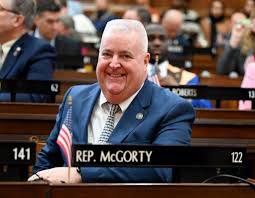
Ben McGorty
Ben McGorty House · District 122
R
Strong +
100% 21
John Kissel
John Kissel Senate · District 7
R
Strong +
89% 43
Roland Lemar
Roland Lemar House · District 96
D
Strong +
88% 20
Christie Carpino
Christie Carpino House · District 32
R
Strong +
88% 21
Craig Fishbein
Craig Fishbein House · District 90
R
Strong −
0% 18
Donna Veach
Donna Veach House · District 30
R
Strong −
12% 21
Karen Reddington-Hughes
Karen Reddington-Hughes House · District 66
R
Strong −
12% 21
John Piscopo
John Piscopo House · District 76
R
Strong −
12% 21
Mark DeCaprio
Mark DeCaprio House · District 48
R
Strong −
12% 21
Showing 11–12 of 12 bills

All labor & employment bills

signed · Connecticut · House May 11, 2026

HB 5003: AN ACT CONCERNING WORKFORCE DEVELOPMENT AND WORKING CONDITIONS IN THE STATE.

This bill requires healthcare facilities and schools to cover medical costs and pay full salary for staff injured during work-related assaults or aggressive incidents. It creates a system for reporting patient violence in digital health records (with patient appeal options) and ensures absences due to such incidents don’t count against paid leave. Directly affects healthcare workers, teachers, and school staff who face workplace violence while performing job duties.
passed · Connecticut · Senate May 1, 2026

SB 271: AN ACT IMPLEMENTING THE RECOMMENDATIONS OF THE LABOR DEPARTMENT.

This bill amends labor laws to limit workweeks to six days for most commercial and industrial employees, protecting them from dismissal for refusing to work seven days. It also revises unemployment rules to require medical documentation for individuals seeking part-time work due to chronic health conditions while claiming benefits. These changes directly affect workers in covered industries and employers who must comply with the new workweek limits and benefit eligibility standards. The provisions take effect October 1, 2026, as specified in Sections 4 and 1 of the bill.
Showing 11 to 12 of 12 bills