Issue · Budget & Taxes

Budget & Taxes (Business Taxes)

Every budget & taxes bill, vote, and legislator stance in Connecticut, automatically classified by Maddy, our AI policy reader.

Total bills
63
2026 Regular Session
Top supporter
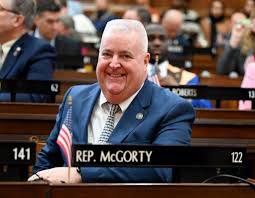
Ben McGorty
100% support rate
Top opponent
Aimee Berger-Girvalo
33% support rate
Ranked legislators
10
5 support · 5 oppose
Key legislators

Who's moving business taxes in Connecticut

Legislators moving business taxes in Connecticut
Legislator Party Stance Support rate Votes
Ben McGorty
Ben McGorty House · District 122
R
Strong +
100% 3
Bill Pizzuto
Bill Pizzuto House · District 71
R
Strong +
100% 3
Billy Buckbee
Billy Buckbee House · District 67
R
Strong +
100% 3
Brian Lanoue
Brian Lanoue House · District 45
R
Strong +
100% 3
Carol Hall
Carol Hall House · District 59
R
Strong +
100% 3
Aimee Berger-Girvalo
Aimee Berger-Girvalo House · District 111
D
Oppose
33% 3
Al Paolillo
Al Paolillo House · District 97
D
Oppose
33% 3
Amy Morrin Bello
Amy Morrin Bello House · District 28
D
Oppose
33% 3
Andre Baker
Andre Baker House · District 124
D
Oppose
33% 3
Anne Hughes
Anne Hughes House · District 135
D
Oppose
33% 3
Showing 31–40 of 63 bills

All budget & taxes bills

in committee · Connecticut · House Feb 9, 2026

HB 5095: AN ACT EXEMPTING PET GROOMING SERVICES FROM THE SALES AND USE TAXES.

HB 5095 would remove sales tax from pet grooming services, directly affecting pet groomers and pet owners who pay for these services. The bill amends the state tax code (chapter 219) to exempt pet grooming as a taxable service, meaning businesses would no longer collect sales tax on this specific service. This change would lower costs for customers seeking pet grooming and simplify tax compliance for service providers. The bill focuses solely on the tax treatment of pet grooming, with no other policy changes or broader implications outlined.
in committee · Connecticut · Senate Feb 10, 2026

SB 106: AN ACT EXEMPTING DOG GROOMING SERVICES FROM THE SALES AND USE TAXES.

SB 106 would remove the sales and use tax from dog grooming services in the state. This change directly affects dog groomers (who would pay less tax on their services) and pet owners (who would pay less for grooming). The bill achieves this by amending the state tax code to specifically exempt dog grooming services from the standard sales tax.
in committee · Connecticut · Senate Feb 20, 2026

SB 100: AN ACT REDUCING CERTAIN PERSONAL INCOME TAX MARGINAL RATES.

SB 100 reduces the two lowest personal income tax rates for eligible taxpayers. It eliminates the 2% tax rate for single filers earning under $100,000 annually and lowers the 4.5% rate to 3% for those in that bracket. Similarly, it removes the 2% rate for married couples filing jointly earning under $200,000 and reduces the 4.5% rate to 3% for them. The bill directly affects low-to-moderate income earners by decreasing their tax burden on the lowest income levels. These changes apply to taxable income falling within the specified thresholds under the state's income tax code.
in committee · Connecticut · Senate Feb 4, 2026

SB 40: AN ACT ESTABLISHING A TAX CREDIT FOR EDUCATIONAL ACCESS AND OPPORTUNITY SCHOLARSHIPS.

SB 40 establishes a state tax credit for individuals and businesses that donate to nonprofit organizations providing educational access and opportunity scholarships. The credit would allow donors to reduce their state income tax liability by a portion of their donation amount, directly incentivizing private funding for scholarship programs. This bill primarily affects taxpayers who make qualifying donations and the nonprofits administering these scholarships, without specifying credit percentages or donation limits. The legislation aims to expand private support for educational opportunities through tax incentives, as stated in its purpose.
in committee · Connecticut · House Feb 11, 2026

HB 5186: AN ACT CONCERNING THE AFFECTED BUSINESS ENTITY TAX AND THE CREDIT RELATED THERETO AND ESTABLISHING A SURCHARGE ON THE AMOUNT OF FEDERAL QUALIFIED BUSINESS INCOME DEDUCTIONS CLAIMED BY CERTAIN FILERS.

HB 5186 adjusts Connecticut's affected business entity tax and related credits for businesses claiming federal qualified business income deductions. It adds a 1% surcharge on the business entity tax and a 10% surcharge on federal deductions claimed by filers in the highest tax bracket. The bill also modifies tax credits: reducing the credit to 83.6% for high-bracket filers while increasing it to 93.01% for lower-bracket filers. These changes directly impact businesses using federal pass-through income deductions, particularly those in Connecticut's top tax rate category.
in committee · Connecticut · Senate Feb 4, 2026

SB 74: AN ACT ESTABLISHING A TAX CREDIT FOR DAIRY FARMERS.

SB 74 would create a $20 million state tax credit for dairy farmers to help offset income losses during periods when milk prices drop. The credit directly affects dairy farmers in the state who experience cyclical price fluctuations in milk sales. The bill establishes this tax credit as a fixed pool, meaning it would provide financial relief to eligible farmers when milk prices fall below certain levels. This is a direct policy change to support dairy farm revenue stability, not a procedural measure.
Sub-Topics Business Taxes Sales Tax Tax Credits Tags Agriculture
in committee · Connecticut · Senate Feb 4, 2026

SB 60: AN ACT CONCERNING THE SALES AND USE TAXES RATE.

This bill would lower Connecticut's general sales tax rate from 7% to 6% and eliminate a separate 1% tax on meals sold at restaurants, caterers, and grocery stores. It directly affects businesses selling taxable goods and meals, as well as consumers who pay these taxes. The key changes are reducing the overall sales tax rate and removing the additional tax specifically for food purchases. The bill aims to decrease the tax burden for these transactions.
in committee · Connecticut · House Feb 9, 2026

HB 5087: AN ACT ESTABLISHING PERSONAL INCOME TAX DEDUCTIONS FOR TIPS OR GRATUITIES AND OVERTIME PAY.

HB 5087 would create a state-level personal income tax deduction for taxpayers who earn tips or overtime pay, mirroring the existing federal tax treatment for these income types. It directly affects workers in service industries (like restaurants or hospitality) who receive tips or earn overtime, as well as other earners with these income streams. The bill would amend tax law to allow these specific income categories to be deducted when calculating taxable income, similar to how they are treated federally. This policy change simplifies tax filing for affected workers by aligning state deductions with federal rules.
in committee · Connecticut · House Mar 12, 2026

HB 5319: AN ACT CONCERNING A RESEARCH AND DEVELOPMENT TAX CREDIT FOR SMALL BUSINESSES.

HB 5319 creates a 6% state tax credit for qualified small businesses based on their eligible research and development (R&D) expenses, directly affecting S corporations, partnerships, and single-member LLCs with gross income under $70 million. Businesses must apply for a pre-approved "tax credit voucher" to reserve credit capacity (capped at $1.5 million per business and $25 million total annually) before incurring expenses. The credit reduces state tax liability, and any excess can be partially refunded (90% for biotech businesses, 65% for others). This policy aims to incentivize R&D investment by making tax credits accessible without upfront cash costs.
in committee · Connecticut · Senate Feb 9, 2026

SB 99: AN ACT ESTABLISHING A REFUNDABLE CREDIT AGAINST THE PERSONAL INCOME TAX FOR THE AMOUNT OF MOTOR VEHICLE PROPERTY TAX PAID.

SB 99 creates a refundable tax credit against personal income tax equal to the motor vehicle property tax paid by qualifying taxpayers. It directly affects low-to-moderate-income individuals: single filers with adjusted gross income under $100,000 and married couples filing jointly with income under $200,000. The credit is refundable, meaning eligible taxpayers receive cash back even if the credit exceeds their income tax liability. The bill specifically applies to motor vehicle property tax, not home property tax (though the text references a separate residence tax limitation, which is unrelated to this vehicle credit). This is a concrete policy change that reduces the tax burden for vehicle owners meeting the income thresholds.
Showing 31 to 40 of 63 bills
Previous 1 3 4 5 7 Next