Issue · Budget & Taxes

Budget & Taxes (Sales Tax)

Every budget & taxes bill, vote, and legislator stance in Connecticut, automatically classified by Maddy, our AI policy reader.

Total bills
52
2026 Regular Session
Top supporter
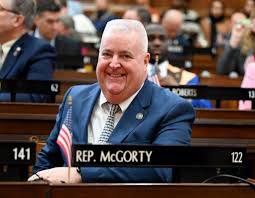
Ben McGorty
100% support rate
Top opponent
Aimee Berger-Girvalo
33% support rate
Ranked legislators
10
5 support · 5 oppose
Key legislators

Who's moving sales tax in Connecticut

Legislators moving sales tax in Connecticut
Legislator Party Stance Support rate Votes
Ben McGorty
Ben McGorty House · District 122
R
Strong +
100% 3
Bill Pizzuto
Bill Pizzuto House · District 71
R
Strong +
100% 3
Billy Buckbee
Billy Buckbee House · District 67
R
Strong +
100% 3
Brian Lanoue
Brian Lanoue House · District 45
R
Strong +
100% 3
Carol Hall
Carol Hall House · District 59
R
Strong +
100% 3
Aimee Berger-Girvalo
Aimee Berger-Girvalo House · District 111
D
Oppose
33% 3
Al Paolillo
Al Paolillo House · District 97
D
Oppose
33% 3
Amy Morrin Bello
Amy Morrin Bello House · District 28
D
Oppose
33% 3
Andre Baker
Andre Baker House · District 124
D
Oppose
33% 3
Anne Hughes
Anne Hughes House · District 135
D
Oppose
33% 3
Showing 31–40 of 52 bills

All budget & taxes bills

in committee · Connecticut · House Feb 10, 2026

HB 5136: AN ACT DEDICATING THE REVENUE GENERATED FROM SALES AND USE TAXES IMPOSED ON MEALS SOLD BY AN EATING ESTABLISHMENT, CATERER OR GROCERY STORE TO CERTAIN PURPOSES.

HB 5136 dedicates an additional 1% sales and use tax collected on meals sold by restaurants, caterers, and grocery stores to two specific purposes. The revenue must be distributed to the municipalities where the tax was collected and deposited into the state's Tourism Fund (under § 10-395b). This bill directly affects businesses selling prepared meals and the local governments receiving the redistributed funds. It creates a new, mandatory allocation for this tax revenue stream without changing the tax rate itself.
Sub-Topics Revenue Sales Tax
in committee · Connecticut · House Feb 10, 2026

HB 5105: AN ACT EXEMPTING HANDICAP RAMPS FOR RESIDENTIAL USE FROM THE SALES AND USE TAXES.

HB 5105 would exempt handicap ramps purchased for residential use from the state's sales and use taxes. This directly affects homeowners with disabilities who need these ramps installed at their primary residence. The bill amends tax law to remove the sales tax requirement specifically for residential handicap ramps, making them more affordable. It does not change tax rules for commercial or non-residential ramp installations. The policy change is limited to removing an existing tax burden on these essential accessibility devices.
in committee · Connecticut · Senate Feb 11, 2026

SB 187: AN ACT CONCERNING THE DISTRIBUTION OF THE SALES AND USE TAXES IMPOSED ON MEALS SOLD BY AN EATING ESTABLISHMENT, CATERER OR GROCERY STORE.

SB 187 redirects the additional 1% sales tax collected on meals sold by restaurants, caterers, and grocery stores to the specific local municipalities where the tax was paid. This changes the current system by ensuring the tax revenue stays in the community where the sale occurred, rather than going to the state. The bill directly affects local governments, providing them with new funding from this tax stream without altering the tax rate or burden on businesses or consumers.
Sub-Topics Revenue Sales Tax
in committee · Connecticut · Senate Feb 4, 2026

SB 49: AN ACT ELIMINATING THE HIGHWAY USE TAX.

SB 49 eliminates the highway use tax by amending Section 12-493a of the general statutes to remove this tax provision from state law. It directly affects vehicle owners who previously paid this tax as part of registration or road usage fees. The bill’s key mechanism is the deletion of the tax requirement from existing statutes, removing the obligation for taxpayers. This policy change would end the collection of the highway use tax without creating new fees or exemptions. The bill’s purpose statement explicitly states it aims to eliminate the highway use tax entirely.
Sub-Topics Sales Tax
in committee · Connecticut · Senate Feb 9, 2026

SB 99: AN ACT ESTABLISHING A REFUNDABLE CREDIT AGAINST THE PERSONAL INCOME TAX FOR THE AMOUNT OF MOTOR VEHICLE PROPERTY TAX PAID.

SB 99 creates a refundable tax credit against personal income tax equal to the motor vehicle property tax paid by qualifying taxpayers. It directly affects low-to-moderate-income individuals: single filers with adjusted gross income under $100,000 and married couples filing jointly with income under $200,000. The credit is refundable, meaning eligible taxpayers receive cash back even if the credit exceeds their income tax liability. The bill specifically applies to motor vehicle property tax, not home property tax (though the text references a separate residence tax limitation, which is unrelated to this vehicle credit). This is a concrete policy change that reduces the tax burden for vehicle owners meeting the income thresholds.
in committee · Connecticut · House Feb 10, 2026

HB 5111: AN ACT EXEMPTING CERTAIN PERSONAL PROPERTY AND SERVICES USED FOR BURIALS AND CREMATIONS FROM THE SALES AND USE TAXES.

HB 5111 exempts burial and cremation-related personal property (like caskets or urns) and services from state sales and use taxes. The bill expands the existing exemption for burial/cremation items from an unspecified limit to a $10,000 cap, while also explicitly removing sales tax from the services themselves. This directly affects individuals and families arranging funerals or cremations by reducing out-of-pocket costs for these essential end-of-life services. The policy change takes effect upon enactment, removing tax liability for qualifying burial and cremation expenses.
Sub-Topics Sales Tax
in committee · Connecticut · House Feb 4, 2026

HB 5015: AN ACT ELIMINATING THE HIGHER SALES AND USE TAXES RATE FOR CERTAIN MOTOR VEHICLES.

HB 5015 changes the sales tax threshold for motor vehicles, raising the price limit from $100,000 to "more than $100,000" to determine which vehicles pay a higher 7.75% sales and use tax rate. This directly affects buyers of vehicles priced below $100,000, who currently pay the higher tax rate but would pay a lower rate under the proposed change. The key mechanism is amending the tax code to increase the sales price threshold, effectively eliminating the higher tax for most lower-cost vehicles. The bill aims to reduce the tax burden for these buyers without altering tax rates for vehicles priced at or above the new threshold.
Sub-Topics Sales Tax
in committee · Connecticut · Senate Feb 4, 2026

SB 57: AN ACT CONCERNING THE SALES PRICE THRESHOLD OF MOTOR VEHICLES SUBJECT TO A HIGHER SALES AND USE TAXES RATE.

SB 57 raises the sales price threshold for motor vehicles subject to a higher 7.75% sales and use tax rate from $65,000 to "more than $65,000." This change directly affects buyers of new or used vehicles priced above this new threshold, meaning they will now pay the lower standard tax rate instead of the higher rate. The bill also requires the threshold to automatically adjust annually based on inflation to maintain its real value over time. This policy update simplifies tax application for higher-priced vehicles and ensures the threshold keeps pace with economic changes.
Sub-Topics Sales Tax
in committee · Connecticut · House Feb 4, 2026

HB 5021: AN ACT EXEMPTING CERTAIN ARTICLES OF CHILDREN'S CLOTHING FROM THE SALES AND USE TAXES.

HB 5021 exempts from state sales and use taxes any children's clothing costing less than $100. This directly affects parents, caregivers, and retailers who sell such clothing within the state. The bill modifies existing tax law to remove the tax burden on qualifying items, including standard children's apparel like shirts, pants, and dresses. It does not apply to clothing over $100 or non-clothing items, and the change takes effect upon enactment.
Sub-Topics Sales Tax Tax Credits
in committee · Connecticut · House Feb 9, 2026

HB 5086: AN ACT FULLY REIMBURSING MUNICIPALITIES FOR REVENUE LOSS ASSOCIATED WITH A VETERANS PROPERTY TAX CREDIT.

HB 5086 requires the state to fully reimburse municipalities for lost property tax revenue caused by an existing veterans' property tax credit. This credit, outlined in section 12-81(83) of state law, allows veterans to reduce their property tax bill. The bill directly affects local governments (municipalities) that currently absorb this revenue loss. It shifts the cost from municipalities to the state, ensuring local budgets aren't negatively impacted by the veterans' tax credit.
Showing 31 to 40 of 52 bills
Previous 1 3 4 5 6 Next