Issue · Budget & Taxes

Budget & Taxes

Every budget & taxes bill, vote, and legislator stance in Connecticut, automatically classified by Maddy, our AI policy reader.

Total bills
343
2026 Regular Session
Top supporter
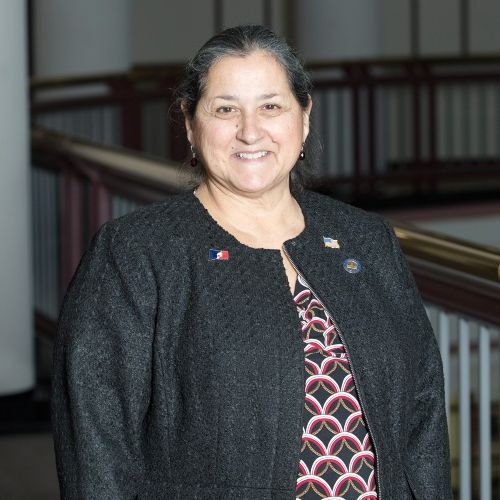
Eilish Collins Main
80% support rate
Top opponent
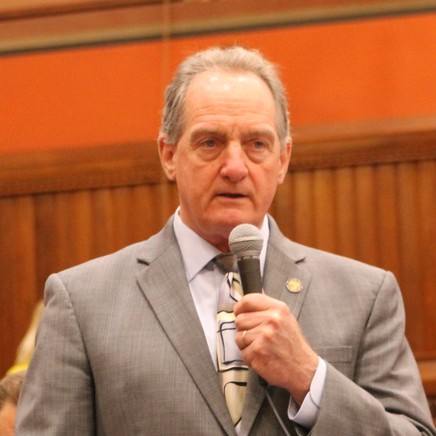
Cara Pavalock-D'Amato
30% support rate
Ranked legislators
10
5 support · 5 oppose
Key legislators

Who's moving budget & taxes in Connecticut

Legislators moving budget & taxes in Connecticut
Legislator Party Stance Support rate Votes
Eilish Collins Main
Eilish Collins Main House · District 146
D
Strong +
80% 21
Jonathan Steinberg
Jonathan Steinberg House · District 136
D
Strong +
80% 25
Maryam Khan
Maryam Khan House · District 5
D
Support
75% 27
Fred Gee
Fred Gee House · District 126
D
Support
73% 26
Raghib Allie-Brennan
Raghib Allie-Brennan House · District 2
D
Support
73% 26
Cara Pavalock-D'Amato
Cara Pavalock-D'Amato House · District 77
R
Oppose
30% 25
Anne Dauphinais
Anne Dauphinais House · District 44
R
Oppose
31% 28
Donna Veach
Donna Veach House · District 30
R
Oppose
31% 28
John Piscopo
John Piscopo House · District 76
R
Oppose
31% 28
Mark DeCaprio
Mark DeCaprio House · District 48
R
Oppose
31% 28
Showing 331–340 of 343 bills

All budget & taxes bills

in committee · Connecticut · House Feb 6, 2026

HB 5070: AN ACT REESTABLISHING THE JOB EXPANSION TAX CREDIT PROGRAM.

HB 5070 reestablishes the Job Expansion Tax Credit Program by amending section 12-217pp of the general statutes. The program provides tax credits to businesses that expand their workforce, reducing their state tax liability for qualifying job growth. This bill directly affects eligible businesses by restoring a tax credit opportunity previously established under the program. The legislation focuses on concrete policy restoration without specifying eligibility details or credit amounts.
in committee · Connecticut · Senate Feb 11, 2026

SB 128: AN ACT CONCERNING FUNDING FOR COMMUNITY ACTION AGENCIES.

SB 128 appropriates $30 million from the General Fund to the Department of Social Services for fiscal year 2027, specifically for grants to community action agencies. This funding directly supports local community action agencies that provide essential services like housing assistance, job training, and food programs to low-income residents. The bill’s key mechanism is a dedicated state funding allocation to ensure these agencies can continue serving vulnerable populations, as stated in its purpose to "protect the people the agencies serve." The legislation does not alter eligibility rules or create new programs, but provides critical financial support for existing agency operations.
in committee · Connecticut · House Feb 13, 2026

HB 5204: AN ACT DEDICATING A PORTION OF THE ROOM OCCUPANCY TAX ON SHORT-TERM RENTAL PROPERTIES TO MUNICIPALITIES.

HB 5204 redirects a portion of the state's room occupancy tax collected from short-term rental properties (like Airbnb or vacation rentals) to the local municipalities where those properties are located. This means cities and towns where short-term rentals operate will receive a share of the tax revenue instead of the funds staying solely with the state. The bill amends existing law to require the state to allocate this specific tax portion directly to the municipalities based on where the rentals are situated, providing them with additional local funding.
Sub-Topics Business Taxes Revenue
in committee · Connecticut · House Feb 20, 2026

HB 5133: AN ACT INCREASING THE HIGHEST MARGINAL RATE OF THE PERSONAL INCOME TAX.

HB 5133 increases the highest marginal personal income tax rate from 6.99% to 7.99%. This change directly affects high-income earners who currently pay the top tax rate under the state's income tax structure. The bill amends Section 12-700 of the general statutes to implement this specific percentage increase, with no other provisions or mechanisms described in the text. The measure focuses solely on adjusting the tax rate for the highest income bracket.
Sub-Topics Income Tax
in committee · Connecticut · Senate Feb 4, 2026

SB 41: AN ACT ESTABLISHING A PERSONAL INCOME TAX DEDUCTION FOR CERTAIN TAXPAYERS FOR CERTAIN CAPITAL GAINS ON THE SALE OF A PRIMARY HOME.

SB 41 creates a state tax deduction for Connecticut taxpayers aged 65 or older who sell their primary home. It allows these seniors to deduct capital gains (the profit from the sale) that are already counted as taxable income for federal tax purposes. The deduction applies only to gains from selling a primary residence, not rental properties or second homes. This policy directly affects older homeowners by reducing their state income tax bill on the profit from their main residence sale.
Sub-Topics Income Tax Tags Seniors
in committee · Connecticut · House Feb 6, 2026

HB 5062: AN ACT ELIMINATING THE HIGHWAY USE TAX.

HB 5062 eliminates the highway use tax by amending section 12-493a of the general statutes. This bill directly affects drivers and vehicle owners who previously paid this tax on vehicle use. The key mechanism is the removal of the tax provision from state law, with no new fees or requirements added. The change simplifies vehicle-related taxes but does not alter other transportation funding mechanisms.
in committee · Connecticut · House Feb 9, 2026

HB 5082: AN ACT CONCERNING THE PROPERTY TAX CREDIT AGAINST THE PERSONAL INCOME TAX FOR A PRIMARY RESIDENCE OR MOTOR VEHICLE.

HB 5082 increases Connecticut's property tax credit against personal income tax for primary residences or motor vehicles. It raises the maximum credit from $300 to $1,000 per year, increases the minimum income threshold for eligibility, and expands access by raising the qualifying Connecticut adjusted gross income limits. This change directly benefits Connecticut residents who own a primary home or vehicle and pay property taxes, reducing their personal income tax liability. The bill modifies existing tax provisions without altering the credit's structure or adding new requirements.
passed · Connecticut · Senate Feb 25, 2026

SR 3: RESOLUTION PROPOSING APPROVAL OF AN ARBITRATION AWARD BETWEEN THE STATE OF CONNECTICUT JUDICIAL BRANCH AND THE CONNECTICUT STATE EMPLOYEES ASSOCIATION, SEIU LOCAL 2001, THE INTERNATIONAL BROTHERHOOD OF POLICE OFFICERS AND THE UNION OF PROFESSIONAL JUDICIAL EMPLOYEES (AFT/AFT-CT, AFL-CIO).

This resolution approves a pre-existing arbitration award between Connecticut's Judicial Branch and three employee unions (SEIU Local 2001, IBPO Local 731, and AFT/AFT-CT). The agreement, retroactive to July 1, 2025, includes a 2.5% general wage increase, annual increments, and lump-sum payments for judicial employees. It will cost approximately $8.07 million in fiscal year 2026 and $8.60 million in fiscal year 2027, affecting all covered bargaining units. The resolution requires legislative approval per state law but does not create new policy.
in committee · Connecticut · Senate Apr 20, 2026

SB 2: AN ACT SUPPORTING LOCAL COMMERCE.

SB 2 exempts small businesses (with less than $10 million in annual revenue) from sales and use taxes on electricity and natural gas purchases. It redirects revenue from an additional 1% sales tax on meals: 50% to the state Tourism Fund and 50% to the municipalities where the meals were purchased. The bill aims to lower operating costs for small commercial and industrial businesses, which could reduce prices passed on to consumers. These changes directly affect small businesses and local governments through tax adjustments and new revenue allocation.
in committee · Connecticut · Senate Feb 4, 2026

SB 18: AN ACT CONCERNING FUNDING FOR AUTISM SPECTRUM DISORDER SERVICES.

SB 18 allocates $5 million from the General Fund to the Department of Social Services for the Autism Spectrum Disorder (ASD) waiver program during the 2026-2027 fiscal year. This funding directly supports individuals and families seeking ASD services by expanding access to the waiver program. The bill’s primary mechanism is increasing financial resources to reduce lengthy waitlists for these critical services. It specifically targets the ASD waiver program to improve timely access to care, without altering eligibility criteria or service types. The appropriation is effective through June 30, 2027.
Showing 331 to 340 of 343 bills