SB 300 California Senate · 2025-2026 Regular Session

Companion chatbots.

Summary
Existing law requires that if a reasonable person interacting with a companion chatbot, as defined, would be misled to believe that the person is interacting with a human, an operator of a companion chatbot platform must issue a clear and conspicuous notification indicating that the companion chatbot is artificially generated and not human. Existing law requires a chatbot operator to maintain a protocol for preventing the production of suicidal ideation, suicide, or self-harm content to the user, as specified, and would require an operator to publish details on that protocol on the operator's internet website. Existing law requires an operator to take certain actions with respect to a user the operator knows is a minor, including instituting reasonable measures to prevent the companion chatbot from producing sexually explicit visual material or proposing sexually explicit conduct. This bill would instead require a companion chatbot operator to take the above actions when it has constructive knowledge that a user is a minor. This bill would instead require an operator to prevent its companion chatbot from producing or facilitating the exchange of any sexually explicit material or proposing sexually explicit conduct.
Bill status passed 3 of 5 stages cleared
Introduction
Feb 2025
Committee Review
Aug 2026
Senate Passage
Jan 2026
Assembly Passage
Governor
Introduced Feb 10, 2025 Last action Aug 30, 2026
Maddy AI version diff · 3 comparisons

What changed between versions

04/01/25 - Amended Senate 01/05/26 - Amended Senate · 5 edits · Jan 5, 2026
MODERATE
SB 300 was substantially expanded to add an entirely new companion chatbot AI regulation alongside its original nonprofit conflict-of-interest provision. The new Section 1 amends Business and Professions Code Section 22602 to require AI chatbot operators to disclose their artificial nature, maintain suicide-prevention protocols, and take specific protective measures for minor users. The original nonprofit conflict-of-interest exception was also revised to broaden its scope from subdivision (c) of Section 87103 to all of Section 87103.
Scope change
The bill's scope expanded significantly from a single-topic conflict-of-interest exception for nonprofit organizations to a dual-purpose bill that also regulates companion chatbot AI platforms, adding new operator obligations around disclosure, suicide prevention, and minor safety.
SCOPE

Entirely new companion chatbot regulation added as Section 1, amending Business and Professions Code Section 22602. Requires operators to issue clear notification that a chatbot is AI-generated, maintain protocols preventing suicidal ideation or self-harm content, publish those protocol details on their website, and for minor users: disclose the AI nature, provide break reminders every three hours, and prevent production or exchange of sexually explicit material.

The nonprofit conflict-of-interest exception (now Section 2) was changed from 'Notwithstanding subdivision (c) of Section 87103' to 'Notwithstanding Section 87103,' broadening the exception to apply to the entire section rather than just one subdivision.

ELIGIBILITY

For minor users, the trigger changed from when an operator 'knows' a user is a minor to when the operator has 'actual knowledge' that a user is a minor, which is a more specific legal standard.

REQUIREMENT

The sexual content protection for minors was broadened from requiring operators to 'institute reasonable measures to prevent' production of visual material of sexually explicit conduct, to requiring them to 'prevent' the chatbot from producing or facilitating the exchange of such material or directly stating that a minor should engage in sexually explicit conduct. This removes the 'reasonable measures' qualifier and adds facilitation of exchange as a prohibited action.

TECHNICAL

The nonprofit conflict-of-interest provision was restructured from two somewhat redundant sentences into a single consolidated sentence, removing the earlier general statement about membership dues and keeping only the specific 501(c)(5) and 501(c)(6) organization language.

Floor votes · Senate Jan 26, 2026

How they voted

380
Passed · 2 other
Total votes 40
Jan 26, 2026
D Democratic30
29 Yea 1
96% Yea
R Republican10
9 Yea 1
90% Yea
Vote distribution
All Yea All Nay Mixed No data
Full legislative history

Actions timeline

Total actions
24
Key actions
7
Committee
8
Amendments
2
Aug 13, 2026
Lower · Passed
From committee: Do pass. (Ayes 13. Noes 0.) (August 13).
lower
Jul 2, 2026
Lower · Passed
From committee: Do pass and re-refer to Com. on APPR. (Ayes 12. Noes 1.) (July 1). Re-referred to Com. on APPR.
lower
May 11, 2026
Committee
Referred to Com. on P. & C.P.
lower
Jan 26, 2026
Upper · Passed
Read third time. Passed. (Ayes 38. Noes 0. Page 3279.) Ordered to the Assembly.
upper
Jan 20, 2026
Upper · Passed
From committee: Be ordered to second reading pursuant to Senate Rule 28.8.
upper
Jan 14, 2026
Upper · Passed
From committee: Do pass and re-refer to Com. on APPR. (Ayes 13. Noes 0. Page 3213.) (January 13). Re-referred to Com. on APPR.
upper
Jan 5, 2026
Committee
Re-referred to Com. on JUD.
upper
Jan 5, 2026
Committee
Re-referred to Com. on RLS.
upper
Jan 5, 2026
Upper · Passed
From committee with author's amendments. Read second time and amended. Re-referred to Com. on E. & C.A.
upper
Apr 1, 2025
Upper · Passed
From committee with author's amendments. Read second time and amended. Re-referred to Com. on E. & C.A.
upper
Feb 19, 2025
Committee
Referred to Com. on E. & C.A.
upper
Feb 10, 2025
Introduced
Introduced. Read first time. To Com. on RLS. for assignment. To print.
upper
1 primary · 0 co-sponsors

Sponsors

Role
Legislator
Party
State
District
P
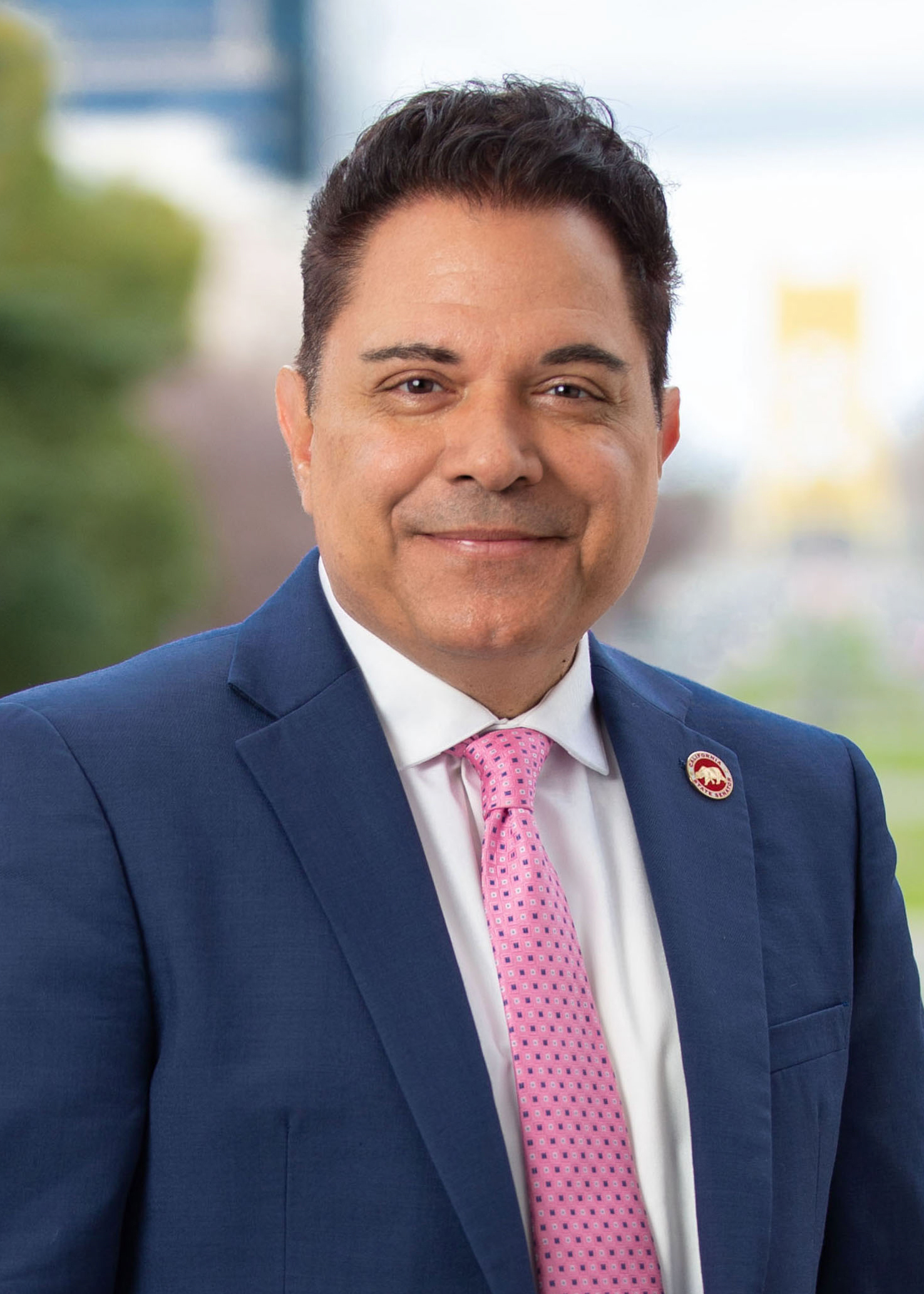
Photo of Steve Padilla
Steve Padilla
DDemocratic
CA
18