

Net zero greenhouse gas emissions goal: carbon dioxide removal: regulations.
Summary
The California Global Warming Solutions Act of 2006 establishes the State Air Resources Board as the state agency responsible for monitoring and regulating sources emitting greenhouse gases. The act requires the state board to approve a statewide greenhouse gas emissions limit equivalent to the statewide greenhouse gas emissions level in 1990 to be achieved by 2020 and to ensure that statewide greenhouse gas emissions are reduced to at least 40% below the 1990 level by 2030. The act requires the state board to prepare and approve a scoping plan for achieving the maximum technologically feasible and cost-effective reductions in greenhouse gas emissions and to update the scoping plan at least once every 5 years. Existing law requires the state board, as part of its scoping plan, to establish specified carbon dioxide removal targets for 2030 and beyond. Existing law, the California Climate Crisis Act, declares the policy of the state both to achieve net zero greenhouse gas emissions as soon as possible, but no later than 2045, and achieve and maintain net negative greenhouse gas emissions thereafter, and to ensure that by 2045, statewide anthropogenic greenhouse gas emissions are reduced to at least 85% below the 1990 levels. This bill would, for the purpose of meeting, or tracking progress against, any state requirement to achieve net zero emissions of greenhouse gases, authorize only qualified carbon dioxide removal, as defined, to be used to counterbalance the state's or an entity's greenhouse gas emissions and would require qualified carbon dioxide removal used for those purposes to meet certain requirements, as specified. Existing law requires the state board to establish a Carbon Capture, Removal, Utilization, and Storage Program to, among other things, evaluate the efficacy, safety, and viability of carbon capture, utilization, or storage technologies and carbon dioxide removal technologies and facilitate the capture and sequestration of carbon dioxide from those technologies, where appropriate. In furtherance of the objectives of that program, existing law authorizes the state board, by January 1, 2024, to adopt protocols to support additional methods of utilization or storage of captured carbon dioxide. This bill would indefinitely authorize the state board to adopt those protocols, and protocols to support methods of utilization or storage of removed carbon dioxide.
Bill status
failed
1 of 4 stages cleared
Introduction
Feb 2025
Committee Review
Floor Vote
Governor
Introduced Feb 5, 2025
Last action Feb 2, 2026
Maddy AI version diff · 2 comparisons
What changed between versions
03/25/25 - Amended Senate
→
SB285
·
3 edits
MINOR
The amendment makes three targeted language changes to SB 285's carbon dioxide removal framework. It narrows Section 1(b) from allowing 'any carbon offsets or CDR' to 'only CDR' that meets quality and durability standards, replaces the word 'reduce' with 'counterbalance' in both the findings and operative text, and adds a stated purpose of ensuring 'scientific integrity' for net zero claims. These changes tighten the bill's language to be more precise about what qualifies toward net zero goals.
ELIGIBILITY
Section 1(b) was changed from allowing 'any carbon offsets or CDR that meets minimum standards' to 'only CDR that meets minimum standards,' removing carbon offsets as a category that can count toward meeting net zero emissions goals.
DEFINITION
The word 'reduce' was replaced with 'counterbalance' in Section 2(b)(1), making clear that qualified CDR is used to counterbalance (offset) remaining emissions rather than to reduce them, which is a more precise characterization of how CDR functions in the net zero accounting.
REQUIREMENT
Section 1(b) added the phrase 'so that these net zero claims have scientific integrity,' explicitly stating the legislative purpose behind requiring quality and durability standards for CDR counted toward net zero goals.
Floor votes
How they voted
No floor votes recorded yet.
Full legislative history
Actions timeline
Total actions
13
Key actions
3
Committee
3
Amendments
1
May 23, 2025
Upper · Passed
May 23 hearing: Held in committee and under submission.
upper
Apr 3, 2025
Upper · Passed
From committee: Do pass and re-refer to Com. on APPR. (Ayes 6. Noes 2. Page 634.) (April 2). Re-referred to Com. on APPR.
upper
Mar 25, 2025
Upper · Passed
From committee with author's amendments. Read second time and amended. Re-referred to Com. on E.Q.
upper
Feb 14, 2025
Committee
Referred to Com. on E.Q.
upper
Feb 5, 2025
Introduced
Introduced. Read first time. To Com. on RLS. for assignment. To print.
upper
1 primary · 0 co-sponsors
Sponsors
Role
Legislator
Party
State
District
P
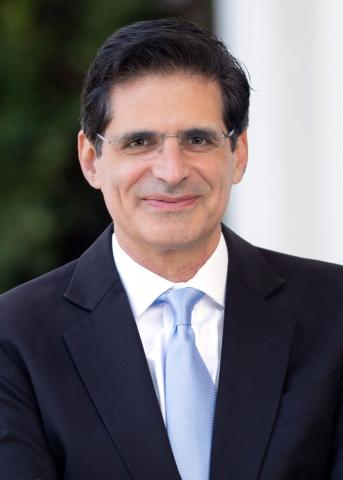
Josh Becker
DDemocratic
Ask Maddy
·
AI policy assistant
Ask Maddy about SB 285
Scope: CA
Hi! I can help you understand SB 285. What would you like to know?
Try one of these
i
Maddy answers using official bill text and legislative records. Always verify before sharing.
Sources cited inline