SB 106 California Senate · 2025-2026 Regular Session

Budget Act of 2025.

SB 106 is a procedural bill that expresses the California Legislature's intent to enact future statutory changes related to the Budget Act of 2025. It does not make any immediate budget changes or affect specific groups; it simply states the Legislature's future intention to modify budget-related laws. The bill serves as a formal declaration to guide upcoming budget legislation but contains no concrete policy provisions or fiscal impacts. It was passed by the Senate on March 20, 2025, and referred to the Assembly Budget Committee for further consideration.
Bill status signed all 5 stages cleared
Introduction
Jan 2025
Committee Review
Mar 2025
Senate Passage
Mar 2025
Assembly Passage
Feb 2026
Signed into Law
Feb 2026
Introduced Jan 23, 2025 Signed Feb 11, 2026
Maddy AI version diff · 4 comparisons

What changed between versions

01/23/25 - Introduced 01/30/26 - Amended Assembly · 9 edits · Jan 30, 2026
MAJOR
SB 106 was transformed from a bare legislative intent statement into a full budget amendment that increases funding for the Department of Health Care Access and Information's local assistance item from $50,253,000 to $140,253,000. The amended bill directs specific allocations toward primary care residency training, family planning provider grants (up to $90 million to offset loss of federal funding after July 4, 2025), facility improvements, and community health worker workforce development. It also designates the act as a Budget Bill taking effect immediately.
FISCAL

Total appropriation for Item 4140-101-0001 (local assistance, DHCAI) increased from $50,253,000 to $140,253,000, with new schedule lines for Health Care Workforce ($36,133,000), Health Care Quality and Affordability ($10,620,000), and Facilities Development ($3,500,000).

Up to $90,000,000 appropriated for grants to family planning providers to offset loss of federal financial participation on or after July 4, 2025. Eligible recipients are limited to community clinics licensed under Health and Safety Code Section 1204(a) that demonstrate they lost federal funding.

Primary care residency funding: up to $18,667,000 for existing slots, $3,333,000 for new slots at existing programs, $5,667,000 for teaching health centers under Song-Brown Act, $3,333,000 for newly accredited programs (redirectable to existing programs if not established by June 30, 2027), and $333,000 for State Loan Repayment Program. Funds available until June 30, 2030.

$2,800,000 for California Medicine Scholars Program (to be appropriated annually), $3,000,000 for Northeast Valley Health Corporation infrastructure, $500,000 for American Reproductive Centers Fertility Clinic in Palm Springs, and $2,000,000 for Youth Mental Health Academy Los Angeles cohort.

ELIGIBILITY

Family planning grant eligibility restricted to community clinics that provide family planning services AND demonstrate loss of federal financial participation on or after July 4, 2025. Up to $1,500,000 may be used for state operations and third-party administration.

REQUIREMENT

DHCAI must seek regular stakeholder input from a formal Advisory Workgroup until June 30, 2026. The workgroup must be composed of a majority of active community health workers, Promotores, or their representatives, and may advise on career development, training access, certification standards, and program accreditation.

ENFORCEMENT

Contracts, grants, and related information for the family planning grant program are exempt from disclosure under the California Public Records Act. The Legislature finds this necessary to protect confidential medical information, provider safety, and access to reproductive health services.

SCOPE

Bill changed from a simple statement of legislative intent to an operative budget amendment with specific appropriation language, designated as a Budget Bill taking effect immediately under Article IV, Section 12(e) of the California Constitution.

TECHNICAL

Appropriation and fiscal committee designations changed from 'no' to 'yes' in the legislative counsel's digest, reflecting that the bill now contains an actual appropriation.

Floor votes · Senate Mar 20, 2025 · Assembly Feb 9, 2026

How they voted

2810
Passed · 2 other
Total votes 40
Mar 20, 2025
D Democratic30
28 Yea 2
93% Yea
R Republican10
10 Nay
100% Nay
Vote distribution
All Yea All Nay Mixed No data
Full legislative history

Actions timeline

Total actions
20
Key actions
5
Committee
2
Amendments
4
Feb 11, 2026
Signed into law
Approved by the Governor.
legislature
Feb 9, 2026
Upper · Passed
Assembly amendments concurred in. (Ayes 26. Noes 9. Page 3373.) Ordered to engrossing and enrolling.
upper
Feb 9, 2026
Introduced
In Senate. Concurrence in Assembly amendments pending.
upper
Feb 9, 2026
Lower · Passed
Read third time. Passed. (Ayes 55. Noes 11. Page 3950.) Ordered to the Senate.
lower
Feb 9, 2026
Introduced
Amendments by Assembly Member Tangipa tabled on motion by Assembly Member Aguiar-Curry. (Ayes 49. Noes 14. Page 3949.)
lower
Jan 30, 2026
Lower · Passed
From committee with author's amendments. Read second time and amended. Re-referred to Com. on BUDGET.
lower
Mar 24, 2025
Committee
Referred to Com. on BUDGET.
lower
Mar 20, 2025
Upper · Passed
Read third time. Passed. (Ayes 28. Noes 10. Page 432.) Ordered to the Assembly.
upper
Feb 5, 2025
Committee
Referred to Com. on B. & F. R.
upper
Jan 23, 2025
Introduced
Introduced. Read first time. To Com. on RLS. for assignment. To print.
upper
1 primary · 0 co-sponsors

Sponsors

Role
Legislator
Party
State
District
P
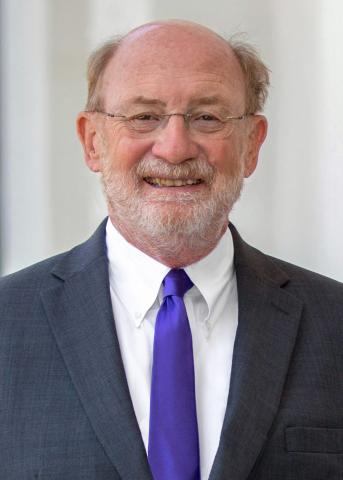
Photo of John Laird
John Laird
DDemocratic
CA
17