AB 2424 California Assembly · 2025-2026 Regular Session

Public Utilities Commission: communications: low-income customers.

Summary
Existing law establishes the Low-Income Oversight Board and requires the Low-Income Oversight Board to advise the Public Utilities Commission on low-income electricity, gas, and water customer issues, and to, among other things, monitor and evaluate implementation of all programs provided to low-income electricity, gas, and water customers. This bill would establish the Low-Income Telecommunications Advisory Board with specified membership. The bill would require the Low-Income Telecommunications Advisory Board to, among other things, advise the commission on low-income telecommunications customer issues, serve as a liaison for the commission to low-income customers and stakeholders, provide certain reports to the Legislature, and monitor and evaluate implementation of all programs provided to low-income telecommunications customers, as provided. The bill would require the commission, in conjunction with the Low-Income Telecommunications Advisory Board, to increase participation in programs for low-income telecommunications customers and ensure that the cost burden of low-income telecommunications customers is reduced, as specified. Existing law vests the commission with regulatory authority over public utilities, including telephone corporations. Existing law, the Moore Universal Telephone Service Act, establishes the Universal Lifeline Telephone Service program to provide low-income households with access to affordable basic residential telephone service. This bill would require the commission to administer the lifeline program in a technologically inclusive manner and would prohibit the commission from discriminating against lifeline providers by adopting rules that favor or disfavor certain providers. Under existing law, a violation of the Public Utilities Act or of an order, decision, rule, direction, demand, or requirement of the commission is a crime. Because the provisions of this bill would be part of the act, and a violation of a commission action implementing its provisions would be a crime, the bill would impose a state-mandated local program. The California Constitution requires the state to reimburse local agencies and school districts for certain costs mandated by the state. Statutory provisions establish procedures for making that reimbursement. This bill would provide that no reimbursement is required by this act for a specified reason.
Bill status in committee 1 of 4 stages cleared
Introduction
Feb 2026
Committee Review
Floor Vote
Governor
Introduced Feb 20, 2026 Last action May 14, 2026
Maddy AI version diff · 3 comparisons

What changed between versions

04/07/26 - Amended Assembly 04/16/26 - Amended Assembly · 6 edits · Apr 16, 2026
MODERATE
The April 16 amendment made major structural changes to AB 2424: it removed the 120-day portability freeze and the provision allowing up to three household members to hold lifeline subscriptions, and instead created a new standalone Low-Income Telecommunications Advisory Board (5 members) dedicated to telecom issues. Section 871.6 was reframed from a flat prohibition on favoring technologies or providers into a 'technologically inclusive' standard with an explicit carve-out preserving the commission's enforcement authority. The existing Low-Income Oversight Board was expanded from 11 to 13 members.
REQUIREMENT

The 120-day freeze on portability between eligible telecommunications carriers and transfer of lifeline benefits (former Section 873.5) was deleted entirely. Subscribers can now switch providers without a waiting period.

Section 871.6 was restructured into three subdivisions: (a) requires the commission to administer lifeline in a 'technologically inclusive manner that does not exclude any technologies or unreasonably favor one technology over another'; (b) prohibits discriminating against providers by adopting rules that favor or disfavor certain providers; (c) explicitly states the section does not affect the commission's enforcement authority against lifeline providers.

The commission is now required to work in conjunction with the new Low-Income Telecommunications Advisory Board to increase program participation, provide technical support, ensure cost burden reduction for low-income telecom customers, and publish formal notice of board meetings in its daily calendar.

ELIGIBILITY

The amendment to Section 878 that would have allowed up to three members of the same family or household to each hold a lifeline subscription (with detailed definitions of adult, economic unit, and household) was deleted. The prior rule of one lifeline subscription per household remains in effect.

SCOPE

A new Low-Income Telecommunications Advisory Board (Section 872) was created with 5 members: two with low-income telecom expertise, one wireline lifeline provider representative, one wireless lifeline provider representative, and one from an organization with experience advocating before the commission. It can establish a technical advisory committee and has duties to monitor programs, assess need, report to the Legislature, and streamline enrollment.

The Low-Income Oversight Board membership was increased from 11 to 13 members, with the number of commission-selected members having low-income community expertise raised from five to six.

Floor votes

How they voted

No floor votes recorded yet.
Full legislative history

Actions timeline

Total actions
10
Key actions
3
Committee
6
Amendments
3
May 14, 2026
Lower · Passed
In committee: Held under submission.
lower
May 6, 2026
Committee
In committee: Set, first hearing. Referred to APPR. suspense file.
lower
Apr 20, 2026
Committee
Re-referred to Com. on APPR.
lower
Apr 16, 2026
Lower · Passed
Read second time and amended.
lower
Apr 15, 2026
Introduced
From committee: Amend, and do pass as amended and re-refer to Com. on APPR. (Ayes 7. Noes 2.) (April 15).
lower
Apr 8, 2026
Committee
Re-referred to Com. on C. & C.
lower
Apr 7, 2026
Introduced
From committee chair, with author's amendments: Amend, and re-refer to Com. on C. & C. Read second time and amended.
lower
Mar 9, 2026
Committee
Referred to Com. on C. & C.
lower
Feb 21, 2026
Lower · Passed
From printer. May be heard in committee March 23.
lower
1 primary · 0 co-sponsors

Sponsors

Role
Legislator
Party
State
District
P
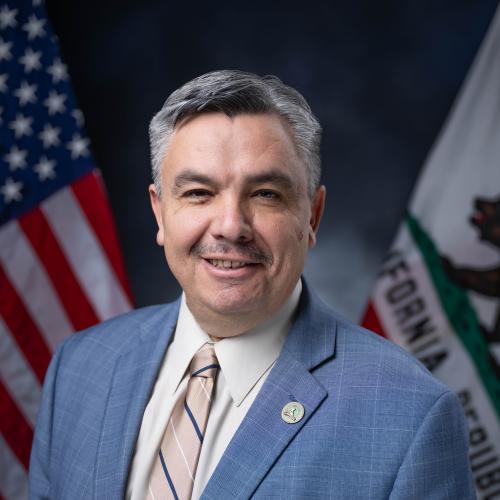
Photo of Juan Carrillo
Juan Carrillo
DDemocratic
CA
39