

Personal income tax: credit: first-time homebuyer program: required repairs.
Summary
The Personal Income Tax Law allows various credits against the taxes imposed by those laws. This bill would allow a credit against those taxes for each taxable year beginning on or after January 1, 2028, and before January 1, 2033, in an amount equal to 40% of the amount paid or incurred, not to exceed $25,000, during the taxable year for repairs that are required as a condition of closing the sale of real property to a purchaser utilizing a first-time homebuyer assistance program, as specified. The bill would prohibit a taxpayer from claiming more than one credit for a taxable year or more than one taxpayer from claiming the credit with respect to a property for a taxable year. Existing law requires any bill authorizing a new tax expenditure, as defined, to include tax credits, to contain, among other things, specific goals, purposes, and objectives that the tax credit will achieve, detailed performance indicators, and data collection requirements. This bill would include findings and reporting requirements in compliance with this requirement. This bill would take effect immediately as a tax levy.
Bill status
in committee
1 of 4 stages cleared
Introduction
Feb 2026
Committee Review
Floor Vote
Governor
Introduced Feb 4, 2026
Last action Apr 27, 2026
Maddy AI version diff · 2 comparisons
What changed between versions
03/23/26 - Amended Assembly
→
AB1714
·
4 edits
MODERATE
The final enacted version of AB 1714 significantly reduced the tax credit from 100% to 40% of qualified repair expenses, limited the carryover period from indefinite to five years, and pushed back the Franchise Tax Board reporting deadline by one year. These changes substantially reduce the financial benefit available to sellers who make required repairs for first-time homebuyer transactions while keeping the $25,000 annual cap intact.
FISCAL
The credit rate was reduced from 100% to 40% of qualified repair expenses. A seller who spent $25,000 on required repairs would now receive a $10,000 credit instead of $25,000.
REQUIREMENT
The carryover provision was changed from allowing the excess credit to carry forward indefinitely until exhausted to limiting carryover to a maximum of five years.
TIMELINE
The Franchise Tax Board performance report deadline was moved from December 1, 2033 to December 1, 2034, giving the agency an additional year to compile data.
TECHNICAL
The performance indicator language was changed from 'aggregate dollar amount of credits claimed' to 'aggregate dollar amount of credits allowed,' shifting the measurement from what taxpayers reported to what the tax authority actually approved.
Floor votes
How they voted
No floor votes recorded yet.
Full legislative history
Actions timeline
Total actions
8
Key actions
3
Committee
6
Amendments
1
Apr 27, 2026
Lower · Passed
In committee: Set, final hearing. Held under submission.
lower
Apr 6, 2026
Committee
In committee: Set, second hearing. Referred to REV. & TAX. suspense file.
lower
Mar 24, 2026
Committee
Re-referred to Com. on REV. & TAX.
lower
Mar 23, 2026
Introduced
From committee chair, with author's amendments: Amend, and re-refer to Com. on REV. & TAX. Read second time and amended.
lower
Mar 16, 2026
Lower · Passed
In committee: Set, first hearing. Hearing canceled at the request of author.
lower
Feb 23, 2026
Committee
Referred to Com. on REV. & TAX.
lower
Feb 5, 2026
Lower · Passed
From printer. May be heard in committee March 7.
lower
1 primary · 0 co-sponsors
Sponsors
Role
Legislator
Party
State
District
P
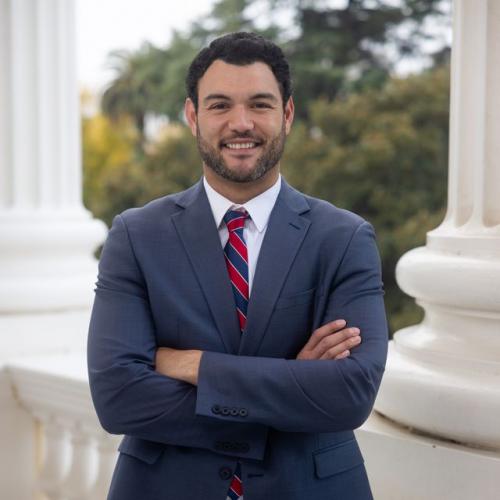
David Tangipa
RRepublican
Ask Maddy
·
AI policy assistant
Ask Maddy about AB 1714
Scope: CA
Hi! I can help you understand AB 1714. What would you like to know?
Try one of these
i
Maddy answers using official bill text and legislative records. Always verify before sharing.
Sources cited inline