

Oil and gas: enforcement: penalties.
Summary
(1) Existing law establishes the Geologic Energy Management Division in the Department of Conservation, under the direction of the State Oil and Gas Supervisor, who is required to supervise the drilling, operation, maintenance, and abandonment of oil and gas wells, as provided. Existing law requires an action for civil penalties or punitive damages authorized pursuant to specified environmental protection laws to be commenced within 5 years after discovery by the agency bringing the action, as provided. This bill would make that statute of limitations applicable to the oil and gas laws, as provided. (2) Existing law requires the supervisor to order tests and remedial work that in the supervisor's judgment are necessary to prevent damage to life, health, property, and natural resources and for other specified reasons. A person who violates, fails, neglects, or refuses to comply with any of the oil and gas laws is guilty of a crime. This bill would provide that, in addition to any cessation requirements or other limitations contained in applicable regulations or conditions of approval, an order to undertake remedial work issued pursuant to this requirement may include an order to cease and desist specified activities that threaten to damage life, health, property, and natural resources or that violate the requirements relating to oil and gas or a regulation implementing these requirements. The bill would also authorize the supervisor, after making a determination, based upon a site inspection, that a well poses a risk to life, health, property, or natural resources, to order an operator, owner, or property owner to secure a site, based on a site inspection, if certain conditions apply. The order would be appealable. The bill would make an operator, owner, or property owner who fails to comply subject to a civil penalty of not more than $25,000. By expanding the scope of crimes, the bill would impose a state-mandated local program. (3) Existing law makes it a crime for an owner or operator, or an employee thereof, to refuse to permit the supervisor or the district deputy, or that person's inspector, to inspect a well, or willfully hinder or delay the enforcement of the requirements relating to oil and gas. Existing law makes every person who violates, fails, neglects, or refuses to comply with specified laws relating to oil and gas, who fails, neglects, or refuses to furnish any report or record which may be required pursuant to these laws, or who willfully renders a false or fraudulent report, guilty of a misdemeanor, and subject to punishment by a fine of not less than $100, nor more than $1,000, or by imprisonment for not exceeding 6 months, or by both that fine and imprisonment, for each offense. Existing law establishes the Oil, Gas, and Geothermal Administrative Fund in the State Treasury for specified purposes, subject to appropriation by the Legislature, except as provided. Existing law also establishes, and requires the division to administer and manage, the Oil and Gas Environmental Remediation Account in the Oil, Gas, and Geothermal Administrative Fund. Existing law requires moneys in the account to be used, upon appropriation by the Legislature, for specified purposes. This bill would increase the fines for committing the acts described above to a minimum of $500 and not more than $5,000. In addition, the bill would specifically authorize the supervisor to refer violations of the oil and gas laws to a public prosecutor, as defined, or the Attorney General for prosecution. The bill would also require a person found liable for one of specified civil penalties to also pay a penalty in an amount equal to the cost to plug and abandon any well associated with the violation in an amount determined by the supervisor using any reasonable method, as provided. The bill would require the penalties collected pursuant to these provisions to be deposited in the Oil and Gas Environmental Remediation Account. (4) Existing law authorizes the supervisor to impose specified civil penalties on a person who violates a legal requirement regarding the operation of an oil and gas well or production facility, which is in addition to any other penalty provided by law for the violation. This bill would specify that the civil penalty imposed by the supervisor is an administrative civil penalty. The bill would also impose a civil penalty of not more than $50,000 for each separate violation of an oil and gas law or regulation, as specified, and each violation of an order issued pursuant to the oil and gas laws, or not more than $25,000 for each separate violation, or, for continuing violations, for each day that violation continues, if the person accused of the violation alleges by affirmative defense and establishes by a preponderance of the evidence that specified circumstances apply. The bill would impose a civil penalty not to exceed $70,000 for intentionally or negligently violating a provision of oil and gas laws, or a permit, rule, regulation, standard, or requirement issued or promulgated pursuant to those laws. The bill would authorize specified actions brought pursuant to the oil and gas laws to be commenced by a public prosecutor, the Attorney General, or an attorney for the division or the department. The bill would require 50% of the civil penalties collected be paid to the agency or office prosecuting the action and 50% be deposited in the Oil and Gas Environmental Remediation Account. The bill would specify that the violator is only subject to either the administrative civil penalty imposed by the supervisor or the civil penalty imposed by the court, and not to both penalties. The bill would authorize the supervisor to recover from the owner or operator all prosecution and enforcement costs incurred by the division arising from the administration and enforcement of those requirements and would require moneys recovered to be deposited into the Oil and Gas Environmental Remediation Account. The bill would also authorize the supervisor to apply to the superior court for an order enjoining acts or practices that violate the oil and gas laws, or violate a regulation, condition of approval, order, or other requirement issued, promulgated, or executed under those laws, as provided. The bill would also authorize a public prosecutor or the Attorney General to apply for that injunctive order. (5) The California Constitution requires the state to reimburse local agencies and school districts for certain costs mandated by the state. Statutory provisions establish procedures for making that reimbursement. This bill would provide that no reimbursement is required by this act for a specified reason.
Bill status
signed
all 5 stages cleared
Introduction
Feb 2023
Committee Review
Aug 2023
Assembly Passage
May 2023
Senate Passage
Sep 2023
Signed into Law
Oct 2023
Introduced Feb 9, 2023
Signed Oct 7, 2023
Floor votes · Senate Sep 12, 2023 · Assembly Jun 1, 2023
How they voted
29–9
Passed · 2 other
Total votes 40
Sep 12, 2023
D
Democratic31
93% Yea
R
Republican9
88% Nay
Vote distribution
All Yea
All Nay
Mixed
No data
Full legislative history
Actions timeline
Total actions
35
Key actions
13
Committee
13
Amendments
10
Oct 7, 2023
Signed into law
Approved by the Governor.
legislature
Sep 13, 2023
Lower · Passed
Senate amendments concurred in. To Engrossing and Enrolling. (Ayes 53. Noes 19. Page 3415.).
lower
Sep 12, 2023
Introduced
In Assembly. Concurrence in Senate amendments pending.
lower
Sep 12, 2023
Upper · Passed
Read third time. Passed. Ordered to the Assembly. (Ayes 29. Noes 9. Page 2633.).
upper
Sep 7, 2023
Upper · Passed
Read third time and amended. Ordered to second reading.
upper
Sep 1, 2023
Upper · Passed
Read second time and amended. Ordered returned to second reading.
upper
Sep 1, 2023
Introduced
From committee: Amend, and do pass as amended. (Ayes 4. Noes 2.) (September 1).
upper
Aug 14, 2023
Committee
In committee: Referred to APPR suspense file.
upper
Jul 5, 2023
Committee
Re-referred to Com. on APPR.
upper
Jul 5, 2023
Upper · Passed
In committee: Hearing postponed by committee.
upper
Jul 3, 2023
Introduced
From committee chair, with author's amendments: Amend, and re-refer to committee. Read second time, amended, and re-referred to Com. on PUB S.
upper
Jun 27, 2023
Upper · Passed
From committee: Do pass and re-refer to Com. on PUB S. (Ayes 7. Noes 3.) (June 27). Re-referred to Com. on PUB S.
upper
Jun 14, 2023
Committee
Referred to Coms. on N.R. & W. and PUB S.
upper
Jun 1, 2023
Assembly · Passed
Assembly Vote: pass (50-19-11)
assembly
May 31, 2023
Lower · Passed
Read third time. Passed. Ordered to the Senate. (Ayes 50. Noes 19. Page 2063.)
lower
May 18, 2023
Lower · Passed
From committee: Do pass. (Ayes 11. Noes 4.) (May 18).
lower
May 10, 2023
Committee
In committee: Set, first hearing. Referred to APPR. suspense file.
lower
Apr 27, 2023
Committee
Re-referred to Com. on APPR.
lower
Apr 26, 2023
Lower · Passed
Read second time and amended.
lower
Apr 25, 2023
Introduced
From committee: Amend, and do pass as amended and re-refer to Com. on APPR. (Ayes 8. Noes 3.) (April 25).
lower
Apr 18, 2023
Lower · Passed
From committee: Do pass and re-refer to Com. on JUD. (Ayes 8. Noes 3.) (April 17). Re-referred to Com. on JUD.
lower
Apr 7, 2023
Committee
Re-referred to Com. on NAT. RES.
lower
Apr 6, 2023
Introduced
From committee chair, with author's amendments: Amend, and re-refer to Com. on NAT. RES. Read second time and amended.
lower
Mar 27, 2023
Committee
Re-referred to Com. on NAT. RES.
lower
Mar 23, 2023
Introduced
From committee chair, with author's amendments: Amend, and re-refer to Com. on NAT. RES. Read second time and amended.
lower
Mar 23, 2023
Committee
Referred to Coms. on NAT. RES. and JUD.
lower
Feb 10, 2023
Lower · Passed
From printer. May be heard in committee March 12.
lower
1 primary · 2 co-sponsors
Sponsors
Role
Legislator
Party
State
District
P

Gregg Hart
DDemocratic
Co
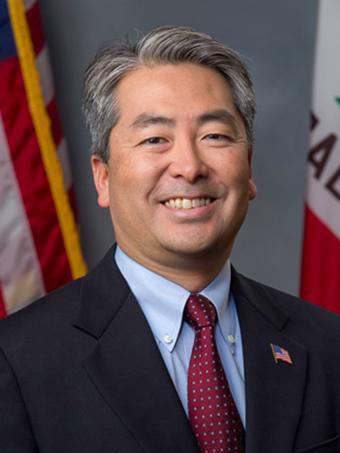
Al Muratsuchi
DDemocratic
Co

Dawn Addis
DDemocratic
Ask Maddy
·
AI policy assistant
Ask Maddy about AB 631
Scope: CA
Hi! I can help you understand AB 631. What would you like to know?
Try one of these
i
Maddy answers using official bill text and legislative records. Always verify before sharing.
Sources cited inline