

Criminal procedure: arraignment.
Summary
Existing law requires a person, once arrested, to be taken before a magistrate without delay and, in any event, within 48 hours after arrest, not including weekends and holidays, as specified. This bill would remove the weekends and holidays exemption, thereby requiring a person to be taken before the court within 48 hours of their arrest, or to be released, except that if the 48-hour period expires at a time that the court is in session, the arraignment can occur anytime that day. Existing law requires a person arrested without a warrant to be taken before the nearest magistrate in the county in which the offense is triable without delay. Existing law also authorizes a peace officer to release the arrested person from custody instead of taking them before a magistrate under certain specified circumstances, including if the person was arrested for intoxication only. This bill would require the person to be taken before the magistrate within 48 hours of their arrest. This bill would require that the court make an initial determination of probable cause, as specified, no more than 48 hours after the warrantless arrest. The bill would also require that if the court makes an initial finding of no probable cause, the court order the person to be released immediately. Existing law similarly requires a juvenile that has been arrested to be released with 48 hours, excluding judicial holidays, unless a petition has been filed to make the minor a ward of the court or charges have been filed charging the minor as an adult. This bill would remove the judicial holidays exemption and the petition exemption and would instead prohibit any juvenile from being held more than 48 hours if they did not receive an initial judicial determination of probable cause. By imposing a higher level of service on prosecutors, public defenders, police, jails, and courthouses, this bill would impose a state-mandated local program. The California Constitution requires the state to reimburse local agencies and school districts for certain costs mandated by the state. Statutory provisions establish procedures for making that reimbursement. This bill would provide that, if the Commission on State Mandates determines that the bill contains costs mandated by the state, reimbursement for those costs shall be made pursuant to the statutory provisions noted above.
Bill status
died
1 of 4 stages cleared
Introduction
Dec 2022
Committee Review
Floor Vote
Governor
Introduced Dec 6, 2022
Last action Feb 1, 2024
Floor votes
How they voted
No floor votes recorded yet.
Full legislative history
Actions timeline
Total actions
15
Key actions
4
Committee
7
Amendments
3
May 18, 2023
Lower · Passed
From committee: Do pass. (Ayes 11. Noes 4.) (May 18).
lower
May 3, 2023
Committee
In committee: Set, first hearing. Referred to APPR. suspense file.
lower
Apr 26, 2023
Lower · Passed
In committee: Hearing postponed by committee.
lower
Mar 9, 2023
Committee
Re-referred to Com. on APPR.
lower
Mar 8, 2023
Lower · Passed
Read second time and amended.
lower
Mar 7, 2023
Introduced
From committee: Amend, and do pass as amended and re-refer to Com. on APPR. (Ayes 6. Noes 1.) (March 7).
lower
Feb 27, 2023
Committee
Re-referred to Com. on PUB. S.
lower
Feb 23, 2023
Introduced
From committee chair, with author's amendments: Amend, and re-refer to Com. on PUB. S. Read second time and amended.
lower
Feb 23, 2023
Committee
Referred to Com. on PUB. S.
lower
Dec 7, 2022
Lower · Passed
From printer. May be heard in committee January 6.
lower
Dec 6, 2022
Introduced
Introduced. To print.
lower
1 primary · 0 co-sponsors
Sponsors
Role
Legislator
Party
State
District
P
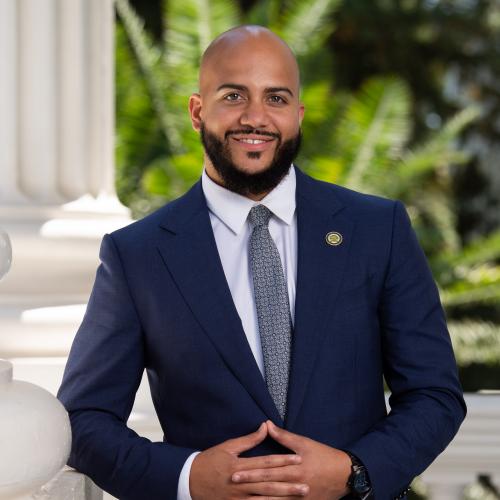
Isaac Bryan
DDemocratic
Ask Maddy
·
AI policy assistant
Ask Maddy about AB 61
Scope: CA
Hi! I can help you understand AB 61. What would you like to know?
Try one of these
i
Maddy answers using official bill text and legislative records. Always verify before sharing.
Sources cited inline