

Labor Code: alternative enforcement.
Summary
(1) Existing law establishes the Department of Industrial Relations in the Labor and Workforce Development Agency, administered by the Director of Industrial Relations, and vests it with various powers and duties to foster, promote, and develop the welfare of the wage earners of California, to improve their working conditions, and to advance their opportunities for profitable employment. Existing law establishes within the department, among other entities, the Division of Labor Standards Enforcement, the Division of Workers' Compensation, and the Division of Occupational Safety and Health, with enforcement duties and powers, as prescribed. Existing law authorizes the Division of Labor Standards Enforcement, the head of which is the Labor Commissioner, to enforce the Labor Code and all labor laws of the state the enforcement of which is not specifically vested in any other officer, board, or commission. Existing law relating to payment of wages for general occupations provides that nothing in those provisions limits the authority of the district attorney of any county or prosecuting attorney of any city to prosecute actions, either civil or criminal, for violations or to enforce those provisions independently and without specific direction of the Division of Labor Standards Enforcement. This bill, until January 1, 2029, would authorize a public prosecutor, as defined, to prosecute an action, either civil or criminal, for a violation of specified provisions of the Labor Code or to enforce those provisions independently. The bill would require moneys recovered by public prosecutors under the Labor Code to be applied first to payments due to affected workers. The bill would also require all civil penalties recovered pursuant to those provisions to be paid to the General Fund of the state, unless otherwise specified. The bill, except as specified, would limit the action of a public prosecutor under the bill to redressing violations occurring within the public prosecutor's geographic jurisdiction. The bill would authorize a public prosecutor, in addition to any other remedies available, to seek injunctive relief to prevent continued violations. This bill would provide that, in any action initiated by a public prosecutor or the Labor Commissioner to enforce the Labor Code, any individual agreement between a worker and employer that purports to limit representative actions or to mandate private arbitration shall have no effect on the authority of the public prosecutor or the Labor Commissioner to enforce the code. The bill would further provide that any subsequent appeal of the denial of any motion or other court filing to impose such restrictions on a public prosecutor, a division, or the Department of Justice shall not stay the trial court proceedings, notwithstanding specified law. (2) Existing law prohibits any person or employer from engaging in willful misclassification, as defined, of an individual as an independent contractor instead of an employee and in specified acts relating to the misclassified individual's compensation. Existing law, if the Labor and Workforce Development Agency or a court makes one of several prescribed determinations regarding the violation of those prohibitions, subjects the violator to specified civil penalties. Existing law also authorizes the Labor Commissioner to determine such a violation through investigation and informal hearing and, on making that determination, to issue a citation to assess those civil penalties pursuant to prescribed procedures for issuing, contesting, and enforcing judgments. This bill would authorize the Labor Commissioner or a public prosecutor, as defined, to enforce these willful misclassification provisions through specified methods, including by investigating an alleged violation, ordering temporary relief, issuance of a citation, and filing a civil action. The bill would also permit specified employees, the Labor Commissioner, or a public prosecutor to alternatively recover certain penalties as damages payable to the employee.
Bill status
signed
all 5 stages cleared
Introduction
Feb 2023
Committee Review
Sep 2023
Assembly Passage
May 2023
Senate Passage
Sep 2023
Signed into Law
Oct 2023
Introduced Feb 9, 2023
Signed Oct 10, 2023
Floor votes · Senate Sep 12, 2023 · Assembly May 25, 2023
How they voted
30–8
Passed · 2 other
Total votes 40
Sep 12, 2023
D
Democratic31
96% Yea
R
Republican9
88% Nay
Vote distribution
All Yea
All Nay
Mixed
No data
Full legislative history
Actions timeline
Total actions
31
Key actions
13
Committee
13
Amendments
7
Oct 10, 2023
Signed into law
Approved by the Governor.
legislature
Sep 13, 2023
Lower · Passed
Senate amendments concurred in. To Engrossing and Enrolling. (Ayes 54. Noes 18. Page 3402.).
lower
Sep 12, 2023
Introduced
In Assembly. Concurrence in Senate amendments pending.
lower
Sep 12, 2023
Upper · Passed
Read third time. Passed. Ordered to the Assembly. (Ayes 30. Noes 8. Page 2647.).
upper
Sep 8, 2023
Upper · Passed
Read third time and amended. Ordered to second reading.
upper
Sep 1, 2023
Upper · Passed
From committee: Do pass. (Ayes 5. Noes 2.) (September 1).
upper
Aug 14, 2023
Committee
In committee: Referred to APPR suspense file.
upper
Jul 12, 2023
Upper · Passed
From committee: Do pass and re-refer to Com. on APPR. (Ayes 9. Noes 2.) (July 11). Re-referred to Com. on APPR.
upper
Jun 28, 2023
Upper · Passed
From committee: Do pass and re-refer to Com. on JUD. (Ayes 4. Noes 1.) (June 28). Re-referred to Com. on JUD.
upper
Jun 7, 2023
Committee
Referred to Coms. on L., P.E. & R. and JUD.
upper
May 25, 2023
Lower · Passed
Read third time. Passed. Ordered to the Senate. (Ayes 52. Noes 17. Page 1804.)
lower
May 18, 2023
Lower · Passed
Read second time and amended. Ordered returned to second reading.
lower
May 18, 2023
Introduced
From committee: Amend, and do pass as amended. (Ayes 11. Noes 4.) (May 18).
lower
May 10, 2023
Committee
In committee: Set, first hearing. Referred to APPR. suspense file.
lower
May 3, 2023
Lower · Passed
In committee: Hearing postponed by committee.
lower
Apr 18, 2023
Lower · Passed
From committee: Do pass and re-refer to Com. on APPR. (Ayes 8. Noes 3.) (April 18). Re-referred to Com. on APPR.
lower
Apr 17, 2023
Committee
Re-referred to Com. on JUD.
lower
Apr 13, 2023
Introduced
From committee chair, with author's amendments: Amend, and re-refer to Com. on JUD. Read second time and amended.
lower
Apr 13, 2023
Lower · Passed
From committee: Do pass and re-refer to Com. on JUD. (Ayes 5. Noes 2.) (April 12). Re-referred to Com. on JUD.
lower
Mar 20, 2023
Committee
Re-referred to Com. on L. & E.
lower
Mar 16, 2023
Introduced
From committee chair, with author's amendments: Amend, and re-refer to Com. on L. & E. Read second time and amended.
lower
Mar 16, 2023
Committee
Referred to Coms. on L. & E. and JUD.
lower
Feb 10, 2023
Lower · Passed
From printer. May be heard in committee March 12.
lower
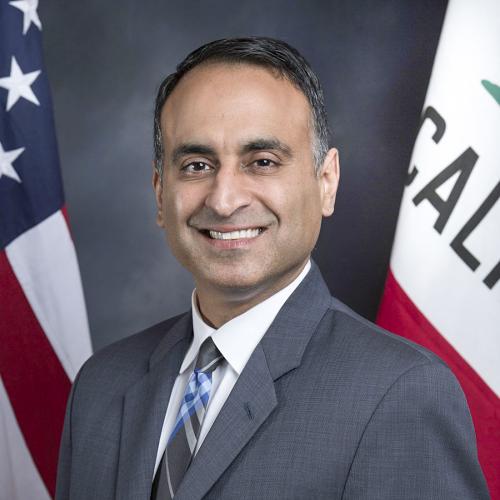
1 primary · 1 co-sponsor
Sponsors
Ask Maddy
·
AI policy assistant
Ask Maddy about AB 594
Scope: CA
Hi! I can help you understand AB 594. What would you like to know?
Try one of these
i
Maddy answers using official bill text and legislative records. Always verify before sharing.
Sources cited inline