

Medi-Cal: workforce adjustment for ground ambulance transports.
Summary
Existing law establishes the Medi-Cal program, which is administered by the State Department of Health Care Services and under which qualified low-income individuals receive health care services, including emergency or nonemergency medical transportation services, as specified. The Medi-Cal program is, in part, governed and funded by federal Medicaid program provisions. Existing law requires, with exceptions, that Medi-Cal reimbursement to providers of emergency medical transports be increased by application of an add-on to the associated Medi-Cal fee-for-service payment schedule. Under existing law, those increased payments are funded solely from a quality assurance fee (QAF) , which emergency medical transport providers are required to pay based on a specified formula, and from federal reimbursement and any other related federal funds. Existing law sets forth separate provisions for increased Medi-Cal reimbursement to providers of ground emergency medical transportation services that are owned or operated by certain types of public entities. This bill would establish, for dates of service on or after July 1, 2024, a workforce adjustment, serving as an additional payment, for each ground ambulance transport performed by a provider of medical transportation services, excluding the above-described public entity providers. The bill would vary the rate of adjustment depending on the point of pickup and whether the service was for an emergency or nonemergency, with the workforce adjustment being equal to 80% of the lowest maximum allowance established by the federal Medicare Program reduced by the fee-for-service payment schedule amount, as specified. The bill would require that the workforce adjustment meet a certain workforce standard, as determined by the department, which would apply to specified classes of employees, including emergency medical dispatchers, emergency medical technicians, paramedics, and registered nurses. The bill would set forth criteria for a provider to meet the workforce standard, with formulas taking into account the fiscal year and base hourly wage rates within a class of employees, and whether the provider is a new provider of ground ambulance services. The bill would require the department to direct each Medi-Cal managed care plan to implement a value-based purchasing model that provides for reimbursement to a network provider that meets the workforce standard requirement and that furnishes ambulance transport services, as specified. The bill would require the department to establish the manner and format for participating providers to report the required data, as specified. The bill would require a provider that has received the workforce adjustment to certify under penalty of perjury that it met the workforce standard, as specified. By expanding the scope of the crime of perjury, the bill would impose a state-mandated local program. The bill would authorize the department to recoup any workforce adjustments paid to a provider that did not meet the workforce standard. The bill would prohibit implementation of the workforce adjustment from affecting the calculation of the above-described QAF-based add-on, and would prohibit adjustments to the workforce adjustment, except as specified to comply with federal requirements. The bill would condition implementation of the workforce adjustment on receipt of any necessary federal approvals and the availability of federal financial participation. The bill would make conforming changes. The California Constitution requires the state to reimburse local agencies and school districts for certain costs mandated by the state. Statutory provisions establish procedures for making that reimbursement. This bill would provide that no reimbursement is required by this act for a specified reason.
Bill status
failed
1 of 4 stages cleared
Introduction
Dec 2022
Committee Review
Floor Vote
Governor
Introduced Dec 5, 2022
Last action Feb 1, 2024
Floor votes
How they voted
No floor votes recorded yet.
Full legislative history
Actions timeline
Total actions
13
Key actions
5
Committee
8
Amendments
3
Feb 1, 2024
Lower · Passed
From committee: Filed with the Chief Clerk pursuant to Joint Rule 56.
lower
May 18, 2023
Lower · Passed
In committee: Held under submission.
lower
May 10, 2023
Committee
In committee: Set, first hearing. Referred to APPR. suspense file.
lower
May 1, 2023
Committee
Re-referred to Com. on APPR.
lower
Apr 27, 2023
Lower · Passed
Read second time and amended.
lower
Apr 26, 2023
Introduced
From committee: Amend, and do pass as amended and re-refer to Com. on APPR. (Ayes 15. Noes 0.) (April 25).
lower
Apr 18, 2023
Lower · Passed
In committee: Set, first hearing. Hearing canceled at the request of author.
lower
Apr 3, 2023
Committee
Re-referred to Com. on HEALTH.
lower
Mar 30, 2023
Introduced
From committee chair, with author's amendments: Amend, and re-refer to Com. on HEALTH. Read second time and amended.
lower
Jan 26, 2023
Committee
Referred to Com. on HEALTH.
lower
Dec 6, 2022
Lower · Passed
From printer. May be heard in committee January 5.
lower
1 primary · 0 co-sponsors
Sponsors
Role
Legislator
Party
State
District
P
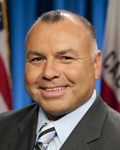
Freddie Rodriguez
DDemocratic
Ask Maddy
·
AI policy assistant
Ask Maddy about AB 55
Scope: CA
Hi! I can help you understand AB 55. What would you like to know?
Try one of these
i
Maddy answers using official bill text and legislative records. Always verify before sharing.
Sources cited inline