

Domestic violence: probation.
Summary
Existing law specifies that the terms of probation granted to a person who has been convicted of domestic violence are required to include, among other things, successful completion of a batterer's program, as defined, or, if such a program is not available, another appropriate counseling program designated by the court, for a period of not less than one year, and a protective order protecting the victim from further acts of violence, threats, stalking, sexual abuse, and harassment. Existing law requires the court to order the defendant to comply with all probation requirements, including the payment of program fees based upon the ability to pay. If the court finds that a defendant does not have the ability to pay the program fee, existing law authorizes the court to reduce or waive the program fee. Existing law requires a batterer's program to develop and utilize a sliding fee schedule based on a defendant's ability to pay. The bill would require program providers, as defined, to publicly post, including on an internet website, a comprehensive description of their sliding fee scales. The bill would require the court to inform the defendant of the availability of a program fee waiver, if they do not have the ability to pay for the program, and to provide each defendant with a selection of available program providers and those providers' standard fees and sliding fee scales before the defendant agrees to the conditions of probation. Existing law requires the probation department, when investigating the appropriate batterer's program for a defendant, to take into account, among other factors, the defendant's age, medical history, and educational background. Existing law requires a program to meet certain requirements, including immediately reporting any violation of the terms of the protective order to the court, the prosecutor, and, if formal probation has not been ordered, to the probation department. The bill would require the probation department, when investigating the appropriate program, to also take into account the defendant's sexual orientation, gender identity, and financial means and to promptly notify each program in which the defendant is required to participate the defendant's other required, court-mandated programs and probation violations pertaining to a domestic violence offense. The bill would require a program provider to report a violation of the protective order within 7 business days. Existing law requires the court to refer persons to batterer's programs that have been approved by the probation department. Existing law requires the probation department to design and implement an approval and renewal process for batterer's programs, to regulate those programs, as specified, and to fix a yearly fee, not to exceed $250 to approve an application or renewal. The bill would place these requirements, instead, in the Department of Justice. The bill, when referencing a batterer's program, would specifically indicate another appropriate counseling program if a batterer's program is not available. The bill would, by April 1, 2024, to ensure compliance with state law, make the Department of Justice responsible for collaborating with the Judicial Council and relevant stakeholders to set program provider standards, approving, monitoring, and renewing approvals of program providers, conducting periodic audits of program providers, and developing, in consultation with the Injury and Violence Prevention Branch of the State Department of Public Health, comprehensive statewide standards through regulations, among other responsibilities. The bill would, by April 1, 2024, require the Judicial Council to establish guidelines and training for judges to ensure the consistent adjudication of probation violations. Existing law requires the Judicial Council to establish judicial training programs for individuals who perform duties in domestic violence matters. Existing law requires the training programs to include a domestic violence session in any orientation session for newly appointed or elected judges and an annual training session in domestic violence. Existing law requires the training programs to include instruction in all aspects of domestic violence, including, but not limited to, the detriment to children of residing with a person who perpetrates domestic violence. This bill would instead require the Judicial Council to establish judicial training programs for individuals, including judicial officers and referees, who perform duties in domestic violence or child custody matters, including, among other topics, child sexual abuse and coercive control, as specified. The bill would make findings and declarations in support of these provisions. By requiring a higher level of service from the courts, this bill would impose a state-mandated local program. The California Constitution requires the state to reimburse local agencies and school districts for certain costs mandated by the state. Statutory provisions establish procedures for making that reimbursement. This bill would provide that, if the Commission on State Mandates determines that the bill contains costs mandated by the state, reimbursement for those costs shall be made pursuant to the statutory provisions noted above.
Bill status
vetoed
4 of 5 stages cleared
Introduction
Jan 2023
Committee Review
Aug 2023
Assembly Passage
May 2023
Senate Passage
Sep 2023
Vetoed
Jan 2024
Introduced Jan 26, 2023
Vetoed Jan 3, 2024
Floor votes · Senate Sep 12, 2023 · Assembly May 31, 2023
How they voted
34–0
Passed · 6 other
Total votes 40
Sep 12, 2023
D
Democratic31
93% Yea
R
Republican9
55% Yea
Vote distribution
All Yea
All Nay
Mixed
No data
Full legislative history
Actions timeline
Total actions
28
Key actions
11
Committee
9
Amendments
7
Feb 1, 2024
Vetoed
Consideration of Governor's veto stricken from file.
lower
Jan 3, 2024
Vetoed
Consideration of Governor's veto pending.
lower
Oct 8, 2023
Vetoed
Vetoed by Governor.
lower
Sep 13, 2023
Lower · Passed
Senate amendments concurred in. To Engrossing and Enrolling. (Ayes 76. Noes 0. Page 3419.).
lower
Sep 12, 2023
Introduced
In Assembly. Concurrence in Senate amendments pending.
lower
Sep 12, 2023
Upper · Passed
Read third time. Passed. Ordered to the Assembly. (Ayes 34. Noes 0. Page 2663.).
upper
Sep 8, 2023
Upper · Passed
Read third time and amended. Ordered to second reading.
upper
Sep 1, 2023
Upper · Passed
Read second time and amended. Ordered returned to second reading.
upper
Sep 1, 2023
Introduced
From committee: Amend, and do pass as amended. (Ayes 6. Noes 0.) (September 1).
upper
Aug 14, 2023
Committee
In committee: Referred to APPR suspense file.
upper
Jul 12, 2023
Upper · Passed
From committee: Do pass and re-refer to Com. on APPR. (Ayes 4. Noes 0.) (July 11). Re-referred to Com. on APPR.
upper
Jun 14, 2023
Committee
Referred to Com. on PUB S.
upper
May 31, 2023
Lower · Passed
Read third time. Passed. Ordered to the Senate. (Ayes 72. Noes 0. Page 1998.)
lower
May 18, 2023
Lower · Passed
Read second time and amended. Ordered returned to second reading.
lower
May 18, 2023
Introduced
From committee: Amend, and do pass as amended. (Ayes 11. Noes 0.) (May 18).
lower
May 3, 2023
Committee
In committee: Set, first hearing. Referred to APPR. suspense file.
lower
Apr 26, 2023
Lower · Passed
In committee: Hearing postponed by committee.
lower
Mar 14, 2023
Lower · Passed
From committee: Do pass and re-refer to Com. on APPR. (Ayes 8. Noes 0.) (March 14). Re-referred to Com. on APPR.
lower
Feb 13, 2023
Lower · Passed
In committee: Set, first hearing. Hearing canceled at the request of author.
lower
Feb 2, 2023
Committee
Referred to Com. on PUB. S.
lower
Jan 27, 2023
Lower · Passed
From printer. May be heard in committee February 26.
lower
1 primary · 2 co-sponsors
Sponsors
Role
Legislator
Party
State
District
P

Chris Holden
DDemocratic
Co
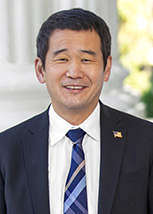
Dave Min
DDemocratic
Co

Tom Lackey
RRepublican
Ask Maddy
·
AI policy assistant
Ask Maddy about AB 304
Scope: CA
Hi! I can help you understand AB 304. What would you like to know?
Try one of these
i
Maddy answers using official bill text and legislative records. Always verify before sharing.
Sources cited inline