

Department of Technology: California Cybersecurity Awareness and Education Council.
Summary
Existing law, the California Emergency Services Act, among other things, creates the Office of Emergency Services, which is responsible for the state's emergency and disaster response services, as specified. Existing law requires the office to establish the California Cybersecurity Integration Center with the primary mission of reducing the likelihood and severity of cyber incidents that could damage California's economy, its critical infrastructure, or public and private sector computer networks in the state. Existing law establishes the Department of Technology within the Government Operations Agency, supervised by the Director of Technology, whose duties include advising the Governor on the strategic management and direction of the state's information technology resources. Existing law establishes the Office of Information Security within the Department of Technology, with the purpose of ensuring the confidentiality, integrity, and availability of state systems and applications, and promoting and protecting privacy as part of the development and operations of state systems and applications to ensure the trust of the residents of the state. This bill would establish the California Cybersecurity Awareness and Education Council within the Department of Technology. The bill would require the council to be composed of 15 members, to be appointed by February 1, 2024, as specified. The bill would require the council to research ways to increase cybersecurity awareness and education of students, families, and other adults, with the goal of helping people learn and use healthy cybersecurity practices, and ways to create a larger and more diverse cybersecurity-trained workforce, and would require the council to propose a strategy to engage Californians in the effort to improve cybersecurity practices and strengthen cyber infrastructure, as specified. This bill would require the council to submit a report by July 1, 2024, that includes, among other things, approaches the state can take to raise awareness of and increase education regarding cybersecurity, including in K–12 schools, institutions of higher education, and workplaces, and ways to effectively utilize social media, marketing campaigns, and the news media to increase awareness of and distribute materials about cybersecurity, as specified. This bill would make these provisions inoperative on February 1, 2025, and would repeal them as of January 1, 2026.
Bill status
failed
1 of 4 stages cleared
Introduction
Feb 2023
Committee Review
Floor Vote
Governor
Introduced Feb 17, 2023
Last action Feb 1, 2024
Floor votes
How they voted
No floor votes recorded yet.
Full legislative history
Actions timeline
Total actions
11
Key actions
4
Committee
7
Amendments
1
Feb 1, 2024
Lower · Passed
From committee: Filed with the Chief Clerk pursuant to Joint Rule 56.
lower
May 18, 2023
Lower · Passed
In committee: Held under submission.
lower
May 17, 2023
Committee
In committee: Set, first hearing. Referred to APPR. suspense file.
lower
Apr 26, 2023
Lower · Passed
From committee: Do pass and re-refer to Com. on APPR. with recommendation: To Consent Calendar. (Ayes 11. Noes 0.) (April 25). Re-referred to Com. on APPR.
lower
Mar 20, 2023
Committee
Re-referred to Com. on P. & C.P.
lower
Mar 16, 2023
Introduced
From committee chair, with author's amendments: Amend, and re-refer to Com. on P. & C.P. Read second time and amended.
lower
Mar 16, 2023
Committee
Referred to Com. on P. & C.P.
lower
Feb 18, 2023
Lower · Passed
From printer. May be heard in committee March 20.
lower
1 primary · 0 co-sponsors
Sponsors
Role
Legislator
Party
State
District
P
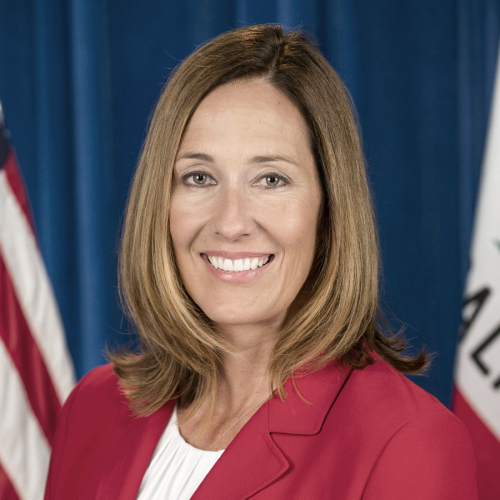
Jacqui Irwin
DDemocratic
Ask Maddy
·
AI policy assistant
Ask Maddy about AB 1667
Scope: CA
Hi! I can help you understand AB 1667. What would you like to know?
Try one of these
i
Maddy answers using official bill text and legislative records. Always verify before sharing.
Sources cited inline