

Planning and zoning: electric vehicle charging infrastructure: public right-of-way.
Summary
Existing law prescribes various requirements on the review and approval of applications to install electric vehicle charging stations. Existing law requires every city, county, and city and county to administratively approve an application to install electric vehicle charging stations and hydrogen-fueling stations through the issuance of a building permit or similar nondiscretionary permit and requires the review of an application to install an electric vehicle charging station or a hydrogen-fueling station to be limited to the building official's review of whether it meets all health and safety requirements of local, state, and federal law. Existing law prohibits a city, county, or city and county from denying an application for a use permit to install an electric vehicle charging station or a hydrogen-fueling station unless it makes written findings that the proposed installation would have a specific, adverse impact upon the public health or safety, and there is no feasible method to satisfactorily mitigate or avoid the specific, adverse impact. Existing law requires that any conditions imposed on an application to install an electric vehicle charging station or a hydrogen-fueling station be designed to mitigate the specific, adverse impact upon the public health or safety at the lowest cost possible. Existing law defines "electric vehicle charging station" or "charging station" for these purposes. Existing law repeals these provisions as they pertain to hydrogen-fueling stations on January 1, 2030. This bill would provide that the provisions described above do not apply to applications to install an electric vehicle charging station or hydrogen-fueling station in a public right-of-way. The bill would require local agencies to complete a plan for the installation of electric vehicle charging stations in the public right-of-way that includes, but is not limited to, a permitting process. In developing the plan and permitting process, the bill would require local agencies to take specified actions. The bill, except as specified, would require local agencies with populations of 250,000 or more to comply with these provisions by January 1, 2027, and local agencies with populations of fewer than 250,000 residents to comply with these provisions by January 1, 2029. The bill would define various terms for these purposes. By imposing additional duties on local agencies, this bill would impose a state-mandated local program. Existing law requires the State Energy Resources Conservation and Development Commission (Energy Commission) , working with the State Air Resources Board and the Public Utilities Commission (PUC) , to prepare a statewide assessment of the electric vehicle charging infrastructure needed to support the levels of electric vehicle adoption required for the state to meet its goals of putting at least 5,000,000 zero-emission vehicles on California roads by 2030, and of reducing emissions of greenhouse gases to 40% below 1990 levels by 2030. Existing law requires the Energy Commission, as a part of the assessment, to identify workforce development and training resources needed to meet those goals. This bill would require the Energy Commission, working with the state board and the PUC, to instead prepare a statewide assessment of the electric vehicle charging infrastructure needed to support the levels of light- and heavy-duty electric vehicle adoption required for the state to meet the goals of a specified executive order, a mobile source strategy, and achieving carbon neutrality as soon as possible and no later than 2045. The bill would require that the assessment also analyze different direct current fast charger power levels, and evaluate the impact of certain deployment scenarios on equitable access to publicly available direct current fast chargers, as specified. The bill would require the Energy Commission to also identify workforce development and training resources needed to meet an array of electric vehicle and electric vehicle charger power levels and to achieve a cost-effective and equitable electric vehicle charging network in the state, as specified. The bill would authorize the Energy Commission to use the findings from the assessment to guide its funding allocations for publicly available direct current fast chargers that are intended to serve light-duty electric vehicles. The bill would include findings that changes proposed by this bill address a matter of statewide concern rather than a municipal affair and, therefore, apply to all cities, including charter cities. The California Constitution requires the state to reimburse local agencies and school districts for certain costs mandated by the state. Statutory provisions establish procedures for making that reimbursement. This bill would provide that, if the Commission on State Mandates determines that the bill contains costs mandated by the state, reimbursement for those costs shall be made pursuant to the statutory provisions noted above.
Bill status
failed
1 of 4 stages cleared
Introduction
Feb 2023
Committee Review
Floor Vote
Governor
Introduced Feb 17, 2023
Last action Feb 1, 2024
Floor votes
How they voted
No floor votes recorded yet.
Full legislative history
Actions timeline
Total actions
12
Key actions
5
Committee
8
Amendments
1
Feb 1, 2024
Lower · Passed
From committee: Filed with the Chief Clerk pursuant to Joint Rule 56.
lower
May 18, 2023
Lower · Passed
In committee: Held under submission.
lower
May 17, 2023
Committee
In committee: Set, first hearing. Referred to APPR. suspense file.
lower
Apr 25, 2023
Lower · Passed
From committee: Do pass and re-refer to Com. on APPR. (Ayes 11. Noes 4.) (April 24). Re-referred to Com. on APPR.
lower
Apr 20, 2023
Lower · Passed
From committee: Do pass and re-refer to Com. on TRANS. (Ayes 6. Noes 2.) (April 19). Re-referred to Com. on TRANS.
lower
Apr 12, 2023
Committee
Re-referred to Com. on L. GOV.
lower
Apr 11, 2023
Introduced
From committee chair, with author's amendments: Amend, and re-refer to Com. on L. GOV. Read second time and amended.
lower
Mar 9, 2023
Committee
Referred to Com. on L. GOV.
lower
Feb 18, 2023
Lower · Passed
From printer. May be heard in committee March 20.
lower
1 primary · 0 co-sponsors
Sponsors
Role
Legislator
Party
State
District
P
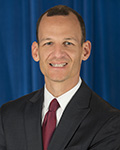
Kevin McCarty
DDemocratic
Ask Maddy
·
AI policy assistant
Ask Maddy about AB 1504
Scope: CA
Hi! I can help you understand AB 1504. What would you like to know?
Try one of these
i
Maddy answers using official bill text and legislative records. Always verify before sharing.
Sources cited inline