

Vehicular air pollution: medium- and heavy-duty vehicles: land ports of entry.
Summary
Existing law imposes various limitations on emissions of air contaminants for the control of air pollution from vehicular and nonvehicular sources. Existing law generally designates the State Air Resources Board as the state agency with the primary responsibility for the control of vehicular air pollution and air pollution control and air quality management districts with the primary responsibility for the control of air pollution from all sources other than vehicular sources. Existing law requires the state board, no later than January 1, 2021, and every 5 years thereafter, to update its 2016 mobile source strategy to include a comprehensive strategy for the deployment of medium- and heavy-duty vehicles in the state for purposes of bringing the state into compliance with federal ambient air quality standards and reducing motor vehicle greenhouse gas emissions from the medium- and heavy-duty vehicle sector. Under its existing authority, the state board has adopted the Advanced Clean Truck Regulation, which requires manufacturers who sell medium- and heavy-duty vehicles to sell zero-emission vehicles as an increasing percentage of their annual sales and requires certain fleet operators to report to the state board certain information regarding their vehicular usage. This bill would, before January 1, 2026, prohibit the state board from enforcing any regulations requiring the purchase and use of zero-emission vehicles with a gross vehicle weight rating of over 8,500 pounds operating in a land port of entry on the California-Mexico border within a commercial zone, as defined. The bill would, on and after January 1, 2026, prohibit the state board from enforcing any regulations requiring the purchase and use of zero-emission vehicles with a gross vehicle weight rating of over 8,500 pounds operating at a land port of entry on the California-Mexico border within a commercial zone under certain conditions. The bill would specify that the state board has the burden of proof in demonstrating the fleet operator has reasonable access to an economically feasible charging or fueling infrastructure in enforcing those regulations for vehicles operating at a land port of entry on the California-Mexico border within a commercial zone. This bill would require the Legislative Analyst, on or before September 1, 2024, to report to the Legislature on certain information regarding international commerce at the state's land ports of entry on the California-Mexico border within commercial zones.
Bill status
failed
1 of 4 stages cleared
Introduction
Feb 2023
Committee Review
Floor Vote
Governor
Introduced Feb 17, 2023
Last action Feb 1, 2024
Floor votes
How they voted
No floor votes recorded yet.
Full legislative history
Actions timeline
Total actions
6
Key actions
3
Committee
4
Feb 1, 2024
Lower · Passed
From committee: Filed with the Chief Clerk pursuant to Joint Rule 56.
lower
Mar 23, 2023
Lower · Passed
In committee: Hearing postponed by committee.
lower
Mar 9, 2023
Committee
Referred to Com. on TRANS.
lower
Feb 18, 2023
Lower · Passed
From printer. May be heard in committee March 20.
lower
1 primary · 0 co-sponsors
Sponsors
Role
Legislator
Party
State
District
P
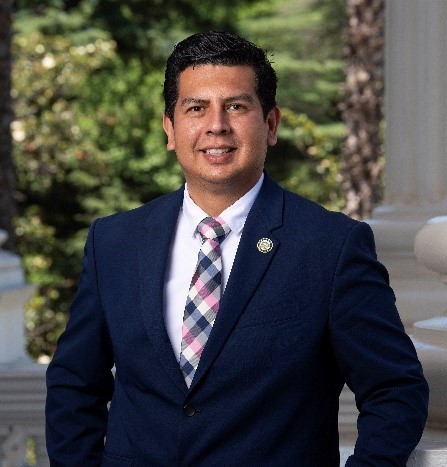
David Alvarez
DDemocratic
Ask Maddy
·
AI policy assistant
Ask Maddy about AB 1372
Scope: CA
Hi! I can help you understand AB 1372. What would you like to know?
Try one of these
i
Maddy answers using official bill text and legislative records. Always verify before sharing.
Sources cited inline