

Hazardous waste: solar panels.
Summary
(1) Under existing law, the purpose of the Electronic Waste Recycling Act of 2003 is to create a comprehensive and innovative system for the reuse, recycling, and proper and legal disposal of covered electronic devices, as defined, and provide incentives to design electronic devices that are less toxic, more recyclable, and that use recycled materials. Under existing law, both the Department of Resources Recycling and Recovery (CalRecycle) and the Department of Toxic Substances Control (DTSC) administer the act and may adopt regulations to implement and enforce the act. The act requires a retailer selling a covered electronic device in this state to collect from a consumer at the time of retail sale a covered electronic waste recycling fee or covered battery-embedded waste recycling fee, as specified. The act defines "covered electronic device" to mean certain video display devices and battery-embedded products. The act requires all funds collected pursuant to the act to be deposited into subaccounts of the Electronic Waste Recovery and Recycling Account. The act continuously appropriates the funds in the subaccounts for specified purposes, including, but not limited to, paying covered electronic waste recycling fee refunds and making electronic waste recovery and recycling payments. Existing law incorporates the act into the hazardous waste control laws, and a violation of the hazardous waste control laws is a crime. This bill, among other things, would add consumer-owned solar photovoltaic modules to the definition of covered electronic devices, thereby subjecting consumer-owned solar photovoltaic modules to the act, as specified. The bill, on and after January 1, 2030, would require a consumer or a service provider serving the consumer, including a developer or installer of a consumer-owned solar photovoltaic system, to pay a consumer-owned solar photovoltaic module recycling fee in an amount determined by CalRecycle, as provided, upon the purchase of new consumer-owned solar photovoltaic modules. The bill would require a retailer selling a consumer-owned solar photovoltaic module to collect a consumer-owned solar photovoltaic module recycling fee, as specified. The bill would require all funds collected from the consumer-owned solar photovoltaic module recycling fee to be deposited into the Consumer-Owned Solar Photovoltaic Module Recycling Fee Subaccount, which the bill would establish within the Electronic Waste Recovery and Recycling Account. The bill would continuously appropriate the funds in the subaccount for specified purposes, including, but not limited to, paying refunds of the consumer-owned solar photovoltaic module recycling fee. The bill would authorize CalRecycle to adjust the consumer-owned solar photovoltaic module recycling fee to, among other things, ensure sufficient funding for the collection, consolidation, and recycling of covered electronic waste resulting from solar photovoltaic modules and the resulting solar photovoltaic module e-waste that is projected to be recycled in the state. This bill would require CalRecycle, and would authorize DTSC, to adopt regulations to implement the provisions of the act related to consumer-owned solar photovoltaic modules. The bill would prohibit CalRecycle's regulations implementing the provisions of the act related to consumer-owned solar photovoltaic modules from having an effective date earlier than January 1, 2029. By expanding the scope of a crime, this bill would create a state-mandated local program. (2) Existing law establishes stewardship programs for certain products, whereby a manufacturer, importer, distributer, or retailer is required, by itself or with others, to establish a stewardship organization that is required to develop and implement a plan for collecting and properly managing the disposal of covered products, as provided. This bill would establish a stewardship program for solar photovoltaic modules that are not included in the definition of consumer-owned solar photovoltaic module, and therefore, would not be regulated by the provisions above. The bill would require CalRecycle to adopt regulations to implement the stewardship program and would prohibit the regulations from having an effective date earlier than January 1, 2029. The bill would define "steward" to mean the person responsible for decommissioning of a solar photovoltaic module, as specified. The bill would require a steward, by itself or with other stewards in a stewardship organization, to submit a stewardship plan to CalRecycle within 12 months of the adoption of the regulations. The bill would specify requirements for the plan, including, but not limited to, describing how the solar photovoltaic modules will be collected, refurbished, reused, or recycled. The bill would require a steward, by itself or with other stewards in a stewardship organization, to pay for the implementation of its stewardship plan and to pay an administrative fee at an amount that is the actual and reasonable costs adequate to cover CalRecycle's and any other state agency's projected full costs of administering and enforcing the stewardship program. The bill would require the administrative fees to be deposited into the Nonconsumer-Owned Solar Photovoltaic Module Recycling Subaccount, which this bill would establish. The bill would require, upon appropriation by the Legislature, moneys in the subaccount to be expended by CalRecycle or any other agency that assists in administering the stewardship program, as specified. The bill would require a steward and a stewardship organization to retain certain documents, allow CalRecycle to inspect documents and facilities, and to perform audits, as specified. The bill would require all reports and records that a steward or stewardship organization submits to CalRecycle pursuant to the stewardship program to be submitted under the penalty of perjury. By expanding the scope of a crime, this bill would create a state-mandated local program. This bill would include a change in state statute that would result in a taxpayer paying a higher tax within the meaning of Section 3 of Article XIIIA of the California Constitution, and thus would require for passage the approval of 23 of the membership of each house of the Legislature. The California Constitution requires the state to reimburse local agencies and school districts for certain costs mandated by the state. Statutory provisions establish procedures for making that reimbursement. This bill would provide that no reimbursement is required by this act for a specified reason. Existing constitutional provisions require that a statute that limits the right of access to the meetings of public bodies or the writings of public officials and agencies be adopted with findings demonstrating the interest protected by the limitation and the need for protecting that interest. This bill would make legislative findings to that effect. The bill would include findings that changes proposed by this bill address a matter of statewide concern rather than a municipal affair and, therefore, apply to all cities, including charter cities.
Bill status
passed
3 of 5 stages cleared
Introduction
Feb 2023
Committee Review
Jun 2024
Assembly Passage
May 2023
Senate Passage
Governor
Introduced Feb 16, 2023
Last action Jun 11, 2024
Floor votes · Assembly May 25, 2023
How they voted
75–0
Passed · 5 other
Total votes 80
May 25, 2023
D
Democratic62
95% Yea
R
Republican18
88% Yea
Vote distribution
All Yea
All Nay
Mixed
No data
Full legislative history
Actions timeline
Total actions
16
Key actions
5
Committee
9
Amendments
2
Jun 11, 2024
Committee
Re-referred to Com. on RLS.
upper
Jun 11, 2024
Upper · Passed
In committee: Set, first hearing. Hearing canceled at the request of author.
upper
Jun 10, 2024
Introduced
From committee chair, with author's amendments: Amend, and re-refer to committee. Read second time, amended, and re-referred to Com. on E.Q.
upper
Jun 7, 2023
Committee
Referred to Com. on E.Q.
upper
May 25, 2023
Lower · Passed
Read third time. Passed. Ordered to the Senate. (Ayes 75. Noes 0. Page 1775.)
lower
May 18, 2023
Lower · Passed
From committee: Do pass. (Ayes 15. Noes 0.) (May 18).
lower
Apr 19, 2023
Committee
In committee: Set, first hearing. Referred to APPR. suspense file.
lower
Mar 29, 2023
Lower · Passed
From committee: Do pass and re-refer to Com. on APPR. (Ayes 9. Noes 0.) (March 28). Re-referred to Com. on APPR.
lower
Mar 22, 2023
Committee
Re-referred to Com. on E.S. & T.M.
lower
Mar 21, 2023
Introduced
From committee chair, with author's amendments: Amend, and re-refer to Com. on E.S. & T.M. Read second time and amended.
lower
Mar 2, 2023
Committee
Referred to Com. on E.S. & T.M.
lower
Feb 17, 2023
Lower · Passed
From printer. May be heard in committee March 19.
lower
1 primary · 0 co-sponsors
Sponsors
Role
Legislator
Party
State
District
P
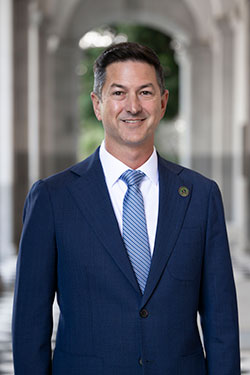
Chris Ward
DDemocratic
Ask Maddy
·
AI policy assistant
Ask Maddy about AB 1238
Scope: CA
Hi! I can help you understand AB 1238. What would you like to know?
Try one of these
i
Maddy answers using official bill text and legislative records. Always verify before sharing.
Sources cited inline