

Carbon sequestration: Carbon Capture, Removal, Utilization, and Storage Program.
Summary
Existing law establishes the State Air Resources Board as the state agency responsible for monitoring and regulating sources emitting greenhouse gases. Existing law, the California Global Warming Solutions Act of 2006, requires the state board to ensure that statewide greenhouse gas emissions are reduced to at least 40% below the 1990 level by 2030. Existing law requires, no later than July 1, 2023, the Natural Resources Agency, in coordination with the state board, the California Environmental Protection Agency, the Department of Food and Agriculture, and other relevant state agencies, to establish the Natural and Working Lands Climate Smart Strategy and, in developing the strategy, to create a framework to advance the state's climate goals. Existing law requires the state board, as part of its scoping plan, to establish specified carbon dioxide removal targets for 2030 and beyond. This bill would require the state board to establish a Carbon Capture, Removal, Utilization, and Storage Program, as provided, to evaluate the efficacy, safety, and viability of carbon capture, utilization, or storage (CCUS) technologies and carbon dioxide removal (CDR) technologies and facilitate the capture and sequestration of carbon dioxide from those technologies, where appropriate. The bill would require the program to ensure that carbon dioxide capture, removal, and sequestration projects include specified components including, among others, certain monitoring activities. In carrying out the program's objectives, the bill would require the state board to prioritize, among other priorities, reducing the emissions of greenhouses gases and reducing fossil fuel production in the state. The bill would require the state board to adopt regulations to implement the program and, in developing the program, to consult with the Geologic Carbon Sequestration Group described below. This bill would require the state board, in consultation with relevant state and local agencies, by January 1, 2025, to adopt regulations for a unified permit application for the construction and operation of carbon dioxide capture, removal, or sequestration projects to expedite the issuance of permits or other authorizations for the construction and operation of those projects. The bill would require relevant state agencies to use the unified permit application when issuing permits or other authorizations for a carbon dioxide capture, removal, or sequestration project. This bill would require the state board, by January 1, 2025, to develop a centralized public database to track the deployment of CCUS and CDR technologies and the development of carbon dioxide capture, removal, and sequestration projects throughout the state. The bill would authorize the state board, by January 1, 2024, to adopt protocols to support additional methods of utilization or storage of captured carbon dioxide. The bill would require the state board, no later than January 1, 2025, to adopt regulations for financial responsibility for carbon dioxide capture, removal, or sequestration projects, as specified. This bill would require the Secretary of the Natural Resources Agency, in consultation with the state board, to publish a framework by July 1, 2025, for governing agreements regarding 2 or more tracts of land overlying the same geologic storage reservoir or reservoirs for purposes of managing, developing, and operating a carbon dioxide capture, removal, or sequestration project, as provided. This bill would provide that title to any geologic storage reservoir is vested in the owner of the overlying surface estate unless it has been severed and separately conveyed and would establish certain requirements with regard to the conveyance of the ownership interest of a geologic storage reservoir. No less than 60 days before commencing development of a carbon dioxide capture, removal, and sequestration project, the bill would require the carbon dioxide capture, removal, or sequestration project operator to provide written notice of the project to each owner of a surface, subsurface, or storage reservoir estate that is adjacent to a geologic storage complex or a geologic storage reservoir that is included in the project. The bill would repeal the provisions described in this paragraph on a specified date. This bill would require a carbon dioxide capture, removal, or sequestration project operator, among other things, (1) to maintain financial responsibility for a specified period of time, (2) to show proof to the state board that there is binding agreement among relevant parties that drilling or extraction that may penetrate the geologic storage reservoir are prohibited for at least 100 years after the last date of injection of carbon dioxide into a geologic storage reservoir, and (3) to create an air monitoring and mitigation plan and to submit the plan to the state board. This bill would authorize the state board to require changes in operations of a carbon dioxide capture, removal, or sequestration project to ensure public and environmental health and safety if the monitoring and reporting detects increased seismicity or carbon dioxide leakage outside the geologic storage reservoir. This bill would require the California Geological Survey to establish the Geologic Carbon Sequestration Group to provide independent expertise and regulatory guidance to the state board. The bill would establish certain of the group's duties, including identifying high-quality, suitable locations of a class of carbon dioxide injection wells. Existing law requires the State Oil and Gas Supervisor to supervise the drilling, operation, maintenance, and abandonment of wells and the operation, maintenance, and removal or abandonment of tanks and facilities attendant to oil and gas production. The federal Safe Drinking Water Act regulates certain wells as Class II injection wells. Under existing federal law, the authority to regulate Class II injection wells is delegated to the Geologic Energy Management Division. Under existing regulations, a well operator is required to obtain approval from the supervisor or a district deputy for a subsurface injection or disposal project, including Class II injection wells, and is required to file a notice of intention whenever a new well is to be drilled for use as an injection well or whenever an existing well is converted to an injection well. This bill would prohibit an operator from injecting a concentrated carbon dioxide fluid produced by a carbon dioxide capture, removal, or sequestration project into a Class II injection well for purposes of enhanced oil recovery, including the facilitation of enhanced oil recovery from another well. Under existing law, a person who fails to comply with specified requirements relating to the regulation of oil or gas operations is guilty of a misdemeanor. Because a violation of the prohibition specified in this bill would be a crime, the bill would impose a state-mandated local program. The California Constitution requires the state to reimburse local agencies and school districts for certain costs mandated by the state. Statutory provisions establish procedures for making that reimbursement. This bill would provide that no reimbursement is required by this act for a specified reason. This bill would make its operation contingent on the enactment of AB 1279 of the 2021–22 Regular Session, as provided.
Bill status
signed
all 5 stages cleared
Introduction
Feb 2022
Committee Review
Aug 2022
Senate Passage
May 2022
Assembly Passage
Aug 2022
Signed into Law
Sep 2022
Introduced Feb 2, 2022
Signed Sep 16, 2022
Floor votes · Senate May 24, 2022 · Assembly Sep 1, 2022
How they voted
25–8
Passed · 4 other
Total votes 37
May 24, 2022
D
Democratic29
86% Yea
R
Republican8
100% Nay
Vote distribution
All Yea
All Nay
Mixed
No data
Full legislative history
Actions timeline
Total actions
45
Key actions
18
Committee
7
Amendments
13
Sep 16, 2022
Signed into law
Approved by the Governor.
legislature
Sep 1, 2022
Assembly · Passed
Assembly Vote: pass (46-15-16)
assembly
Aug 31, 2022
Upper · Passed
Assembly amendments concurred in. (Ayes 29. Noes 9. Page 5401.) Ordered to engrossing and enrolling.
upper
Aug 31, 2022
Introduced
In Senate. Concurrence in Assembly amendments pending.
upper
Aug 31, 2022
Lower · Passed
Read third time. Passed. Ordered to the Senate.
lower
Aug 28, 2022
Lower · Passed
From committee with author's amendments. Read second time and amended. Re-referred to Com. on APPR.
lower
Aug 25, 2022
Committee
Re-referred to Com. on APPR. pursuant to Assembly Rule 77.2.
lower
Aug 25, 2022
Lower · Passed
Read third time and amended.
lower
Aug 16, 2022
Lower · Passed
Read second time and amended. Ordered to second reading.
lower
Aug 15, 2022
Lower · Passed
From committee: Do pass as amended. (Ayes 12. Noes 4.) (August 11).
lower
Jun 23, 2022
Lower · Passed
Read second time and amended. Re-referred to Com. on APPR.
lower
Jun 22, 2022
Lower · Passed
From committee: Do pass as amended and re-refer to Com. on APPR. (Ayes 7. Noes 0.) (June 20).
lower
Jun 13, 2022
Lower · Passed
From committee with author's amendments. Read second time and amended. Re-referred to Com. on NAT. RES.
lower
Jun 2, 2022
Committee
Referred to Com. on NAT. RES.
lower
May 24, 2022
Upper · Passed
Read third time. Passed. (Ayes 27. Noes 9. Page 3882.) Ordered to the Assembly.
upper
May 19, 2022
Upper · Passed
Read second time and amended. Ordered to second reading.
upper
May 19, 2022
Upper · Passed
From committee: Do pass as amended. (Ayes 5. Noes 2. Page 3774.) (May 19).
upper
Apr 21, 2022
Upper · Passed
From committee: Do pass and re-refer to Com. on APPR. (Ayes 5. Noes 2. Page 3457.) (April 20). Re-referred to Com. on APPR.
upper
Apr 18, 2022
Upper · Passed
From committee with author's amendments. Read second time and amended. Re-referred to Com. on ED.
upper
Mar 28, 2022
Upper · Passed
From committee: Do pass and re-refer to Com. on ED. (Ayes 5. Noes 2. Page 3238.) (March 28). Re-referred to Com. on ED.
upper
Mar 3, 2022
Committee
Referral to Com. on N.R. & W. rescinded because of the limitations placed on committee hearings due to ongoing health and safety risks of the COVID-19 virus.
upper
Mar 2, 2022
Committee
Re-referred to Coms. on E.Q., ED., and N.R. & W.
upper
Feb 18, 2022
Upper · Passed
From committee with author's amendments. Read second time and amended. Re-referred to Com. on RLS.
upper
Feb 9, 2022
Committee
Referred to Com. on RLS.
upper
Feb 2, 2022
Introduced
Introduced. Read first time. To Com. on RLS. for assignment. To print.
upper
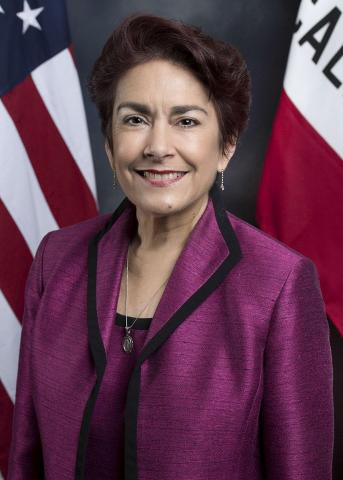
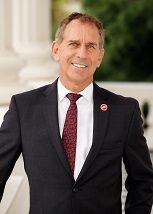
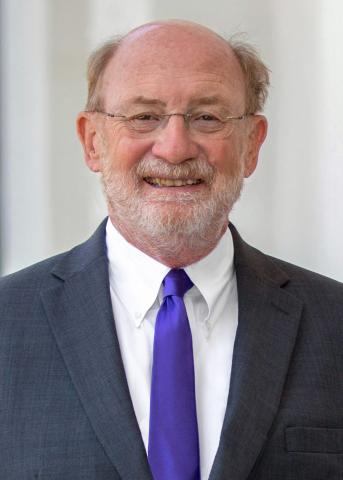
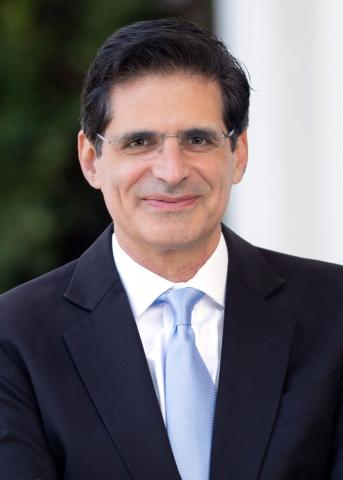
1 primary · 8 co-sponsors
Sponsors



Ask Maddy
·
AI policy assistant
Ask Maddy about SB 905
Scope: CA
Hi! I can help you understand SB 905. What would you like to know?
Try one of these
i
Maddy answers using official bill text and legislative records. Always verify before sharing.
Sources cited inline