

Electricity: resource adequacy requirements.
Summary
Existing law requires the Public Utilities Commission, in consultation with the Independent System Operator, to establish resource adequacy requirements for all load-serving entities, defined as including electrical corporations, electric service providers, and community choice aggregators. Existing law requires the resource adequacy program to achieve certain objectives, including, among other objectives, maximizing the ability of community choice aggregators to determine the generation resources used to serve their customers. This bill would revise and recast the objectives of the resource adequacy program. The bill would require the commission to analyze, compile, and publish on its internet website an annual report on the compliance status of load-serving entities. Existing law requires the commission to determine and authorize the most efficient and equitable means for ensuring that community choice aggregators can determine the generation resources used to service their customers. This bill would additionally require the commission to determine and authorize the most efficient and equitable means for ensuring that electric service providers can determine the generation resources used to serve their customers. The bill would also require the Independent System Operator to ensure that the cost of backstop procurement and associated greenhouse gas attributes are equitably allocated. This bill would require the commission, in coordination with the Independent System Operator, in a new or existing proceeding, to develop a pilot program for aggregated customer-sited zero-emission distributed energy resources, as defined, to assess the value of potential energy exports from those resources for purposes of fulfilling the requirements of the resource adequacy program, as specified. The bill would exclude from participation in the pilot program customers taking service under a customer-generator tariff unless the customer is only compensated in a specified manner. The bill would authorize the commission to allocate certain funds to carry out the pilot program and would specify the resources eligible to participate in the pilot program, as provided. This bill would incorporate additional changes to Section 380 of the Public Utilities Code proposed by SB 1158 to be operative only if this bill and SB 1158 are enacted and this bill is enacted last. Under existing law, a violation of the Public Utilities Act or any order, decision, rule, direction, demand, or requirement of the commission is a crime. To the extent that certain provisions of this bill would require an order, decision, rule, direction, demand, or requirement of the commission to implement, the bill would impose a state-mandated local program by creating new crimes. The California Constitution requires the state to reimburse local agencies and school districts for certain costs mandated by the state. Statutory provisions establish procedures for making that reimbursement. This bill would provide that no reimbursement is required by this act for a specified reason.
Bill status
vetoed
4 of 5 stages cleared
Introduction
Feb 2022
Committee Review
Aug 2022
Senate Passage
May 2022
Assembly Passage
Aug 2022
Vetoed
Sep 2022
Introduced Feb 18, 2022
Vetoed Sep 28, 2022
Floor votes · Senate May 23, 2022 · Assembly Aug 29, 2022
How they voted
33–0
Passed · 4 other
Total votes 37
May 23, 2022
D
Democratic29
86% Yea
R
Republican8
100% Yea
Vote distribution
All Yea
All Nay
Mixed
No data
Full legislative history
Actions timeline
Total actions
33
Key actions
12
Committee
7
Amendments
7
Sep 28, 2022
Vetoed
In Senate. Consideration of Governor's veto pending.
upper
Sep 28, 2022
Vetoed
Vetoed by the Governor.
upper
Aug 30, 2022
Upper · Passed
Assembly amendments concurred in. (Ayes 40. Noes 0. Page 5317.) Ordered to engrossing and enrolling.
upper
Aug 29, 2022
Introduced
In Senate. Concurrence in Assembly amendments pending.
upper
Aug 29, 2022
Lower · Passed
Read third time. Passed. Ordered to the Senate.
lower
Aug 25, 2022
Lower · Passed
Read third time and amended.
lower
Aug 11, 2022
Lower · Passed
From committee: Do pass. (Ayes 16. Noes 0.) (August 11).
lower
Jun 30, 2022
Lower · Passed
Read second time and amended. Re-referred to Com. on APPR.
lower
Jun 29, 2022
Lower · Passed
From committee: Do pass as amended and re-refer to Com. on APPR. with recommendation: To consent calendar. (Ayes 13. Noes 0.) (June 29).
lower
Jun 15, 2022
Lower · Passed
From committee with author's amendments. Read second time and amended. Re-referred to Com. on U. & E.
lower
May 27, 2022
Committee
Referred to Com. on U. & E.
lower
May 23, 2022
Upper · Passed
Read third time. Passed. (Ayes 36. Noes 0. Page 3829.) Ordered to the Assembly.
upper
May 9, 2022
Upper · Passed
From committee: Be ordered to second reading pursuant to Senate Rule 28.8.
upper
Apr 27, 2022
Upper · Passed
From committee: Do pass and re-refer to Com. on APPR. (Ayes 12. Noes 0. Page 3510.) (April 26). Re-referred to Com. on APPR.
upper
Apr 13, 2022
Upper · Passed
April 25 hearing postponed by committee.
upper
Mar 23, 2022
Committee
Re-referred to Com. on E., U. & C.
upper
Mar 16, 2022
Upper · Passed
From committee with author's amendments. Read second time and amended. Re-referred to Com. on RLS.
upper
Mar 9, 2022
Committee
Referred to Com. on RLS.
upper
Feb 18, 2022
Introduced
Introduced. Read first time. To Com. on RLS. for assignment. To print.
upper
1 primary · 0 co-sponsors
Sponsors
Role
Legislator
Party
State
District
P
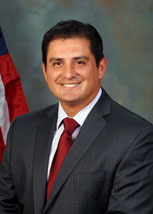
Ben Hueso
DDemocratic
Ask Maddy
·
AI policy assistant
Ask Maddy about SB 1432
Scope: CA
Hi! I can help you understand SB 1432. What would you like to know?
Try one of these
i
Maddy answers using official bill text and legislative records. Always verify before sharing.
Sources cited inline