

Joint powers agreements: zero-emission transportation systems or facilities.
Summary
(1) Existing law, the Joint Exercise of Powers Act, authorizes 2 or more public agencies by agreement to exercise any power common to the contracting parties. Existing law requires the agreement to state the purposes of the agreement or the power to be exercised, and provides that the agency or entity provided by the agreement to administer or execute the agreement may be one or more of the parties to the agreement, a commission or board constituted pursuant to the agreement, or a person, firm, or corporation, including a nonprofit corporation, designated in the agreement. Existing law authorizes the agreement to, among other things, provide for the repayment or return to the parties of all or any part of any contributions, payments, or advances made by the parties and for payment to the parties of any sum or sums derived from the revenues of said facilities and authorizes the contracting parties to the agreement to issue revenue bonds to pay the cost and expenses of acquiring or constructing a project or conducting a program for specified purposes. This bill, notwithstanding any other provision of the act, would authorize a private, nonprofit corporation formed for the purposes of providing services to zero-emission transportation systems or facilities, including, but not limited to, finance, design, construction, operation, or maintenance, or authorized by their board of directors to provide such services, to join a joint powers authority or enter into a joint powers agreement with a public agency to facilitate the development, construction, and operation of zero-emission transportation systems or facilities that lower greenhouse gases, reduce vehicle congestion and vehicle miles traveled, and improve public transit connections. The bill, notwithstanding any other law, would prohibit a joint powers authority formed pursuant to these provisions from incurring debt. Under the bill, the authority would be governed by a board of directors, composed as determined by the participating public agency or agencies. The bill would prohibit the representation of private, nonprofit mutual benefit corporations on the board of directors from exceeding 50%. The bill would define terms for its purposes. The bill's provisions would be repealed on January 1, 2032. (2) Existing law sets forth requirements for the solicitation and evaluation of bids and the awarding of contracts by public entities, including requirements applicable if the public entity is required by statute or regulation to obtain an enforceable commitment that a bidder, contractor, or other entity will use a skilled and trained workforce, as defined, to complete a contract or project. Except as specified, existing law requires that, for workers employed on public works, as defined, not less than the general prevailing rate of per diem wages, determined as provided by the Director of Industrial Relations, for work of a similar character in the locality in which the public work is performed be paid to those workers, as provided. This bill, except as specified, would require a joint powers authority formed pursuant to the bill that undertakes a project to obtain an enforceable commitment that any entity undertaking the project will use a skilled and trained workforce. The bill would require a private entity performing the work on a project for the joint powers authority to certify, in writing and under penalty of perjury, that prevailing wages will be paid to workers on the project, as provided, and that a skilled and trained workforce will be used to perform all construction work on the project. By requiring private entities performing work on a project under these provisions to certify this information, thereby expanding the scope of the crime of perjury, the bill would impose a state-mandated local program. (3) The California Constitution requires the state to reimburse local agencies and school districts for certain costs mandated by the state. Statutory provisions establish procedures for making that reimbursement. This bill would provide that no reimbursement is required by this act for a specified reason.
Bill status
signed
all 5 stages cleared
Introduction
Feb 2022
Committee Review
Aug 2022
Senate Passage
May 2022
Assembly Passage
Aug 2022
Signed into Law
Sep 2022
Introduced Feb 17, 2022
Signed Sep 18, 2022
Floor votes · Senate May 23, 2022 · Assembly Aug 15, 2022
How they voted
26–8
Passed · 3 other
Total votes 37
May 23, 2022
D
Democratic29
89% Yea
R
Republican8
100% Nay
Vote distribution
All Yea
All Nay
Mixed
No data
Full legislative history
Actions timeline
Total actions
31
Key actions
14
Committee
9
Amendments
7
Sep 18, 2022
Signed into law
Approved by the Governor.
legislature
Aug 23, 2022
Upper · Passed
Assembly amendments concurred in. (Ayes 31. Noes 9. Page 5021.) Ordered to engrossing and enrolling.
upper
Aug 15, 2022
Introduced
In Senate. Concurrence in Assembly amendments pending.
upper
Aug 15, 2022
Lower · Passed
Read third time. Passed. (Ayes 62. Noes 14. Page 5887.) Ordered to the Senate.
lower
Aug 11, 2022
Lower · Passed
Read third time and amended.
lower
Aug 3, 2022
Lower · Passed
From committee: Do pass. (Ayes 11. Noes 4.) (August 3).
lower
Jun 28, 2022
Lower · Passed
From committee: Do pass and re-refer to Com. on APPR. (Ayes 11. Noes 3.) (June 27). Re-referred to Com. on APPR.
lower
Jun 16, 2022
Lower · Passed
From committee: Do pass and re-refer to Com. on TRANS. (Ayes 6. Noes 2.) (June 15). Re-referred to Com. on TRANS.
lower
May 27, 2022
Committee
Referred to Coms. on L. GOV. and TRANS.
lower
May 23, 2022
Upper · Passed
Read third time. Passed. (Ayes 28. Noes 9. Page 3828.) Ordered to the Assembly.
upper
May 9, 2022
Upper · Passed
From committee: Be ordered to second reading pursuant to Senate Rule 28.8.
upper
Apr 27, 2022
Upper · Passed
From committee: Do pass and re-refer to Com. on APPR. (Ayes 13. Noes 3. Page 3521.) (April 26). Re-referred to Com. on APPR.
upper
Apr 19, 2022
Upper · Passed
From committee with author's amendments. Read second time and amended. Re-referred to Com. on TRANS.
upper
Apr 18, 2022
Upper · Passed
Read second time and amended. Re-referred to Com. on TRANS.
upper
Apr 7, 2022
Upper · Passed
From committee: Do pass as amended and re-refer to Com. on TRANS. (Ayes 4. Noes 0. Page 3377.) (April 7).
upper
Mar 24, 2022
Committee
Referral to Com. on E.Q. rescinded because of the limitations placed on committee hearings due to ongoing health and safety risks of the COVID-19 virus.
upper
Mar 23, 2022
Committee
Re-referred to Coms. on GOV. & F., TRANS., and E.Q.
upper
Mar 16, 2022
Upper · Passed
From committee with author's amendments. Read second time and amended. Re-referred to Com. on RLS.
upper
Mar 2, 2022
Committee
Referred to Com. on RLS.
upper
Feb 17, 2022
Introduced
Introduced. Read first time. To Com. on RLS. for assignment. To print.
upper
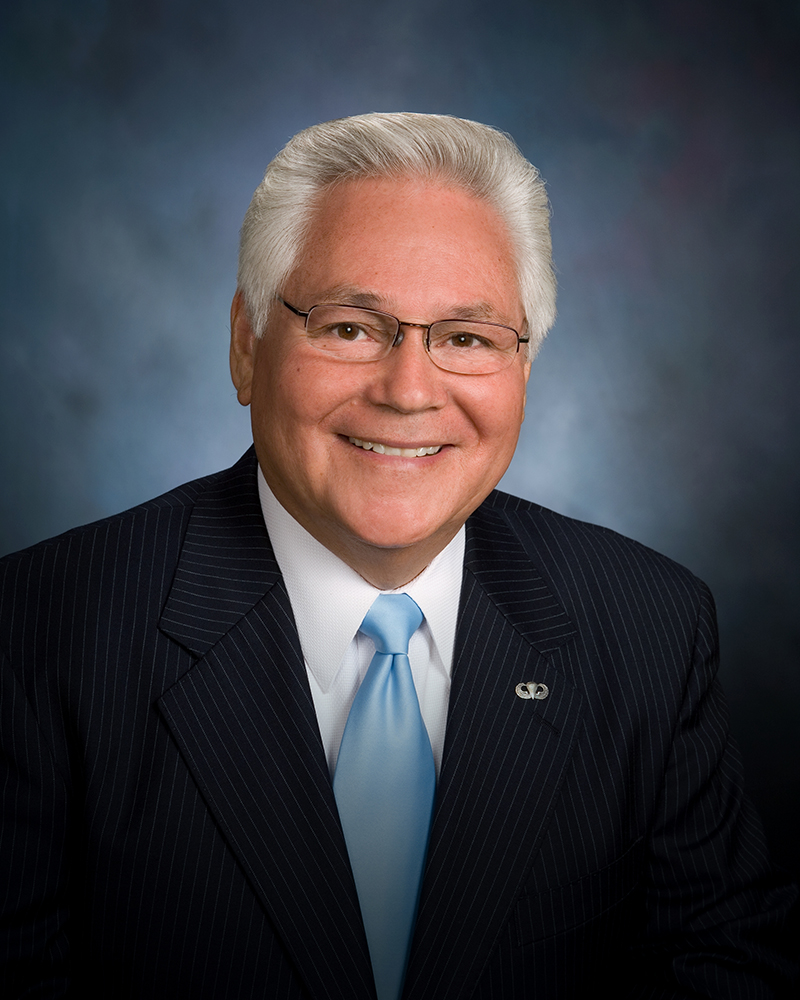
1 primary · 4 co-sponsors
Sponsors


Ask Maddy
·
AI policy assistant
Ask Maddy about SB 1226
Scope: CA
Hi! I can help you understand SB 1226. What would you like to know?
Try one of these
i
Maddy answers using official bill text and legislative records. Always verify before sharing.
Sources cited inline